Are we helping Ukraine enough?

The main thing that is necessary, and therefore the first thing to address, is to decide what outcome we want to see. How do we want this war to end?

Here in the democratic world, we claim to be helping Ukraine. But are we really doing enough? I think we began rather late, but after (and even before) the Russian invasion in February 2022 we did make some efforts to help Ukraine with arms and ammunition. And two final questions, ‘Why does it matter anyway?’ and ‘What more should we do?’

Beautiful Ukrainian scenery in Crimea (Wikimedia)

In thinking this through there are several things to be considered. Let’s deal with those briefly before discussing in more detail whether we are helping Ukraine enough.

The democratic world

We often hear people talk about ‘The West‘ as a catch-all term for the USA, Europe, and any other similar democracies around the globe. This would include the UK, Canada, Australia, New Zealand, Japan, South Korea and I could list more. ‘The democratic world’ is not the way we usually express it, but I think it’s a more accurate term than ‘The West’.

Ukraine

Most of us know where Ukraine is, particularly following the Russian invasion. Regular news coverage has given most people a reasonable level of knowledge about the place geographically, socially and historically. But we need to acknowledge that there are two distinct understandings of Ukraine. The democratic world accepts that Ukraine became an independent nation when the Soviet Union broke apart in 1991. Ukraine is also recognised by the UN and other international bodies, with borders widely accepted to include Crimea and the Donbas. But the current Russian leadership has a different view, claiming that Ukraine remains part of the Russian World and should be brought back into the fold, by force if necessary.

Countries that don’t identify as part of either the democratic world or the Russian world also view Ukraine in one of those two ways depending on the strength of their association with Russia. North Korea and Iran, for example, accept the Russian version. Many countries in South America, Africa, the Middle East, and Asia take the view of the democratic world, but by no means all. Voting at the UN reveals where the balance of opinion lies – and it’s not with Russia.

Helping Ukraine

Aid of various kinds has been provided to Ukraine. There has been financial support to the Ukrainian government to help with provision of public services and for reconstruction following Russian destruction of power supplies, hospitals, schools, industries and housing. At the same time a wide range of sanctions have been applied to Russian trade and we can see this as support for Ukraine as well.

Additionally there has been considerable help in the supply of weapons and ammunition to help Ukraine fend off Russian attacks; but this has come with strict limits (don’t use what we are giving you to strike targets inside Russia). Limiting the use of weapons in this way is effectively tying the Ukrainian armed force’s hands behind their backs. The argument is that the Democratic World does not want to ‘provoke’ Russia. That’s a serious weakness, not just for Ukraine, but for all of us.

And although European nations and their allies are still providing arms and ammunition, the USA is not, due to internal wrangling in the House of Representatives.

Is there more we should do?

Undoubtedly, yes, much more. The main thing that is necessary, and therefore the first thing to address, is to decide what outcome we want to see. How do we want this war to end? We should have decided this more than two years ago, even before Russian armour, aircraft, supply vehicles, and troops crossed the international border in a drive to Kyiv on 24th February 2022. There are only four possible answers here:

  • We want Russia to win
  • We want the war to drag on and on while Russia continues to commit war crimes, destroying towns and cities, targeting essential civilian infrastructure, and killing Ukrainian men, women and children
  • We want a ceasefire agreement
  • We want Ukraine to win, ie drive Russia back beyond the 1991 borders

So let’s consider the implications of each outcome.

We want Russia to win

This way lies madness, and I don’t think any democratic country is suggesting it. Even if we ignore the illegality of the war, and even if we ignore what Russia would do next (we can guess, given their actions in Bucha, Mariupol, Bakhmut, Avdiivka and so forth), we should never overlook Russia’s existing threats beyond Ukraine. Serious threats have been expressed towards Finland, the three Baltic States, even Poland; and who is to say it would stop there?

We want the war to drag on

In this case we would have to accept that we’d need to go on supporting Ukraine indefinitely with financial and military aid. That represents a very expensive choice! It would also seem to be an abhorrent and immoral choice as it would allow the civilian suffering to continue indefinitely. Does anyone seriously support such an option?

We want a ceasefire agreement

Ukraine would gain a respite from fighting, and so would Russia; it seems like a good choice that many people would support. But we need to think a bit harder about this option. First, it rewards the illegal hostility and land grab that has already taken place. A ceasefire would put an end to Ukrainian hopes of regaining its occupied territory, territory taken against international law and international recognition of borders. Are we really willing to let Russia benefit from its aggression?

And how long would such a ceasefire last? Russia has declared that it wants all of Ukraine (Reuters). Five or six years for Russia to regain its strength, build up its army and armaments, and what would then stop them from starting a new ‘special military operation’. Up until the day of the invasion in 2022, Russia had been telling the world it had no intention of attacking Ukraine! Putin is not a man of his word. Words mean nothing to him; he’s made that clear over and over again. He would simply ignore any commitments previously made in a ceasefire agreement. Trust him at your peril!

We want Ukraine to win

Considering the arguments above, this has to be a no-brainer. Why isn’t it? The answer is clear – we have not thought it through very thoroughly.

I want Ukraine to win, and I want all the countries that support Ukraine to want them to win too. And further, I want all those countries to let Russia know, in no uncertain terms, that our clearly declared intention is that they should lose this unprovoked, illegal war for which they alone carry the responsibility.

Why is it important that Russia understands this? Simply this, that Mr Putin respects strength and clearly expressed intentions. If he is in any doubt that we will settle for less than a full Russian withdrawal from Ukraine including from Crimea and Donbas, he will procrastinate and continue to fight. He may do that anyway, of course. But he must, if necessary, be forced to leave Ukraine.

Why does it matter anyway?

Russia is militarily weaker that they believed themselves to be two years ago, and Ukraine has proved to be far stronger than Putin expected. Russia will not give up voluntarily, so it’s essential that they are forced to do so. It is essential for Ukraine to win as soon as possible, to save innocent lives, to reduce the financial costs for Ukraine and her supporters, and to put Putin and Russia back into a place where they know they have lost and will be unwilling and unable to try again. It’s essential for peace and security in Eastern Europe, and very possibly in Western Europe too. We must not fail Ukraine and we must not fail ourselves. Democratic people deserve to live in a peaceful world. Autocracies must not, in the end, prevail. Indeed, all people deserve to live in a peaceful and harmonious world.

Please don’t misunderstand me, I would very much like peace and harmony with Russia. But that will not become possible until Russian forces withdraw from Ukraine, and accept that military conquest to extend Russian territory is not acceptable.

Historians remind us that we were in a similar situation in 1938 when Czechoslovakia was forced to give significant border areas to Germany ‘to prevent a wider war’. The disputed land was duly given to Germany, but German forces subsequently moved into the rest of the country and took control anyway. World War II broke out soon afterwards when German forces entered Poland.

And that’s what might happen now. Ukraine would be forced to give significant border areas to Russia ‘to prevent a wider war’. The disputed land would be duly given to Russia, but Russian forces would subsequently move into the rest of the country and take control anyway. World War 3 would break out soon afterwards when Russian forces enter Poland and/or the Baltic States.

Let’s not fall into that trap. We need to say, ‘No’, and say it very clearly indeed. We must not say, ‘OK, settle for part of what you want’. Because Putin will smile, take what we agree, and then take the rest later. And he won’t stop there.

There’s another thing to remember. We are not dealing with a reasonable person. Vladimir Putin has lied before, he has never been trustworthy, when he agrees to something it’s because it will bring him an advantage. He regards keeping his word as a serious weakness. He casually murders those who oppose him – even his friends. It’s hard to imagine permanent peace in Europe as long as Putin is alive and free. Russia cannot change while he is in charge. That, too, should remind us of the run up to World War II.

What more should we do?

We should immediately provide much more military support. France is working to provide more armour and air defence missiles. The United States must be deeply embarrassed at their present inability to provide ammunition and air defence help. Czechia has done really well to arrange to supply more than a million shells.

In parallel, our governments should urgently be ramping up manufacture of ammunition for our own stocks in addition to supplying Ukraine, and we must increase military budgets to innovate and enlarge our armed forces. Perhaps the war will not spread beyond Ukraine, but we cannot assume that. It is always better to be safe than sorry. We must stop acting as if war is far away and can never come closer. The old Boy Scouts motto applies – ‘Be prepared’.

See also:

Complete clarity on Ukraine

The Russian official line is certain to be rejected and disregarded by most governments, by NATO, by the UN, and by people of goodwill

Just take a look at Russia’s current demands for peace with Ukraine, expressed by Dmitry Medvedev. I’m sure you’ll agree that he puts it rather clearly; does this seem reasonable and fair to you?

How Russia treated Mariupol (Wikimedia)

The text below is an extract from today’s ISW report on the war in Ukraine. These are the Russian conditions for peace. It’s the official line, published by Dmitry Medvedev, currently Deputy Chairman of the Russian Security Council. This is what he calls a ‘peace formula’, it does have the merit of leaving us in no doubt about what Russia wants.

Medvedev begins the “peace plan” by rhetorically stripping Ukraine of its sovereignty, referring to it as a “former” country and placing the name Ukraine in quotation marks. Medvedev laid out the points of his “peace formula”, which he sardonically described as “calm”, “realistic”, “humane” and “soft.”

The demands are:

  • Ukraine’s recognition of its military defeat
  • Complete and unconditional Ukrainian surrender
  • Full “demilitarization”
  • Recognition by the entire international community of Ukraine’s “Nazi character”
  • The “denazification” of Ukraine’s government
  • A United Nations (UN) statement stripping Ukraine of its status as a sovereign state under international law
  • A declaration that any successor states to Ukraine will be forbidden to join any military alliances without Russian consent
  • The resignation of all Ukrainian authorities and immediate provisional parliamentary elections
  • Ukrainian reparations to be paid to Russia
  • Official recognition by the interim parliament to be elected following the resignation of Ukraine’s current government that all Ukrainian territory is part of Russia
  • The adoption of a “reunification” act bringing Ukrainian territory into the Russian Federation
  • The dissolution of the provisional parliament
  • UN acceptance of Ukraine’s “reunification” with Russia
Reformatted, extracted from the ISW report for 14th March 2024.

In a sense, this can be taken as a reply to the Pope’s recent statement about Ukraine ‘raising the white flag’. The Pope has since backtracked and clarified his statement, but Medvedev is most unlikely to backtrack his response.

The Russian official line is certain to be rejected and disregarded by most governments, by NATO, by the UN, and by people of goodwill throughout most of the globe. It is not acceptable as a starting point for negotiations of any kind, more a vain wish-list that very few can accept. Why, exactly, would Ukraine ‘recognise its military defeat’ when it is very clearly not defeated? And why does Medvedev think the entire world would ‘recognise’ that Ukraine has a ‘Nazi character’? Most of the world would be more likely to perceive such a character in the Russian government’s imperialist ambitions.

Dmitry Medvedev, and more to the point Vladimir Putin, seem to think they can get away with rewriting history, disregarding truth, invading an internationally recognised member state of the UN, breaking international law, and have the entire world let them get away with it. They are deluded. We will not and must not allow it.

Blast from the past… 16

I visited friends in Yatton, North Somerset, where I had lived for several decades with my first wife, Judy, and our two daughters.


< Previous
 | Index | Next >

Notes from bygone years – Marching on and on
Hint: Click on the thumbnails for larger images.

March 2023 (1 year before publishing this article)
The heart of Bristol

We visited Bristol for the day on 18th March 1973; it’s only 44 miles from our home in Cirencester. For several years I lived in this fine city, and then for many more years just a few miles to the west. I know the place pretty well and I’ve seen it change with the passing decades. This photo contains many of the places I love: the cathedral, the university, the floating harbour created long ago by damming the River Avon with a lock for entry and exit around times of high tide.

We visited the covered St Nicholas Market where we ate a light Indian lunch, and viewed a gallery of award winning wildlife photos at the M shed. After coffee and cake at a local cafe it was time to drive home. A lovely day to remember.

JHM: I wrote two articles about ChatGPT. – World events:GPT-4 was launched by OpenAI.

< Feb 2023 – Apr 2023 >

March 2022 (2 years before publishing)

Members of the family met to plant a Siddington Russet apple tree on the site of Siddington Nursery.

When I was young this was a working ornamental and fruit tree nursery, part of the family business run by my grandfather with my father, three uncles, and a cousin. It included a shop in Cirencester and later, a garden centre in the town centre and another at Kingsmeadow on the southern outskirts (now a Tesco Extra). There were a number of nurseries, including Siddington; however, it was a declining business and was wound up in the 1980s.

World events: The UN deplored Russia’s invasion of Ukraine and called for the immediate withdrawal of its forces; and Shackleton’s ship Endurance was discovered in the Antarctic;

< Feb 2022Apr 2022 >

March 2019 (5 years before)

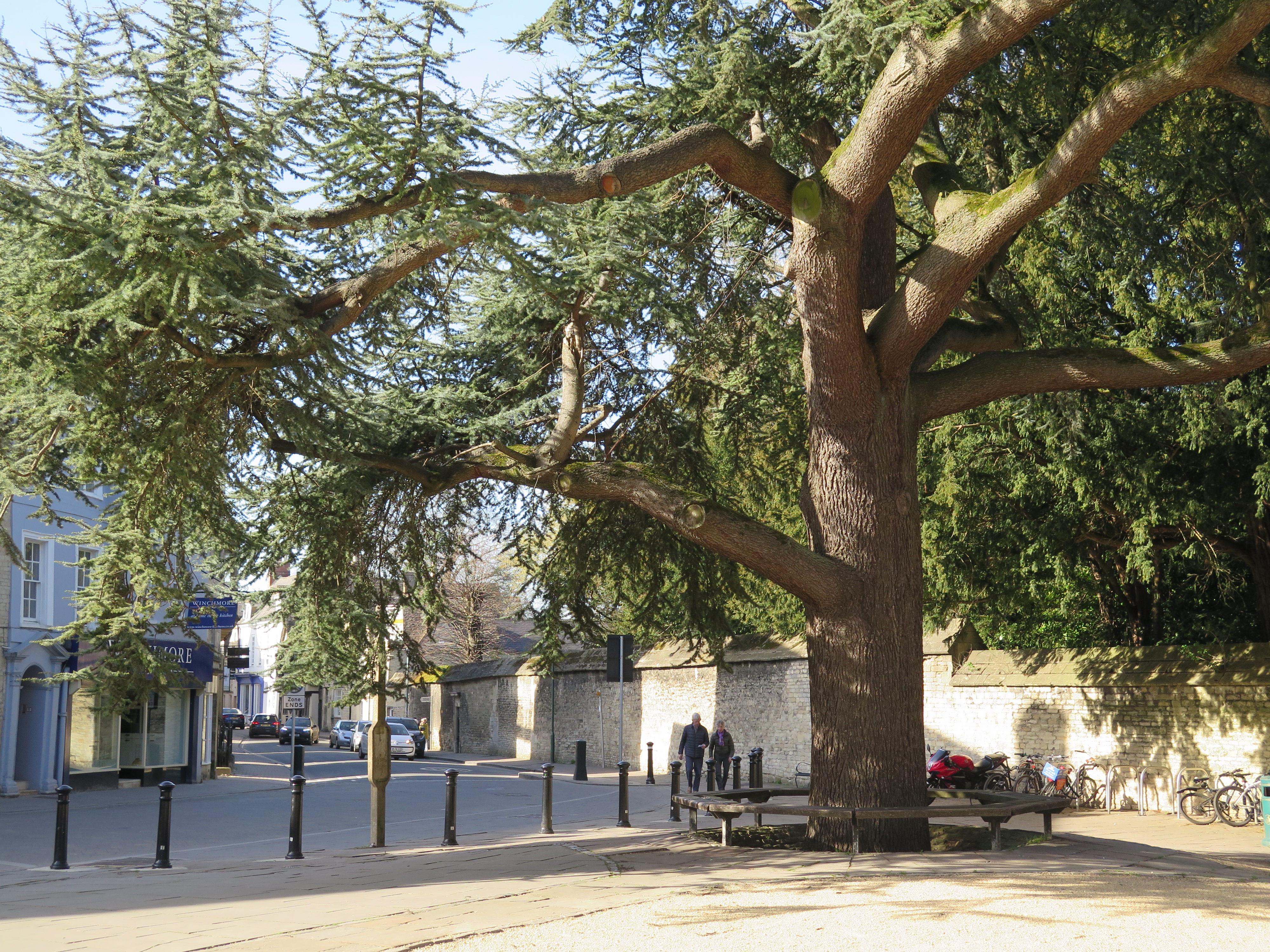
This old cedar tree was here when I was a child, a feature of Cirencester’s West Market Place. It must have been here when my father was a child too. Usually I just walk past, but on this March day I stopped to take the tree’s portrait.

World events: An uncrewed SpaceX Crew Dragon test flight docked with the International Space Station; and all Boeing 737 Max aircraft were grounded.

< Feb 2019Apr 2019 >

March 2014 (10 years)
Boats in St Neots

We were living in St Neots at this time, the photo is of boats in the centre of town, near the River Great Ouse and an easy walk from our home. The short canal in the photo served the industrial part of the town and follows the course of Hen Brook, a small tributary of the Great Ouse.

JHM: I posted an interview with the author of ‘The Black Swan Effect’. – World events: Malaysia Airlines Flight 370 disappeared without trace.

< Feb 2014Apr 2014 >

March 2009 (15 years)
Yatton

In March 2009 I visited friends in Yatton, North Somerset, where I had lived for several decades with my first wife, Judy, and our two daughters. I took this photo of our first house; the weeping birch had grown enormously since I last saw it!

JHM: I wrote a short note about a meeting; – World events: NASA’s Kepler mission was launched to search for planets orbiting other stars.

< Feb 2009Apr 2009 >

March 2004 (20 years)
Runaway car

Always apply the handbrake when parking your car. This was the scene in the Unilever car park at work one day in March 2004! Somebody left their car with the handbrake off, and the slight slope had been enough to cause a very big problem later. Whoops!

JHM: I explained how trees figured in a meeting. – World events: Seven European nations were admitted to NATO.

< Feb 2004Apr 2004 >

March 1999 (25 years)
Colosseum

To celebrate our first wedding anniversary, Donna and I visited Rome in March. What a fascinating place! We explored many historic sites – the Vatican, the remains of the Roman Forum, the Roman senate, the temple to all the gods (the Pantheon), but most amazing for me was the Colosseum. The photo shows people entering the building.

World events: Hungary, Poland and the Czech Republic joined NATO.

< Feb 1999Apr 1999 >

March 1994 (30 years)
Glorious Glosters

The Gloucestershire Regiment (Glorious Glosters) was disbanded in March 1994, here they are parading through Cirencester in a still frame from a video taken by my Dad. Their final parade was in the city of Gloucester, just three days later.

World events: China made its first connection to the internet; Schindler’s List won seven Oscars; and the Linux kernel v 1.0.0 was released.

< Feb 1994Apr 1994 >

March 1989 (35 years)
French exchange

We visited the SS Great Britain in Bristol with Debbie’s French Exchange student, Anne. Here are Beth, Anne and Debbie on the old ship. The Bristol/Bordeaux exchange has been running a long time. Judy remembered doing the exchange and now one of her daughters was taking part too.

World events: Tim Berners-Lee wrote a proposal for the World Wide Web; and there was a serious rail crash in Purley.

< Feb 1989Apr 1989 >

March 1984 (40 years)
Carpentry (Wikimedia)

This was the month that my friend, Tony Everest, died. It was such a tragedy; Tony felt he was a failure. A carpenter by trade, he had lost his job and was unable to find a new one; in particular he felt he had let down his wife and children. He left a message asking me to take his funeral, and although I did that willingly, I was very glad to have the help of some other mutual friends in the planning and on the day.

World events: A year-long coal miner’s strike began in the UK; and Iran accused Iraq of using chemical weapons.

< Feb 1984Apr 1984 >

March 1979 (45 years)
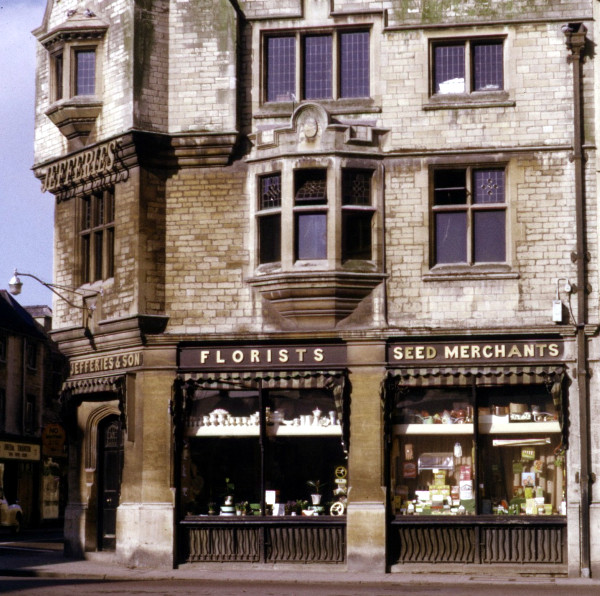
Jefferies shop

John Jefferies & Son was redeveloping their small Forum Garden Centre in the area between Tower Street and The Avenue. The site is now Minerva Court, an area of 1980s housing. A number of old, brick and timber greenhouses were demolished and replaced by a single, large aluminium glasshouse for the indoor display area. Debbie had her fourth birthday this month.

World events: NASA’s Voyager 1 probe showed that Jupiter has rings; and Philips demonstrated the first CD audio disc (marketed from 1982).

< Feb 1979Apr 1979 >

March 1974 (50 years)
Bristol

I believe this is a photo of Bristol from the top of Dundry Hill, though I can’t be completely sure. We were living in the city and used to enjoy the drive out to Dundry from time to time. We were saving to buy our first house at a time of rapid inflation, a difficult situation.

World events: The Terracotta Army was discovered in China; and Hiroo Onoda, a Japanese WW2 soldier, surrendered in The Philippines.

< Feb 1974Apr 1974 >

March 1969 (55 years)
Trip costs

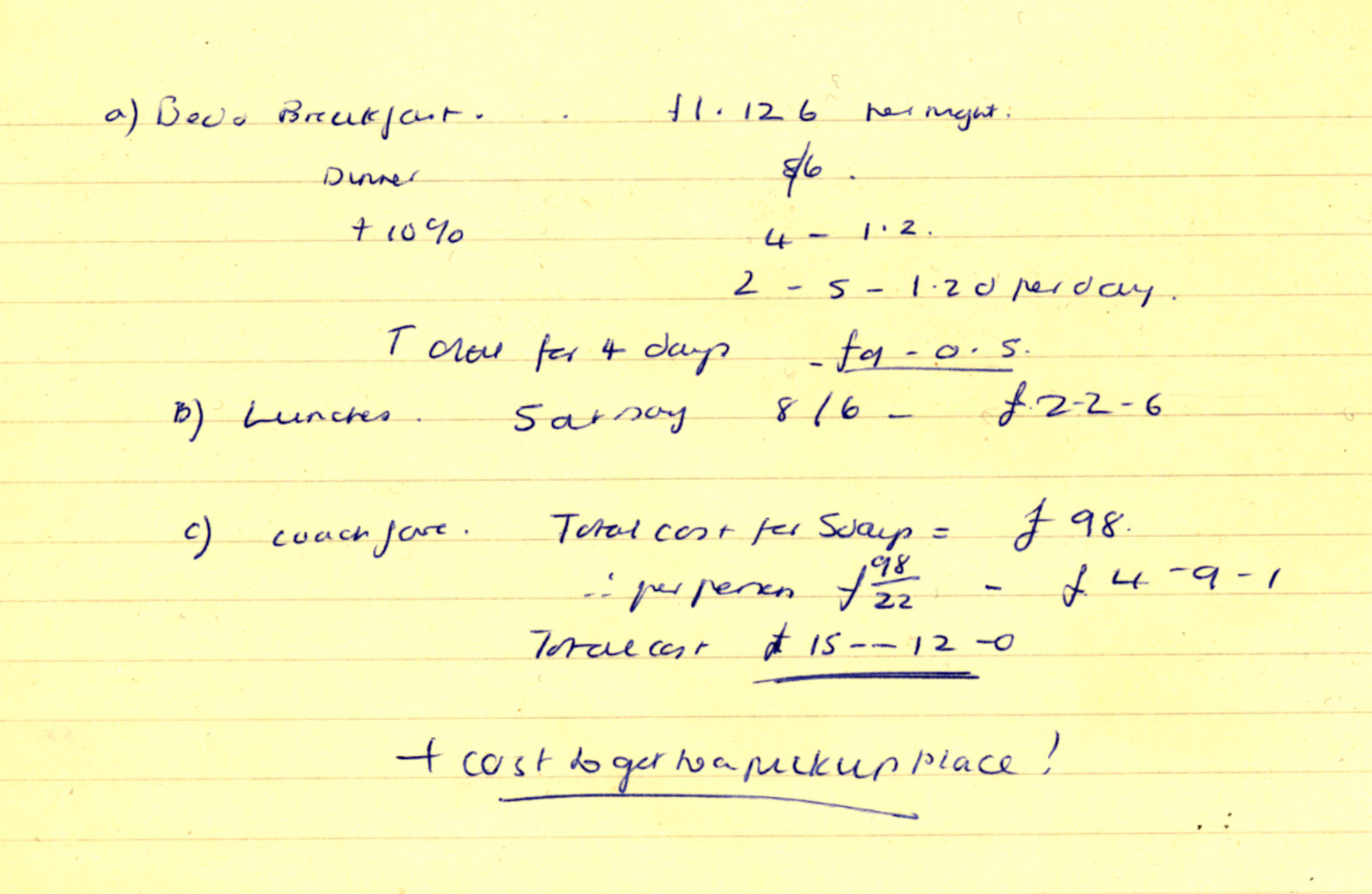
During March I was in my third year at Bath University while Judy was in her second year at Aberystwyth. Exams were only a few months away for both of us, though it’s fair to say Judy was working far harder than I was.

Judy was planning for a biochemistry trip to Cambridge in April and was carefully considering the finances for it (see image). About £15.60 for four days covered accomodation, meals, and travel from Aber to Cambridge and back!

World events: Concorde‘s first test flight took off at Toulouse; and John Lennon and Yoko Ono were married.

< Feb 1969Apr 1969>

March 1964 (60 years)
By rail to Paris

I was in the 5th year at Cirencester Grammar School, and during the Easter holiday some of us went to Paris on a school trip for a week. I took this photo on the platform at Swindon Station waiting for our train to London. I think we might have caught our first train at Cirencester Town Station to change at Kemble. The Cirencester branch closed the following year.

World events: A huge earthquake struck Anchorage in Alaska; Jerrie Mock started a solo flight around the world, becoming the first woman to do so.

< Feb 1964Mar 1964>

March 1959 (65 years)
Makarios (Wikimedia)

The end of the spring term fell in March, I had just one final term and the eleven plus exam to go and that would be the end of my time at junior school. I think that made me feel rather grown up and I began wondering how my new life would be at secondary school.

World events: Archbishop Makarios returned to Cyprus from exile; NASA’s lunar probe Pioneer 4 became the first American object to escape Earth orbit; the Barbie doll was released in the USA; and Hawaii became a US state.

< Feb 1959Apr 1959>

March 1954 (70 years)
Hydrogen bomb

My second term at Querns School continued right through March as Easter wasn’t until mid-April. By this time I was probably getting quite good at copying letters and short, simple words as well as counting small pictures of animals and objects and writing down the correct number. We also got to colour in these little pictures so it seemed quite good fun.

World events: The USA announced that a hydrogen bomb had been tested on Bikini Atoll in the Pacific; the Soviet Union recognised the sovereignty of East Germany.

< Feb 1954Apr 1954>

March 1949 (75 years)
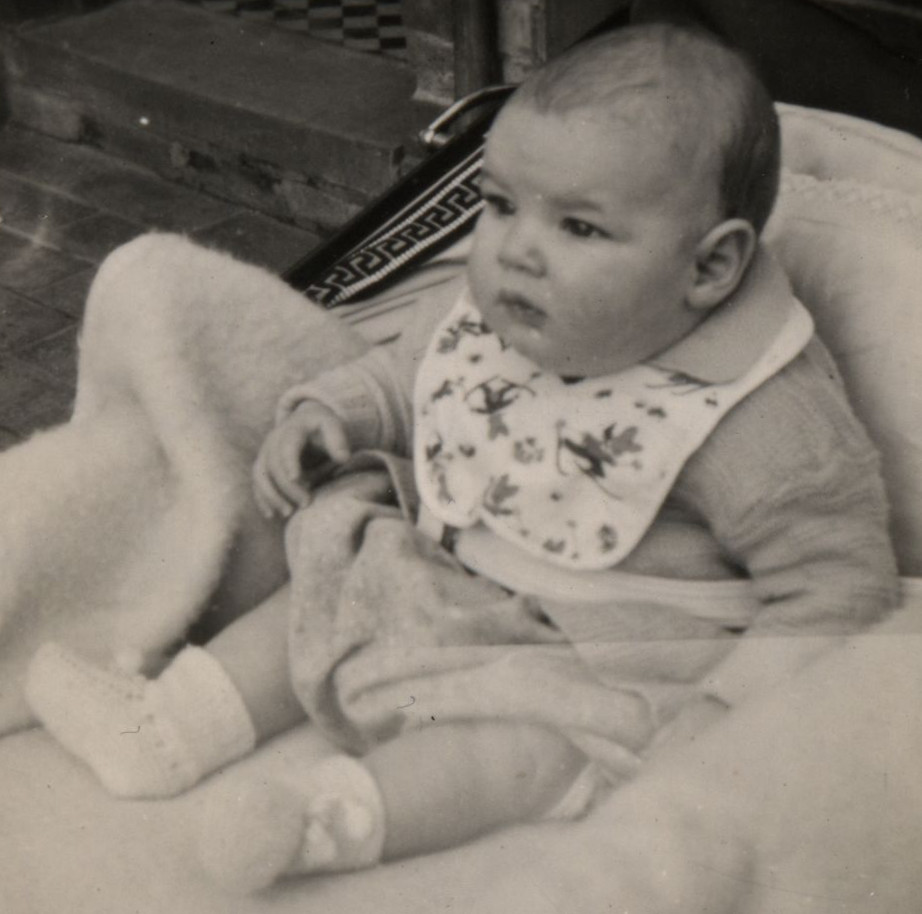
This is me!

I was eight months old at the end of March, perhaps beginning to crawl around and confident at sitting. Mum, Dad and I shared a bedroom upstairs in my grandparents home at 37 Victoria Road in Cirencester. I must have been carried up and down the stairs in that house a number of times every day.

World events: 92 000 Baltic States citizens were deported internally in the USSR; and Newfoundland became part of Canada.

< Feb 1949Apr 1949>

March 1944 (80 years)
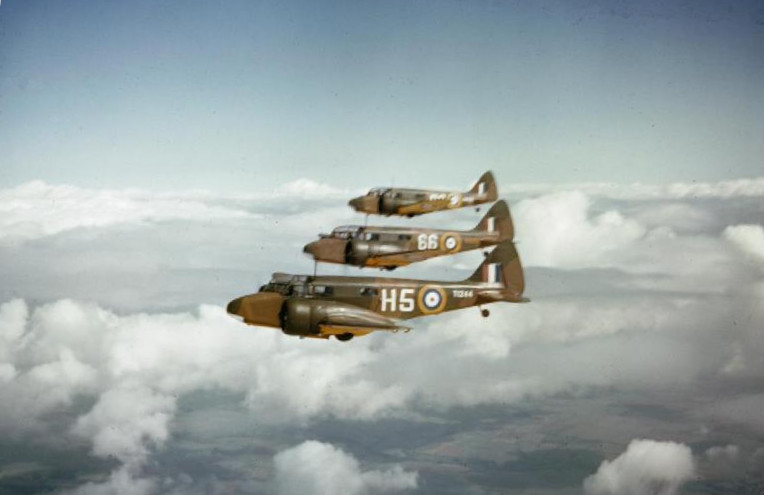
Three Oxfords (Wikimedia)

Dad registered again for military service (just to be sure) and received his calling up papers three months earlier than expected.

Also in March, as a member of the Air Training Corps (ATC) he was lucky enough to be invited on a cross-country flight in an Airspeed Oxford with two Frenchmen. Taking off from South Cerney, they flew over Chippenham, Thame, Droitwich, Malvern, Monmouth, and Stroud, landing again at South Cerney.

World events: In the UK, a prohibition against teaching by married women was lifted; Mount Vesuvius erupted; and the Tetra Pak was invented in Sweden.

< Feb 1944Apr 1944>

< Previous | Index | Next >

Useful? Interesting?

If you enjoyed this or found it useful, please like, comment, and share below. (If you don’t see those links, click the article’s title above the main photo and they will appear.) Send a link to friends who might enjoy the article or benefit from it – Thanks! My material is free to reuse (see conditions), but a coffee is always welcome and encourages me to write more often!