As the group size grows, the dynamics change; ten to twenty people will chat together (like the group in the photo), though sometimes there will be more than one conversation going on.
Image 99 – What’s in an image? Sometimes quite a lot, more than meets the eye. I’m posting an image every day or so.
Click to enlarge
People like to sit in the sun and chat. Social interaction is central to human nature with group sizes anywhere between two and a hundred; more than a hundred becomes a crowd in which there are some people who don’t know one another at all. And the larger the crowd, the more anonymous the experience becomes.
Group dynamics
A group of two or three has the potential to be quite intimate; close friends who trust one another may share things they wouldn’t discuss more widely.
As the group size grows, the dynamics change; ten to twenty people will chat together (like the group in the photo), though sometimes there will be more than one conversation going on. Generally most people will have something to say; the intimacy is lost, but everyone has a chance to join in.
As group size increases beyond twenty, to say thirty or forty, it’s no longer possible for everyone to hear. If it’s an informal gathering, people will break into smaller groups to chat and often there will be a few left out, not engaging with others at all. Or if it’s a more formal gathering a chairperson may manage things and individuals will take turns to make their points.
Sharing food and drink
The people in the photo are eating and drinking together, this is helpful in getting a group to relax. Here, things are completely informal, but in more formal groups of this size or larger it may help to provide tea and coffee, or even a buffet. This relaxes everyone.
Right-sizing
If you are planning a group meeting for a specific purpose it’s beneficial to consider group size and how it affects things. Often we do this automatically, these group dynamics are so familiar that we don’t need to make any special effort to get it right. Sometimes it’s useful to break a big group up into smaller ones, sitting people at tables of six or so to make sure everyone is able to talk and interact while also being part of something bigger (perhaps with a speaker at the front from time to time). This enables a focus/discuss/focus/discuss dynamic which can be very useful.
When: 21st June 2024 Where: Weston-super-Mare, North Somerset, England
Favourites
For convenience, here’s a list of my favourite images:
If you enjoyed this or found it useful, please like, comment, and share below. (If you don’t see those links, click the article’s title above the main photo and they will appear.) Send a link to friends who might enjoy the article or benefit from it – Thanks! My material is free to reuse (see conditions), but a coffee is always welcome and encourages me to write more often!
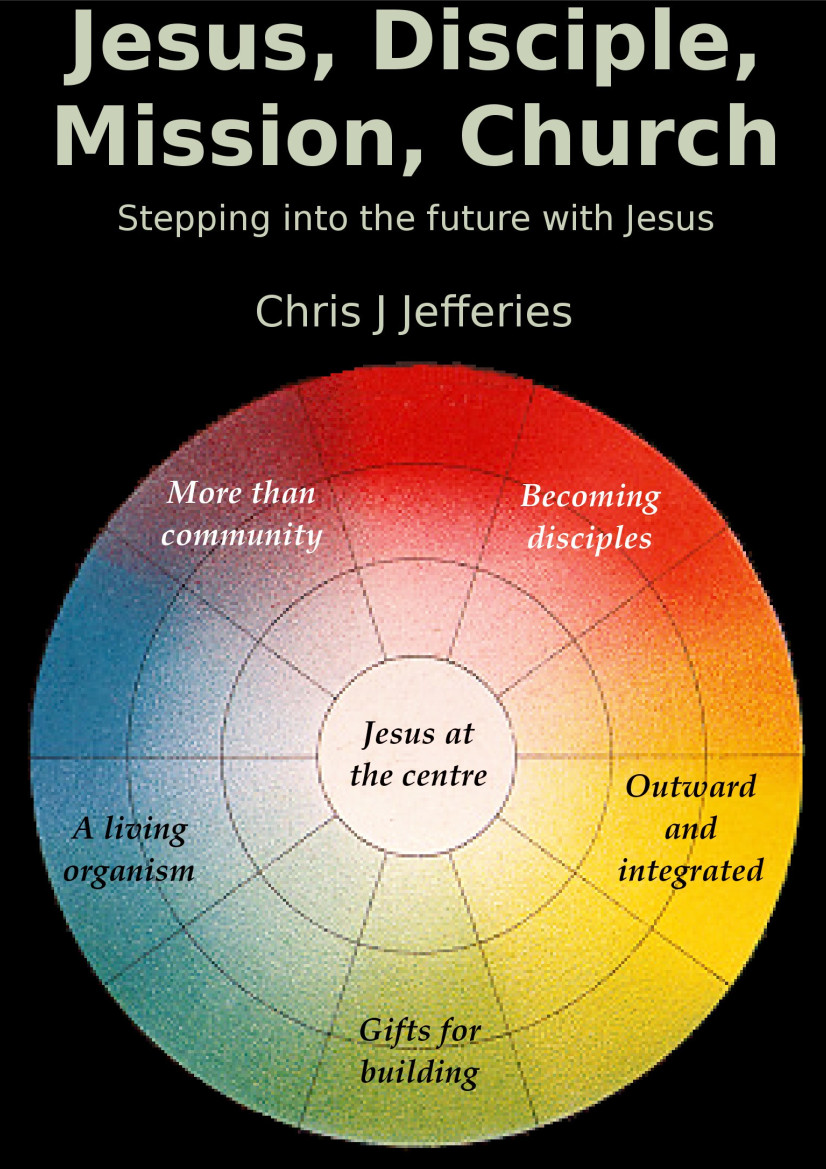
This article is an extract from my short book, Jesus, Disciple, Mission, Church (JDMC). The bite-sized piece below is roughly two percent of the book. Now we begin the first chapter entitled Working together in six ways.
Chapter introduction
JDMC cover
Here’s a question to get you thinking. ‘Why doesn’t church in the West grow explosively like the church described in the book of Acts?’
Jesus told his disciples, ‘Go and make disciples of all nations … and teach them everything that I have taught you’ (Matthew 28:18-20). How many of us actually go? How many make disciples? What was this early, outgoing, discipling church really like?
The gospels are full of hints and clues in the life of Jesus, and Acts describes the early years of the church in exciting detail. Jesus’ followers were reviled and persecuted but determined to press on; they had one another and the presence of the Holy Spirit to sustain them in their constant outward movement.
The church grew from 120 people to 20 million in the first 300 years. Doesn’t that fill you with a sense of challenge? Will you rise to it?
Discuss – List some of the ways church today and church at the beginning are different. Can you think of other examples of church movements throughout history that exploded from tiny beginnings? How did they do it? Jesus rarely mentions church, but talks about the kingdom a lot – why?
Key factors
Alan Hirsch identifies six factors that he calls ‘forgotten ways’. These factors were all active in the early church and in other examples of explosive growth; think of them as the DNA of the church. Alan suggests that if you follow Jesus, you already have this DNA, but perhaps some of it is inactive. Jesus is our righteousness, but are we a ‘faithful city’? (Isaiah 1:26). Have we, like the church at Ephesus, forgotten the love we had at first? (Revelation 2:4)
In the Western church, what has been lying dormant for so long needs to be brought back into activity. The next six chapters in this guide are intended to help you start the process and begin a more exciting and fruitful journey.
This first chapter of JDMC might leave you with more questions than answers. That is the intention, to get you wondering and pondering. The remaining chapters provide more focus and detail.
Discuss – Before reading on, make some guesses about what the six factors might be. What most enables rapid, even explosive, growth?
1 – Jesus at the centre
As his followers, Jesus should be central in all we do. Few would argue with that! The alternative is to do things in our own strength and wisdom and we know this will never be enough.
The early believers kept Jesus central in their lives and went out and changed their world. Although many of us today claim (and even sing) that Jesus is at the centre, what do we really mean by that? Do our actions truly bear out our words? Have other things got in our way? To some extent this is a way that most of us have forgotten. One of the issues here is that we might not even be aware there’s a problem. (Luke 9:57-62)
If there are other things crowding out Jesus at the centre of our lives, how might we go about identifying them and rooting them out? Consider Matthew 11:28-30; might a burdensome life get in the way sometimes? Is it necessary to struggle?
Discuss – Is Jesus at the centre in your lives? Are there parts of life where he takes second place? Think about money, friends, hobbies, family life, fitness, music, TV, work and even church life. Be as honest as you can; consider in particular how you use your time.
This was extracted from Jesus, Disciple, Mission, Church (JDMC), pages 9 and 10. Download the whole thing or read it online – GetJDMC.scilla.org.uk
Useful? Interesting?
If you enjoyed this or found it useful, please like, comment, and share below. (If you don’t see those links, click the article’s title above the main photo and they will appear.) Send a link to friends who might enjoy the article or benefit from it – Thanks! My material is free to reuse (see conditions), but a coffee is always welcome and encourages me to write more often!
This article is an extract from my short book, Jesus, Disciple, Mission, Church (JDMC). The bite-sized piece below is roughly two percent of the book. The first article in this series explained why I wrote JDMC and set the scene. This time I’m offering advice on how to approach using it.
This extract is still part of the book’s introduction. In fact, this extract completes the introduction, so the next post will get into the real meat of the thing – the first real section.
Practicalities
JDMC cover
Each part of the guide recommends an online video (see ‘For more information’ at the end of each section). You might start each session by watching the video together.
(Note: some of these videos are no longer available. When I can, I’d like to update JDMC. Until then, please accept my apologies.)
If you’re reading through JDMC on your own, I suggest you consider the thoughts and ideas for group study, and adapt them as you think fit.
One way of working is for everyone to read the notes before meeting. Underline anything that seems important or stands out. Jot ideas in the margins. Mark anything you don’t understand so you can raise it in the discussion. Alternatively it may be simpler to read together as far as the first discussion point, and then repeat for the second point. For this reason, the second edition includes a discussion point for every subheading in the text. Decide what works best for your particular group; invent your own method if necessary.
It’s more important to cover everything well than it is to get to the end, but it’s also important not to get stuck; if you don’t have time for a session in one sitting, finish it next time you meet. But if you really can’t agree on something, note down the different points of view and move on. If your numbers are larger than ten, I suggest working as several groups (two groups of six will be better than a group of twelve). Everyone should engage and contribute, but in large groups there are always some who are reluctant to speak up.
The suggested things to do are just that – suggestions; see if you can come up with other creative ideas of your own. Don’t try to do everything but think things through and aim to do a few things well. Agree on some choices and work on them together. Make notes on things you want to return to later and any decisions you make. Get someone to write down the agreed points and circulate them.
If you feel a session highlights a particular weakness for your group, consider returning to it for a second time later. Or you could tackle the weak area in more depth from The Forgotten Ways Handbook.
Some final suggestions
Work through the sessions again from time to time, perhaps annually; different things will come into focus if you do. Better still, read The Forgotten Ways and consider using The Forgotten Ways Handbook to discover a great deal more.
Don’t feel you must read JDMC in sequence; it may be better to start with a topic that excites you; the parts are self-contained and will work in any order. Part 1, the overview, would also work at the end. Some groups might prefer to start with Part 3, Becoming disciples. But however you decide to do it, aim to cover everything at some point.
Encourage other groups to work through JDMC. Offer to guide them through it, but encourage them to make their own choices about what is most relevant and useful in their own situation. If you are helping another group try to listen much more than you speak.
If you do decide to act as a guide for others it would be very useful to read The Forgotten Ways first and work through The Forgotten Ways Handbook. This will provide more detail and supporting information to help you answer questions and give useful advice.
Outward and integrated
We need to reach those around us; Jesus commands it. He said, ‘I’ve been given all authority in heaven and on earth, so as you go, make disciples of all nations … and I’ll be with you.’ (Matthew 28:18-20) But as we go out into the world and seek to embed ourselves deep in the culture (as he did), we do not go alone.
Not only are we together as a community of his people, we are also together in the community of the Almighty Creator. The Son has made the way open and has sent the Spirit to fill us – Father, Son, Spirit, and us! It’s not going to heaven when we die; it’s far better than that. It’s living in their community right here, right now and forever. Jesus says he is with us right to the end (Matthew 28:20) and he says that if we have seen him we have seen the Father (John 14:9).
In our going out and going deep we remain in the Presence, for the Holy Spirit is in us and communicates with us and for us. We couldn’t be effective carriers of good news without him. There are some great examples in the New Testament; read Acts 8:26-39, Acts 10:9-21 and Acts 16:7-10.
As you go out and deep in the culture around you, how will you pay attention to the presence of the Holy Spirit with you? Consider prayer, listening, and the truth that the Spirit is alive within you and wanting to communicate with you.
This was extracted from Jesus, Disciple, Mission, Church (JDMC), page 8. Download the whole thing or read it online – GetJDMC.scilla.org.uk
Useful? Interesting?
If you enjoyed this or found it useful, please like, comment, and share below. (If you don’t see those links, click the article’s title above the main photo and they will appear.) Send a link to friends who might enjoy the article or benefit from it – Thanks! My material is free to reuse (see conditions), but a coffee is always welcome and encourages me to write more often!



 Journeys of Heart and Mind