Terraced border at Blenheim

Much of this slope is being managed by rows of stones so that each section of soil will have a reduced slope. Trailing plants like Aubretia can be planted behind the stones.

< Previous | Index | Next >

Image of the day – 146

What’s in an image? Sometimes quite a lot, more than meets the eye. I’m posting an image every few days.

What to do with a sloping garden

Click to enlarge

There are many things that need managing in gardens great and small; one of these things is a slope. If your garden is on a hillside and the slope is steep, you will need to create a winding path to exchange steepness for distance, or as an alternative, build some steps. If you have a sloping flower bed you can make a bank and plant ground cover plants to stabilise the soil and reduce erosion, or you could build a rock garden.

Terracing

In this photo, you can see the initial phase in construction of a third way of dealing with a sloping border – a terraced border. Much of this slope is being managed by rows of stones so that each section of soil will have a reduced slope. Trailing plants like Aubretia can be planted behind the stones, or low shrubs or herbaceous plants could be planted in the lower tiers with tall plants and small trees such as Acer cultivars at the back. The terraced area in the photo will look lovely as it becomes established with some mature plants. Perhaps I’ll go back in future to take more photos for comparison.

A rockery

A rockery would be designed differently, the stones would be carefully placed in a naturalistic way with alpines growing amongst them, but not hiding them. Again, taller bushes and small trees would fit well at the top, concealing the fact the the ‘outcrop’ of rock is of limited height. A well-built rockery should respect overall angles of bedding planes, even though no such planes really exist. But making it look as if they do can give a fine impression of structure. Each stone needs to be angled in two dimensions to fit with angles of all the others. They must all lean backward or forward at the same angle, and they must lie from side to side in agreement as well.

It’s usually best for the stones to lie backwards rather than forwards, they will be much more stable and better supported, but they will also proved better opportunities for planting after the stones are all in place. Careful planting can hide the gaps between some of the stones, giving the appearance of much larger blocks of stone. It’s very convincing if done well!

A hillside

If the garden is large enough, a winding path with several terraced or rockery sections (perhaps both) can be very pleasing. This is a great way of using a hillside, though few of us can afford such an expansive space. But it’s a great idea for shopping centres, university campuses, industrial sites, and parks where there is already a natural slope large enough for this kind of feature.

See also:

< Previous | Index | Next >

Useful? Interesting?

If you enjoyed this or found it useful, please like, comment, and share below. My material is free to reuse (see conditions), but a coffee is always welcome!

You might like these posts too…

Image of the day – 80

Hot water rose in the system and the returning pipes contained cooler, denser water that flowed down, re-entered the boiler and warmed up again.

< Previous | Index | Next >

What’s in an image? Sometimes quite a lot, more than meets the eye.

I’m posting an image every two days (or as often as I can). A photo, an image from the internet, a diagram or a map. Whatever takes my fancy.

Click to enlarge

The Montalto Estate in County Down had an extensive fruit and vegetable garden to supply the house year round with freshly harvested crops. Greenhouses were an important feature, providing out-of-season crops and exotic fruits like pineapples and citrus. These greenhouses needed heating in the winter months and this was supplied by wide-bore cast iron pipes below the plant benches.

The remains of some of these pipes are visible in the photo. They usually ran in pairs; there were no circulating pumps, instead the boiler would be below ground in a stokehole and the hot water would rise and flow by gravity acting on the changes in density. Hot water rose in the system and the returning pipes contained cooler, denser water that flowed down, re-entered the boiler and warmed up again.

I remember greenhouse heating systems just like this from my childhood, my father had a role in the family business at that time, a nursery with greenhouses full of cuttings and seedlings and houseplants that needed heating during the winter. There was a wonderful smell of greenery, the pipes were always warm, yet never too hot to touch, delicate maidenhair ferns grew wild around the pipework below the benches and these were allowed to remain because the fronds were always useful in making bouquets and buttonholes for sale in the shop in town, or for weddings and other occasions. Even on cold, frosty days you’d want to take off your coat, hat and gloves if you went into a greenhouse!

Modern glasshouses are very different, they have oil or gas fired systems controlled automatically on demand by thermostats, and the heat may be distributed by water pipes or by fan-blown air circulation.


Images from our Irish holiday 2024

For convenience, here’s a list of all the Irish holiday images:

28th Jul – Welsh Botanic Garden, Robin, Fishguard
29th Jul – Wicklow Mts, Glendalough, Powerscourt, Rose, Greystones
30th Jul – Liffey, Temple Bar, St Patrick’s Cathedral
31st Jul – Newgrange, Battle of the Boyne
1st Aug – Monasterboice, Mourne, Thrift, Window
2nd Aug – Spelga Dam, Hydrangea, Pipework, Lough Neagh
3rd Aug – Coagh, Springhill, Portrush
4th Aug – Beach at Portrush
5th Aug – Giant’s Causeway, Carrick-a-Rede, Portrush

Themed image collections

The links below will take you to the first post in each collection

Cirencester, Favourites, Irish holiday 2024, Roman villa

< Previous | Index | Next >

Useful? Interesting?

If you enjoyed this or found it useful, please like, comment, and share below. My material is free to reuse (see conditions), but a coffee is always welcome!

Image of the day – 79

Thrive like an Irish Hydrangea, get rooted in surroundings and situations that bring out your very best.

< Previous | Index | Next >

What’s in an image? Sometimes quite a lot, more than meets the eye.

I’m posting an image every two days (or as often as I can). A photo, an image from the internet, a diagram or a map. Whatever takes my fancy.

Click to enlarge

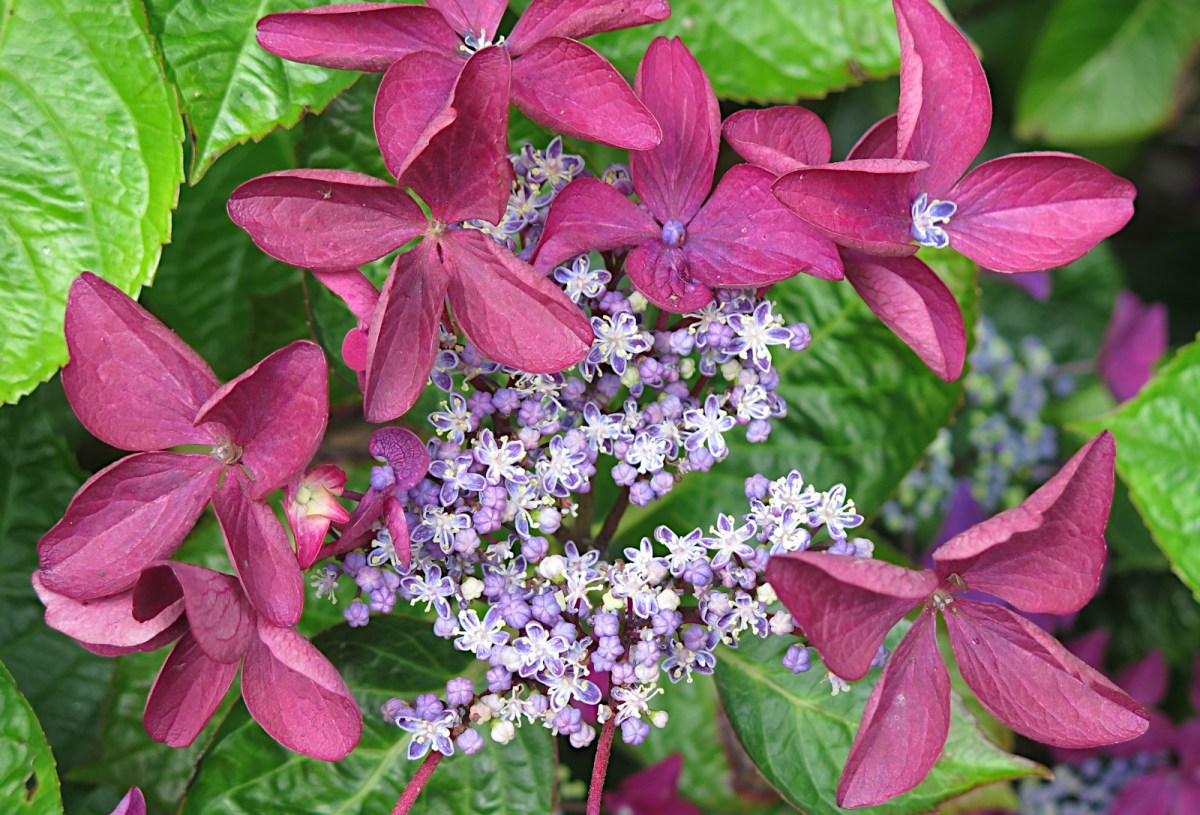
Irish gardens often have the most magnificent Hydrangeas, in striking colours, not just white, blue and pinks, but purples and very vivid blues as well as many kinds like the lacecaps where there are small inner flowers and large outer ones as in the photo.

It seems there’s something in the Irish soils or climate that cause Hydrangeas to thrive particularly well! We visited the Montalto Estate just south of Ballynahinch where I took this shot, but it’s typical of all the gardens we visited in our two weeks in Ireland.

Perhaps the same is true for people. Do we thrive best in particular places? Perhaps the cultural ‘soil and climate’ suit us best in the country we call home, or amongst people we know well. Some people are energised by good company and parties, others (like me) are energised by solo activities. I can walk for miles on my own and come home afterwards feeling calm, balanced, and ready for anything. Others I know are just the opposite, a long, solo ramble would be hard to endure.

Whatever the individual differences it’s good for all of us to spend time in the ways that are most comfortable to us. Thrive like an Irish Hydrangea, get rooted in surroundings and situations that bring out your very best. You deserve it! And the people around you deserve it too.


Images from our Irish holiday 2024

For convenience, here’s a list of all the Irish holiday images:

28th Jul – Welsh Botanic Garden, Robin, Fishguard
29th Jul – Wicklow Mts, Glendalough, Powerscourt, Rose, Greystones
30th Jul – Liffey, Temple Bar, St Patrick’s Cathedral
31st Jul – Newgrange, Battle of the Boyne
1st Aug – Monasterboice, Mourne, Thrift, Window
2nd Aug – Spelga Dam, Hydrangea, Pipework, Lough Neagh
3rd Aug – Coagh, Springhill, Portrush
4th Aug – Beach at Portrush
5th Aug – Giant’s Causeway, Carrick-a-Rede, Portrush

Themed image collections

The links below will take you to the first post in each collection

Cirencester, Favourites, Irish holiday 2024, Roman villa

< Previous | Index | Next >

Useful? Interesting?

If you enjoyed this or found it useful, please like, comment, and share below. My material is free to reuse (see conditions), but a coffee is always welcome!

Image of the day – 39

Most of these old houses and their gardens are now enjoyed by much larger numbers of visitors than the original owners could possibly have imagined.

< Previous | Index | Next >

What’s in an image? Sometimes quite a lot, more than meets the eye.

I’m posting an image every day (or as often as I can). A photo, an image from the internet, a diagram or a map. Whatever takes my fancy.

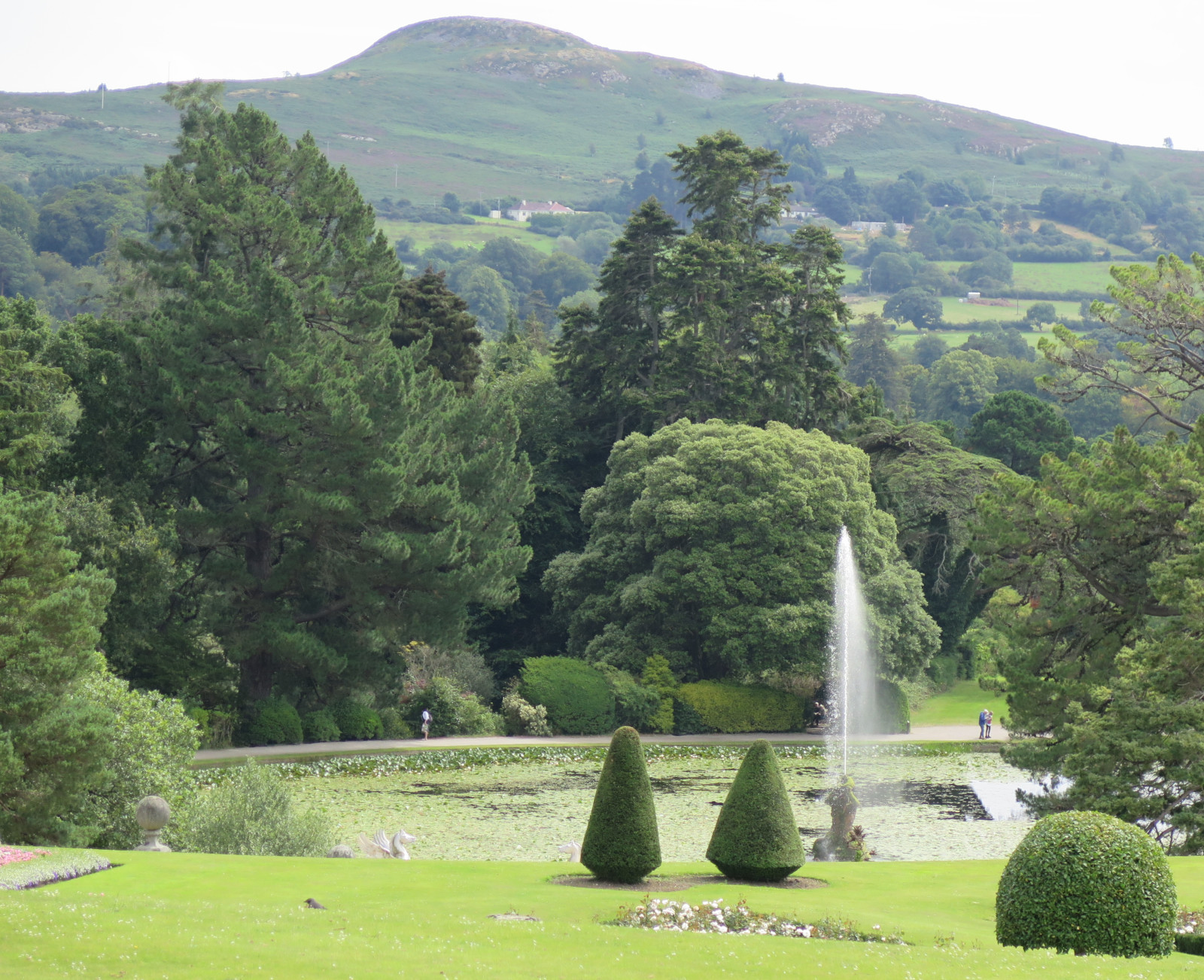
National Geographic rated this as the third best garden in the World. It’s Powerscourt Gardens in Wicklow, Ireland. National Geographic is right, this is a very fine garden indeed. It’s spacious, well designed, full of interesting plants and landscape features, and very well maintained. We did spot a few small weeds here and there, but not very many; keeping a garden this large will require a lot of dedicated gardeners, either volunteers or paid staff (probably both). Most of the work has to be done manually, it will not be a cheap operation!

Of course, ordinary everyday people can’t manage a huge garden like this, nor afford to build a house as large as Powerscourt. A very tiny minority of the population could build and live in this kind of luxury either then or now. And even among the very wealthy, not everyone wants to.

But time moves on, and most of these old houses and their gardens are now enjoyed by much larger numbers of visitors than the original owners could possibly have imagined. Perhaps they’d have been horrified! But I, for one, am grateful for their beautiful legacies that I can visit and enjoy.

I have a final question for you, dear reader, and for myself too. What will you leave as a legacy for future generations? And what will I leave? Why not leave your thoughts below in a comment? There are no right or wrong answers.


Images from our Irish holiday 2024

For convenience, here’s a list of all the Irish holiday images:

28th Jul – Welsh Botanic Garden, Robin, Fishguard
29th Jul – Wicklow Mts, Glendalough, Powerscourt, Rose, Greystones
30th Jul – Liffey, Temple Bar, St Patrick’s Cathedral
31st Jul – Newgrange, Battle of the Boyne
1st Aug – Monasterboice, Mourne, Thrift, Window
2nd Aug – Spelga Dam, Hydrangea, Pipework, Lough Neagh
3rd Aug – Coagh, Springhill, Portrush
4th Aug – Beach at Portrush
5th Aug – Giant’s Causeway, Carrick-a-Rede, Portrush

Themed image collections

The links below will take you to the first post in each collection

Cirencester, Favourites, Irish holiday 2024, Roman villa

< Previous | Index | Next >

Useful? Interesting?

If you enjoyed this or found it useful, please like, comment, and share below. My material is free to reuse (see conditions), but a coffee is always welcome!

Image of the day – 33

There would have been the sounds of birds and fragrance from the garden, but no distant traffic sounds or planes passing overhead.

< Previous | Index | Next >

What’s in an image? Sometimes quite a lot, more than meets the eye.

I’m posting an image every day (or as often as I can). A photo, an image from the internet, a diagram or a map. Whatever takes my fancy.

At the back of the villa was a garden area. In the reconstruction it’s been planted with both decorative plants as well as dual purpose plants like rosemary with value in the kitchen as well as looking and smelling good in the garden.

The villa was built in a position where it is surrounded by hilly ground with a longer view in one direction. A great choice then as now. And on a clear night, with none of the light pollution we’re used to these days, the sky would have been a glorious sight, sprinkled liberally with stars and a stunning vista of the Milky Way spread out across it.

Imagine, if you will, a sunny day with the slaves tending the garden and the cook hunting for the right combination of herbs for the evening dining in the villa. There would have been the sounds of birds and fragrance from the garden, but no distant traffic sounds or planes passing overhead. This would have been a beautiful and peaceful place for the wealthy, but a place of daily duties and hard work for the ever-present slaves who kept the place clean, tidy, and working well.

Images of the Roman villa

For convenience, here’s a list of all the Roman villa images:

Ceiling, Desk, Dining room, Exterior1, Exterior2, Garden, Kitchen, Mosaic floor, Office, Sitting room

Themed image collections

The links below will take you to the first post in each collection

Cirencester, Favourites, Irish holiday 2024, Roman villa

< Previous | Index | Next >

Useful? Interesting?

If you enjoyed this or found it useful, please like, comment, and share below. My material is free to reuse (see conditions), but a coffee is always welcome!

Image of the day – 14

Any creative work seems quite magical, as what was only in the creator’s mind appears in actuality and can be seen and touched.

< Previous | Index | Next >

What’s in an image? Sometimes quite a lot, more than meets the eye.

I’m posting an image every day (or as often as I can). A photo, an image from the internet, a diagram or a map. Whatever takes my fancy.

Here’s another view of the gardens at Hidcote. Lawrence Johnston designed Hidcote with the concept of ‘garden rooms’, one of which is the focus of this photo. Walking through the Hidcote garden you pass from one room to another, to another repeatedly. There are constant surprises every time you turn a corner or pass through an opening in a hedge. It’s delightful.

I love this kind of garden and I think you might too, if you ever have a chance to visit Hidcote – take it!

This, to me, says something about the nature of creation in general. There’s a design stage during which the idea of ‘rooms’ is a foundational step, and even some of the layout, or even most of it, take shape in the designer’s imagination. And almost always there’s a second stage after things start to be laid out on the ground (for a garden). In this second stage, it may become clear that improvements are possible once you see the ‘lay of the land’. Little tweaks and changes can improve the design significantly.

But always, in any creative work, something comes into existence that was simply not there before. Any creative work seems quite magical, as what was only in the creator’s mind appears in actuality and can be seen and touched, or in the case of a garden – walked in and admired.

Themed image collections

The links below will take you to the first post in each collection

Cirencester, Favourites, Irish holiday 2024, Roman villa

< Previous | Index | Next >

Useful? Interesting?

If you enjoyed this or found it useful, please like, comment, and share below. My material is free to reuse (see conditions), but a coffee is always welcome!

Image of the day – 11

Hidcote is managed by the National Trust to very high standards, and National Trust food is also very good.

< Previous | Index | Next >

What’s in an image? Sometimes quite a lot, more than meets the eye.

I’m posting an image every day (or as often as I can). A photo, an image from the internet, a diagram or a map. Whatever takes my fancy.

A waterlily at Hidcote

Hidcote is a wonderful garden near Chipping Camden, north of Cirencester where we live, and I took this photo in June 2024. Donna and I spent a while casually strolling around, enjoying the sunshine and the gardens and stopping for lunch. Hidcote is managed by the National Trust to very high standards, and National Trust food is also very good. We are National Trust members so we don’t pay an entry fee and can come here as often as we like, we know the place really well.

Most of us would agree that a water lily flower is a thing of beauty, yet it is also ephemeral; it’s here today, gone tomorrow. Living things are all like that, from the tiniest bacteria to the largest blue whale. Life makes up for temporary fragility by it’s abundant reproduction and ability to adapt to new opportunities. Life is amazing!

Themed image collections

The links below will take you to the first post in each collection

Cirencester, Favourites, Irish holiday 2024, Roman villa

< Previous | Index | Next >

Useful? Interesting?

If you enjoyed this or found it useful, please like, comment, and share below. My material is free to reuse (see conditions), but a coffee is always welcome!