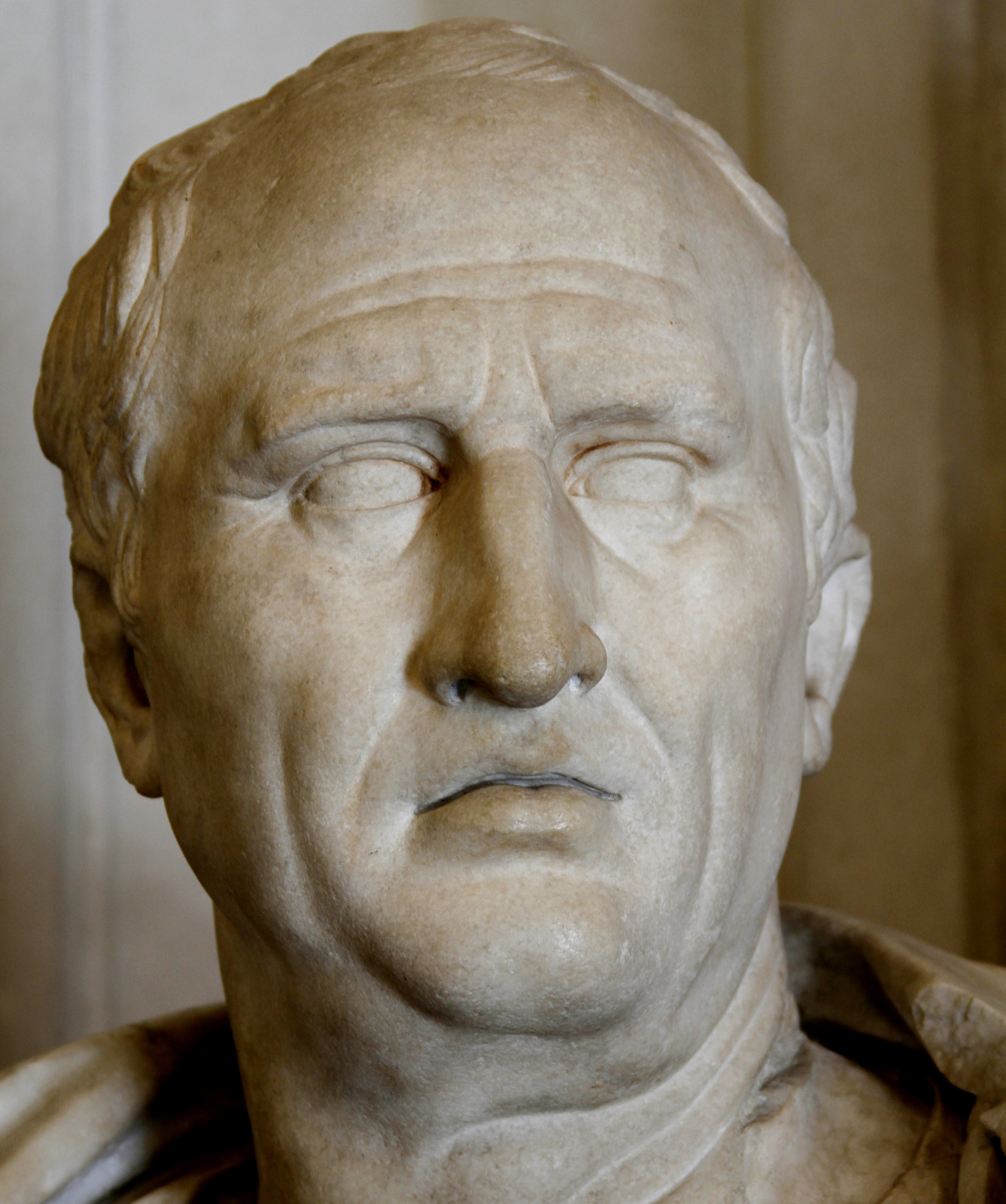
Cicero, feared or liked?

Cicero pointed all this out most eloquently. As a philosopher he thought things through carefully and deeply and then expressed his ideas clearly, giving plenty of reasons and examples.

The great Roman orator, lawyer, politician, philosopher and author, Cicero has left us a great legacy. He wrote on many topics that are as relevant today as they were when he dictated them to his trusted slave, Tiro.

Tiro was a gifted and hard working person in his own right – he invented a form of shorthand and left a good deal of written material that has survived. He was given his freedom by Cicero but chose to continue working for him. One piece of work dictated by Cicero concerns the good and bad motives people may have. He considered how becoming feared and becoming liked can both bring benefits, but the first is dangerous while the second is not.

When a person is feared, they may find a wide circle of supporters to do their bidding. Think in terms of Vladimir Putin, generally the people around him do his bidding because they do not wish to fall from a high window or drink poisonous tea. There are plenty of people who have died or nearly died because they have crossed Putin in some way – from Sergei Skripal to Yevgeny Prigozhin. Many political opponents have died while imprisoned. Examples like these cause others in Putin’s circle to be carefully obedient. Yet Putin himself is always in danger and must live under a permanent cloud, fearful that at any moment he will be toppled from power and most likely be murdered in the process.

On the other hand, live a life in which you are surrounded by friends who love you because of your kindness and thoughtfulness, and you will also have a wide circle to work with you and for you, but you will have far fewer anxieties, fears, and sleepless nights.

Cicero pointed all this out most eloquently. As a philosopher he thought things through carefully and deeply and then expressed his ideas clearly, giving plenty of reasons and examples. What Cicero must have realised (but did not express) is that most of us, most of the time, are feared by some yet liked by others. Cicero himself was no exception. He had political enemies and was murdered by the roadside as he attempted to flee from Italy.

There are three ways to learn more about Cicero, and it’s well worth doing so. Many of his arguments are as interesting and useful today as they were two thousand years ago (we would write 2000, Tiro would have written MM).

One way is to read Cicero’s writings for yourself. Much has been lost no doubt, but much has been preserved too – often thanks, in part, to Tiro. A second way is to read what historians and commentators have written about him. The third way, and perhaps the one that is most fun, is to read Robert Harris’s famous and fascinating Cicero trilogy. Yes, it’s fiction; but it’s skillfully woven around what we know of the characters portrayed.

See also:

Cicero

If only the government had stood firm on the lines it was starting to follow! Instead of succumbing to creatures who were not seeking its reform at all, but its total obliteration.

Cicero (Mediawiki)

Below is a passage from Cicero’s work ‘On Duties’. We need a bit of background before I quote him. Cicero had been a lawyer, arguing cases for prosecution or defence, and he had a good deal of success in these endeavours. After a successful legal career he went into politics, working his way into the Senate, and then eventually being elected Consul.

But now the political process in Rome has changed, and instead of the Senate and other elected offices of state ruling Rome, the democratic element such as it was has been swept aside, first by a group of three and finally by the Dictatorship of Julius Caesar. Prior to this, a Dictator would be appointed for a limited time in case of great need. But now Caesar has taken the temporary role and made it permanent. (This brief summary leaves out a great deal, for more detail read the Wikipedia articles on Cicero and Caesar.)

The democracy of Senatorial Rome has ended. The dictatorship of Imperial Rome has begun. Cicero clearly understands the danger, and warns against it. Here is what he writes:

As long as our country was still governed by men it had voluntarily elected as its rulers, I was delighted to dedicate all my efforts and thoughts to national affairs. But when the entire government lay under the domination of a single individual, no one else but he any longer had the slightest opportunity to exert statesmanlike influence in any way whatever. Besides, I had lost the friends who had worked with me in the service of the State; and great men they were. When they were gone, I refused to give way to my distress – if I had not resisted by every possible means it would have overwhelmed me. Nor, on the other hand, did I just abandon myself to a life of pleasure; to do that would have been unworthy of an educated man.

If only the government had stood firm on the lines it was starting to follow! Instead of succumbing to creatures who were not seeking its reform at all, but its total obliteration. If things had gone better I should never have been devoting my attention to writing, as I am now. No, I would have been delivering public addresses, as I used to in the days when we still had a government: and if I wrote anything it would have been those speeches – just as I always wrote down and published my speeches after I had delivered them – it would not have been these essays I am engaged in now. Every scrap of my energy, attention and care used to go to politics. So when there was no such thing as politics any more, it was inevitable that my voice should be heard in the Forum and Senate no longer.

(The translation is from CICERO on the good life by Michael Grant.)

Does this sounds a little bit familiar? It should! We can identify democracies in our own times. Germany was a democracy before Adolf Hitler and the National Socialist Party seized power. Russia was a democracy under Boris Yeltsin until the presidency was transferred to a younger Vladimir Putin.

And what about the democracies of the USA and the UK today? They are still democracies for the time being, but how long will they last?

Adolf Hitler and Vladimir Putin came to power in democracies, but then tweaked the rules to give themselves additional powers and longer terms in office. Do we see the same kinds of manoeuvring by Donald Trump and the extreme right in the USA and by right wing politicians like Boris Johnson and Nigel Farage in the UK? So far, people like these have not been able to change electoral processes, but Trump has tried and so far failed, while Johnson and others may have used distortion and misrepresentation.

Intimidation and violence were used as levers of political change in Rome, and those methods are also being employed in our own day. Look at the words and actions of the far right across the world in recent years. We should all be concerned, some of today’s best and most moderate politicians have been elbowed aside – notably in USA’s Republican Party and the UK’s Conservative Party. And the same trend seems to exist everywhere in the wider West.

Just like Cicero, we should be alarmed, and careful, and work against the slide towards authoritarianism and power in the hands of individuals. A very great deal depends on the survival and flourishing of democratic government or we risk sliding into a new dark age of untempered authoritarianism.

Useful? Interesting?

If you enjoyed this or found it useful, please like, comment, and share below. My material is free to reuse (see conditions), but a coffee is always welcome!