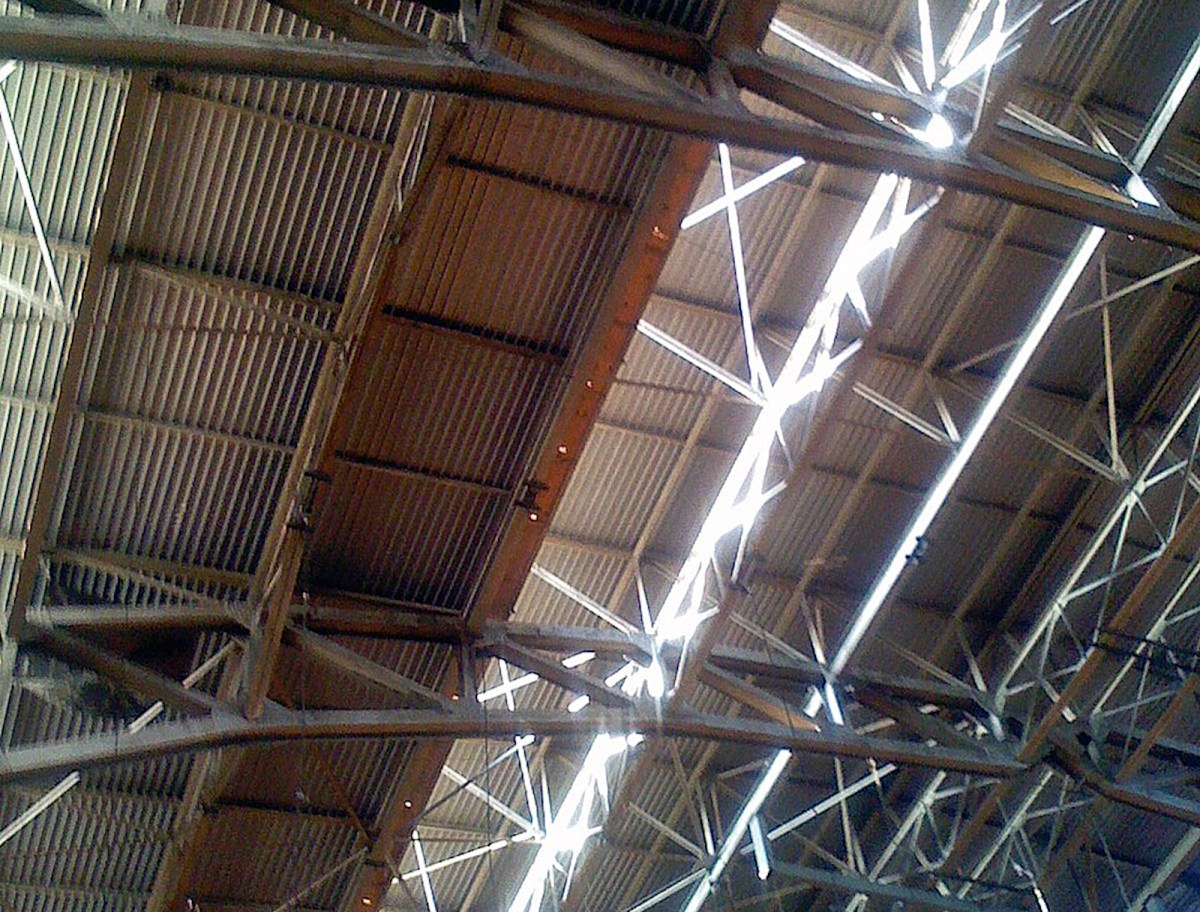
A steel girder structure
< Previous – Index – Next>
We’ve thought now about the foundations of church and we’ve considered things that are often seen as foundational, yet are not. These are important distinctions. This time we’ll start to consider what follows from this.
The most import thing that follows is recognising we are not here to tell one another what to do or how to go about it. I do what he calls me to do, and you do what he calls you to do. There are no hierarchies in church life. We all have a place and a function, but we don’t tell one another what to do, or when, or how. This doesn’t mean we can’t talk about it, encourager is a ministry gift and we’d struggle without it sometimes. But there are no people managers in church life, or rather, there is only one and his name is Jesus.
First I need to explain what I mean by ‘who we are’ on the one hand, and ‘what we do’ on the other. Basically, all people can be defined by who they are and by what they do. But to me, being is fundamental, doing much less so; I believe that’s true for all people because what we do springs ultimately from who we are.
If you want an example, look no further than Donald Trump. He bullies people and nations, he often seems to act or speak before thinking things through, and he’s always looking for ‘a deal’ that will benefit him, or the USA in some way. Why does he behave like this? Because it’s in his nature, and his lived experience is based on his nature as well, so what he does is natural but is also amplified and reinforced by a long life of living that way. Think about Claude Monet, Adolf Hitler, Albert Einstein, Isambard Kingdom Brunel or Charles Dickens; their actions sprang from their personalities and natures; they began with character and their behaviour found its source there.
We’re all fundamentally like that. We have a character and a nature as well as a lifetime of learning and practice based on those things. My behaviour, and yours (what we do) is based on our characters and our experiences (who we are). I might be better than you at creating websites or conducting biological experiments. You will undoubtedly be better than me in other areas of life and ability, our abilities and actions spring from our natures and characters. What we do, and indeed what we can do comes from who we are, supported by much practice.
Who am I and what do I do in church?
Am I defined by what I do or by who I am? What makes me significant in church life? It’s no different than any other aspect of my life. I am defined by who I am.
I’m a child of my Father in heaven, I’m a brother (or a sister) of Jesus, I’ve been filled with his Spirit. I’m much more now than just a biological specimen in an organic body that will eventually fail. This is why I’m significant. If I matter to Papa, and to Jesus, and contain their Holy Spirit, and will live eternally in them and without the necessity of a physical body, what can I add to that by what I do?
So let’s look at the detail; what do I do? I continue for a little while longer in this frail, physical body. I read and study the Bible, I write blog posts that I hope may open up a new world for some of my readers, I care about my daughters and their families, I try to be a blessing and a guide and a help to my friends, to the people I meet as I live my life, I do my best to be kind and helpful to others. Is my significance in any of these things, or even all of it taken together? No, I don’t think it is. I do these things because of the significance I have in Christ. He is my source and my destination. He is the first and the last, the beginning and the end, I can do all things in him (Phil 4:13), and apart from him I can do nothing whatsoever (John 15:5).
Just as in the rest of life I’m defined by who I am, not by what I do. But over the two millennia between Jesus walking this Earth and my doing so, something fundamental has shifted. Jesus always taught that we’re defined by who we are. So did Paul, so did the other apostles. Paul wrote that he was laying foundations and that the only possible foundation is Christ (1 Cor 3:11). None of them said anything about studying the Bible, reading it every day, having clearly defined leaders, meeting in special buildings, or celebrating special days; all of that was invented by people who thought what we do matters and that right activity should be the guiding principle. But the people who had met with Jesus and been deeply changed by those encounters knew better! ‘I’m a son, a daughter, a much-loved child of Papa in Heaven. That’s the only thing that truly matters. That’s who I am, and I’ve been filled with the Spirit for my daily guidance, the Spirit of Christ is in me. Every day the Holy Spirit turns me to point in the right direction, and all I have to do is take a step. Tomorrow he’ll adjust the direction and I’ll take another step. I don’t need more detail than that, I don’t have to plan (though he does), but I just step out daily in faith.
Writing things down can clarify our thinking, it can be helpful and satisfying. That’s what’s happened here for me, I think. I’ve been making a conscious effort over the last few weeks to dig as deep as I can into this topic and try to come up with observations and understanding that will help me (and my readers) stand on the only foundation (Jesus) that is strong enough to provide his people with everything they need to grow and thrive and live in newness and freshness every single day. What we do can never support us in this, the best we can do will never be enough. we’re going to need the best that Jesus offers. Then, and only then, can church function as he intends it to. This, for me, is a statement of faith, I’ll go on standing on the only foundation worth choosing, that is… Jesus and when I finally leave this world, I will still stand on him and continue to draw from his strength and direction.
I don’t want to live my life according to tasks that need to be done (though there are always plenty of those!) I want to live my life out of Who I am in Christ. Isn’t that why John writes that ‘without Christ I can do … nothing’? And also Paul, that ‘I can do all things in Christ who strengthens me’?
I really do feel that this is essential for all my brothers and sisters also, but that it’s somehow been squeezed out of much of the teaching of the churches almost everywhere because doing the right things seems more important and more fundamental; in truth what we do is empty, it’s only as good as our own abilities and strengths and choices. I am not interested in programmes because I know that when I’m walking with Jesus, programmes are unhelpful. I believe, deep down, I’ve been called to recognise the difference between being and doing and share it whenever possible (not necessarily with words but perhaps more by behaviour). And I feel that as believers we are called to community so that we can listen to Jesus and the Spirit together and share what we are hearing and seeing day by day. And for that reason I greatly miss meetings where there are no leaders, and everyone present is waiting to hear what Jesus has to say about things and speak, sing, dance in whatever way will express what he is saying to his gathered body. Without us he is just a head, we are his body turning his thoughts and purposes into action. What future does a headless body have? None at all! No sense of direction, no sense of purpose, and quite unable to grow in the fruit of the Spirit – love, joy, peace, patience, kindness, goodness, fidelity (or faithfulness), gentleness, and self control.
So for the next few weeks I plan to continue digging into this stuff as deeply as I can, sticking close to Jesus along the way. I’m going to live in the presence as fully as possible and make notes on anything I hear or see so I can revisit them later. Will you join me in standing on the one, true foundation who is Jesus? We can live this adventure together in him!
I pray for abundant grace and peace to all my readers here on Journeys of Heart and Mind. And I urge you all to pay more attention to who you are, and a whole lot less on your activities. You just need to know that there is someone in charge and that you are part of a team, you don’t need to understand the overall strategy, you do need to let yourself be turned to the right direction and then step out for today. And you need a very simple faith that expects the one in charge to adjust your direction again tomorrow so that you can take one more step. You don’t need to plan, you don’t need to understand, you don’t need to be aware of your role or the big picture.
A question
Ask yourself, ‘Who am I?’ (Don’t ask, ‘What am I doing?’) Also, ask Jesus, ‘Who am I?’ He knows the answer better than you. If you ask him, ‘What should I be doing?’ he’ll say , ‘Don’t worry about that, Papa will make sure you know when the time comes. Meanwhile you are my sister, my brother, we have the same Father. He guides me with a little nudge here and a word there. You know what it’s like when you listen to a piece of music on Spotify or iTunes. You click Start or press the button and nothing happens – until it does! There’s an opening chord, a drumbeat, and the melody begins. And you recognise it instantly and join in singing at the top of your voice. It’s the old, old song of love, joy and peace, patience, kindness, overwelming goodness and faithfulness, gentleness and self-control, the great and familiar song you remember so well from Galatians 5:22-23! You were not being asked to do something difficult or learn something new! You are learning, quite simply, to be obedient.
A dream?
One night a few weeks ago I had a dream, I rarely wake up remembering a dream, but this was an exception. I was living in Cirencester during the Second World War (I’m not that old, but in the dream it was during the war). I was working with a construction crew on a specialised site of some kind, we were building several structures out of steel girders according to a plan we’d been given. We had no idea what they were for. When these objects were finished we had to move them to Stamford in Lincolnshire.
I don’t know how well you know Stamford, but Donna and I had friends there when we lived in St Neots so we know the town well. It’s like a Cotswold town in many ways as it lies on the same band of oolitic limestone that is so familiar here in the Cotswolds. I have no idea how we moved these building-sized steel structures from Cirencester to Stamford! But it didn’t seem to be a problem in the dream.
But when we arrived we found a site already prepared where they were a perfect fit and a team of workers who were expecting them to arrive and knew exactly what to do with them. That was all we needed to know and we just travelled back to Cirencester understanding that there was a designer somewhere who’d done the planning and had made all the necessary arrangements.
See also:
- The apostolic gift – Journeys of heart and mind
- Last words from JDMC – Journeys of heart and mind
< Previous – Index – Next>
Useful? Interesting?
If you enjoyed this or found it useful, please like, comment, and share below. (If you don’t see those links, click the article’s title above the main photo and they will appear.) Send a link to friends who might enjoy the article or benefit from it – Thanks! My material is free to reuse (see conditions), but a coffee is always welcome and encourages me to write more often! 


 Journeys of Heart and Mind
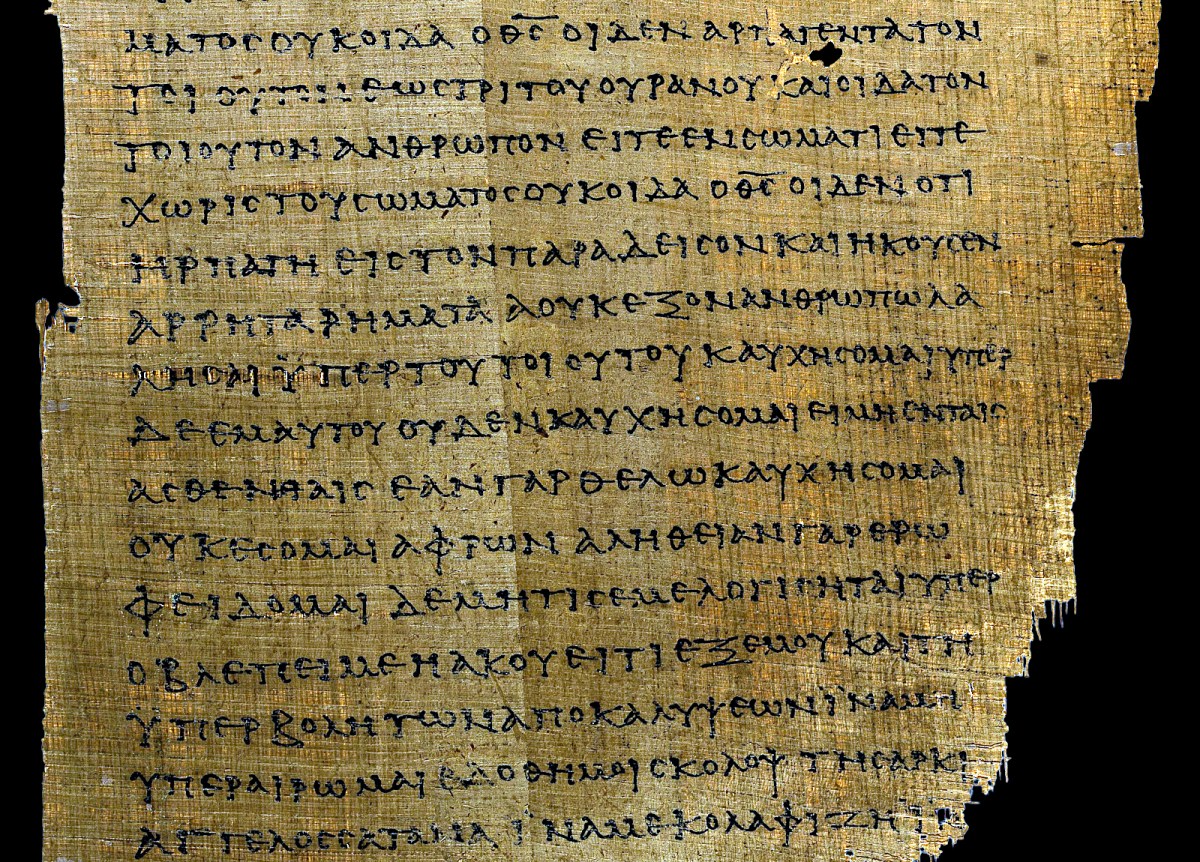
_fol._142r_-_2_Corinthians_11,33-12,9.jpg)