Institute of Astronomy, Cambridge (Wikimedia)
Science and technology – 6

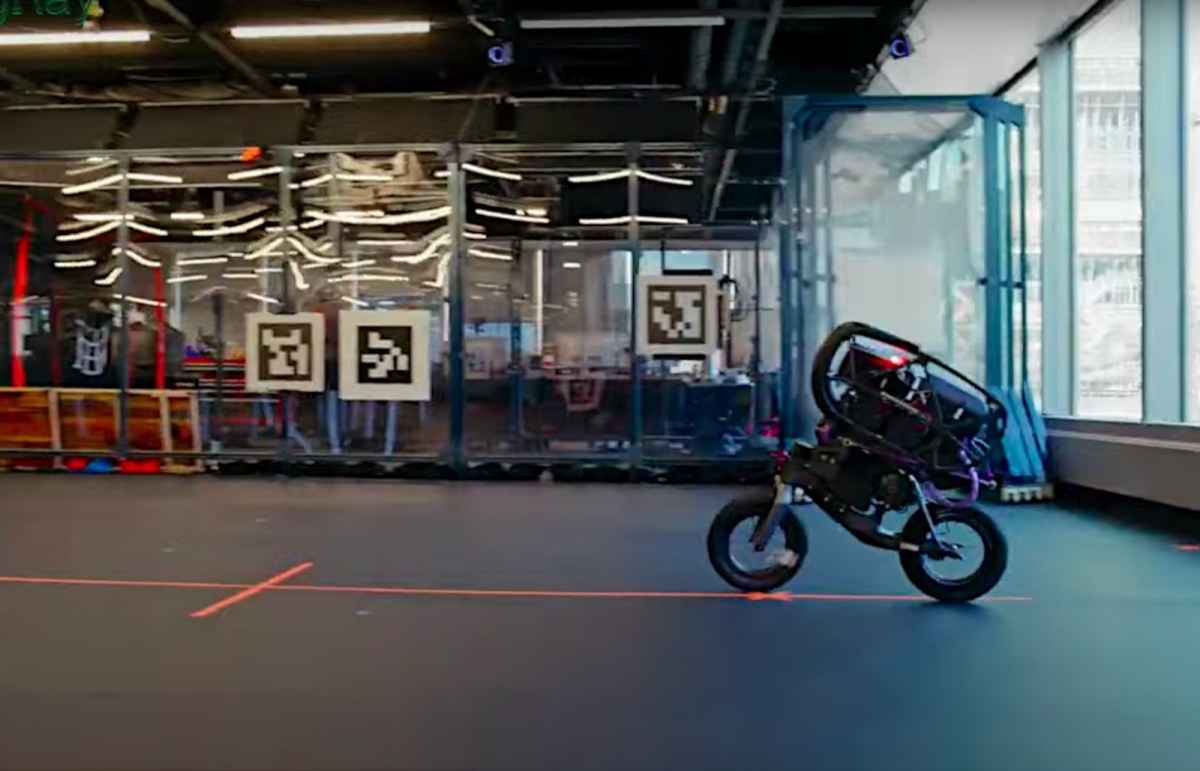
Here’s a robot doing the kinds of things well-programmed robots can do. You might think nothing of it, we’ve all seen videos of robots dancing, jumping and performing difficult tasks and manipulations. But this bike-balancer is a bit different. It has an AI system with a feedback mechanism that learns how to balance better and better with practice. This is how all animals with nervous systems learn new behaviours and improve their performance at practical tasks and skills. It’s still nowhere near Artificial General Intelligence (AGI) but it might be a small step along the way.
With this achievement under their belts, the developers will undoubtedly try the same method to develop robots that can handle tasks like juggling, sorting items, removing incorrect objects from a moving belt, or bolting two items together using a spanner. It may become possible to train a robot by simply showing it a task and correcting it when it makes mistakes. This would be far quicker than having to program the actions in the traditional way. It would probably be impossible to know how the robot makes decisions on the best movements to get a particular job done, but that’s true with training people to do jobs too. Very often, the how is not important providing the result is reliable and effective.
See also:
- Artificial Intelligence – Wikipedia
- Earlier robot cyclist – JHM
- Robotics and AI Institute – Website
- Robots – YouTube search
Useful? Interesting?
If you enjoyed this or found it useful, please like, comment, and share below. (If you don’t see those links, click the article’s title above the main photo and they will appear.) Send a link to friends who might enjoy the article or benefit from it – Thanks! My material is free to reuse (see conditions), but a coffee is always welcome and encourages me to write more often! 


 Journeys of Heart and Mind

