What’s in an image? Sometimes quite a lot, more than meets the eye.
I’m posting an image every two days (or as often as I can). A photo, an image from the internet, a diagram or a map. Whatever takes my fancy.
Click to enlarge
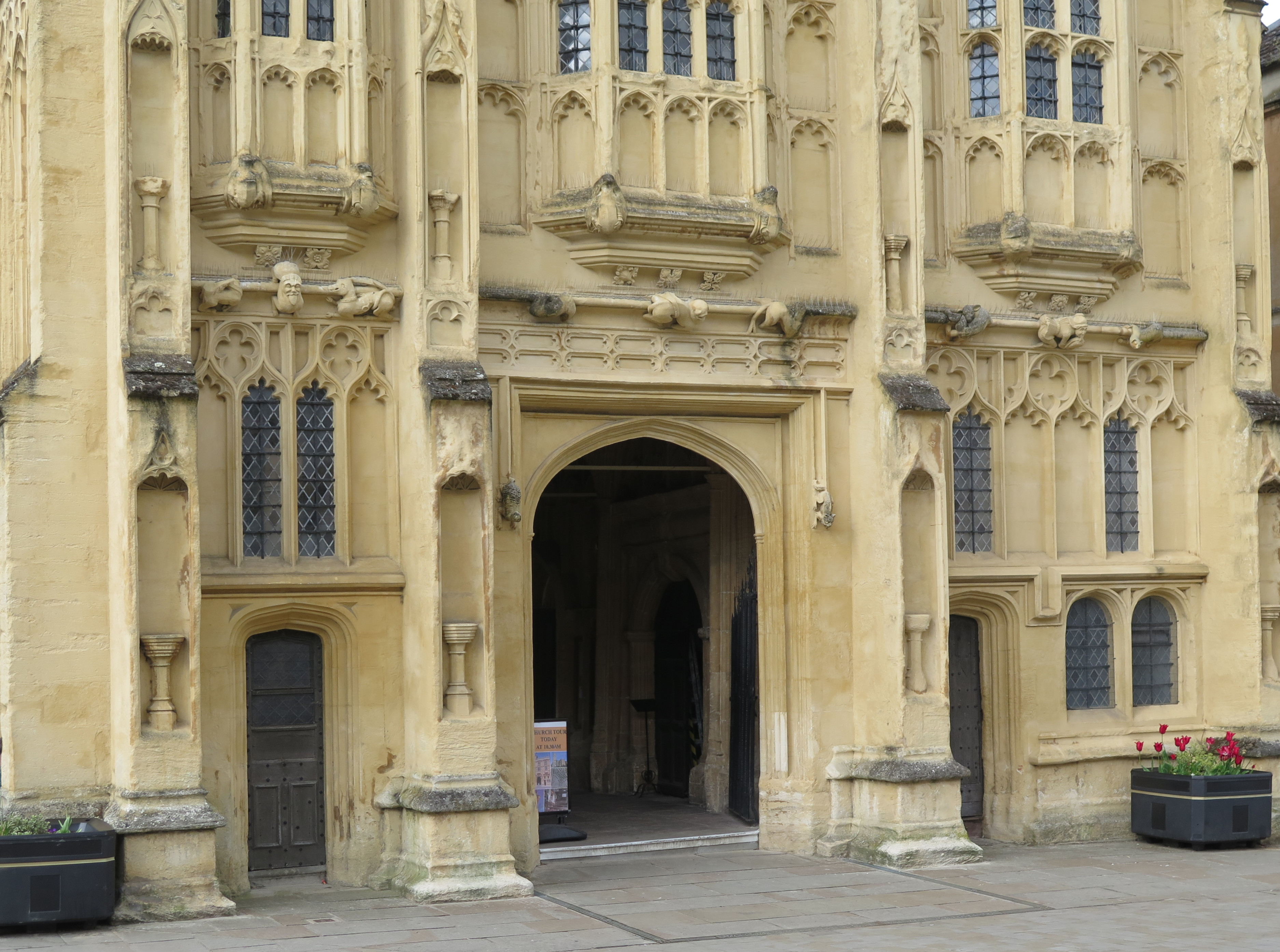
This is the porch of Cirencester’s Parish Church, St John the Baptist. It’s used as the main south entrance into the Church, and the door on the north side is also usually open, but the main West Door is kept closed and bolted. A three storey porch is a rarity, and in fact the two upper floors were once used as the Town Hall. But it seems the porch was built by the nearby Abbey as administrative offices and only attached to the Parish Church after the Abbey was dissolved.
This image shows the front detail, but I’ll post another photo soon showing the entire building. The architecture is interesting, with carved animals both real and imaginary, and niches for statues, now empty.
I think there’s something we can learn from this. There was an uneasy rivalry between the Abbott and the townspeople in medieval times. It’s thought that Cirencester was given a royal charter at one time, but the Abbot got hold of it somehow and destroyed it. Building the administrative centre right in front of the Parish Church makes me wonder about the motives involved in that, as well. Maybe there are other explanations I’m not aware of.
But we should always strive to get on well with those around us. It takes two to argue, but it also takes two to agree and agreement is usually better in the long run. In the uneasy relationship between abbey and town, the town had the last laugh when Henry VIII dissolved the abbey. And the town used the building in the picture and later gave it to the church to be added to the structure as perhaps the grandest church porch in all England!
Cirencester
For convenience, here’s a list of all the Cirencester area images:
If you enjoyed this or found it useful, please like, comment, and share below. (If you don’t see those links, click the article’s title above the main photo and they will appear.) Send a link to friends who might enjoy the article or benefit from it – Thanks! My material is free to reuse (see conditions), but a coffee is always welcome and encourages me to write more often!
What’s in an image? Sometimes quite a lot, more than meets the eye.
I’m posting an image every two days (or as often as I can). A photo, an image from the internet, a diagram or a map. Whatever takes my fancy.
Siddington canal bridge
Cirencester and its surroundings have changed dramatically over the years. This old bridge in Siddington takes a country lane over the old Thames and Severn canal. Although the canal is derelict, looking down from the bridge you get a clear view of the ladder of locks that used to be here. The good news is that the canal is being restored and is already in water again through Stroud. It will be reconnected to the national canal network within the next three years or so. Work has also started at the Cotswold water park, repairing the section from the spine road to Latton, and in Lechlade where it joins the Thames.
Sadly, there is no plan to restore any part of the Cirencester Arm of the canal, but it’s possible to trace the route of the towpath almost the entire way from Siddington to the bottom of Querns Hill where Cirencester Wharf used to see the loading and unloading of cargo.
Cirencester
For convenience, here’s a list of all the Cirencester area images:
If you enjoyed this or found it useful, please like, comment, and share below. (If you don’t see those links, click the article’s title above the main photo and they will appear.) Send a link to friends who might enjoy the article or benefit from it – Thanks! My material is free to reuse (see conditions), but a coffee is always welcome and encourages me to write more often!
What’s in an image? Sometimes quite a lot, more than meets the eye.
I’m posting an image every two days (or as often as I can). A photo, an image from the internet, a diagram or a map. Whatever takes my fancy.
Yellow flag Iris
These beautiful, water tolerant, native Irises pop up every year in the waterways in and around Cirencester. The photo was taken at the junction of Riverside Walk and Gloucester Street right by Abbey Way Services. The photo was taken in May, just as they were reaching their best.
Although our natural environment is struggling to cope with the many pressures we put on it, some species manage to do quite well. This is one of them. But there are many others that are in danger. Some of these, plants and animals, are fairly stable or even recovering in and around the Cirencester area with careful conservation management. Examples include the lovely snakeshead fritillaries that flower abundantly in North Meadow just south of Cricklade, pasqueflowers in a strong colony to the north of the town near the Stow Road, and the large blue butterfly on a reserve west of the town and on common land near Stroud.
NOTE: If you visit any of these sites, please treat them with respect. Stay on marked paths if they’re available, avoid trampling on plants, stay out of restricted areas, and definitely don’t dig anything up. Pay attention to signs and notices. Thanks!
Other species, once rare but now much more common include red kites, you’ll see these frequently in the skies around Cirencester, often flying very low, even over housing estates. Back along Riverside Walk you may be lucky enough to see a heron, a kingfisher, or a little egret.
Cirencester
For convenience, here’s a list of all the Cirencester area images:
If you enjoyed this or found it useful, please like, comment, and share below. (If you don’t see those links, click the article’s title above the main photo and they will appear.) Send a link to friends who might enjoy the article or benefit from it – Thanks! My material is free to reuse (see conditions), but a coffee is always welcome and encourages me to write more often!
What’s in an image? Sometimes quite a lot, more than meets the eye.
I’m posting an image every two days (or as often as I can). A photo, an image from the internet, a diagram or a map. Whatever takes my fancy.
Christmas lights
This is Cirencester Market Place on 5th January 2021, still in its decorated-for-Christmas state. In the 17th century this space was full of buildings and narrow streets. Roughly where the red car stands, imagine an old inn with a street either side, and beyond it two rows of buildings, Butter Row and Butcher’s Row, so three streets at that point. Many old buildings were destroyed in town improvement schemes over the years. If they still existed today they would attract preservation orders.
If you could visit the Market Place in 1500 you would struggle to recognise anything other than the Parish Church. All the fine, Cotswold stone buildings were constructed more recently than that, the shops and dwellings at that time would have been timber framed with overhanging upstairs floors. The entire look and feel of the place would be different. At that time the Abbey was thriving with the Abbey Church behind the existing Parish Church. The entirety of what is now the Abbey Grounds would have been busy with monks on errands and at work in the gardens, at the fishing lake (still there today), in the mill and bakery and so much more. It was almost a walled town within a town.
In the year 1000, shortly before the Norman invasion, some of Saxon Cirencester may still have been outside the old Roman walls, but there was a Saxon church in the area of the Abbey Grounds and it’s likely that other parts of the Roman City would have been cleared and put to use.
And in the year 500 the Romans had left only 100 years earlier. The city would have been more or less intact, but derelict. Initially, Saxon settlers lived outside the old city walls. Some of those walls would still have been standing, at least in places, and the larger buildings inside the city would have been identifiable – the Basilica, the Forum, and probably Baths and a Theatre (now lost). The Saxons built timber framed houses and farms initially outside the walls. Piles of rubble and stone, no doubt ridden with extensive and impenetrable growths of brambles and trees, would have seemed far less useful than the arable land outside the old walls.
Go back another five hundred years and the area where the town now stands consisted of a flood plain with low gravel banks and the River Churn meandering through. There would have been yellow iris, water mint, alder and willow in wetter areas with other trees on higher ground. The waterways would have been easily forded and the local Dobunni people likely fished in the area and farmed on higher ground nearby. The Roman army constructed the Fosse Way from Exeter to Lincoln and built a timber fort in the eastern part of modern Cirencester. It’s likely that a trading settlement grew up near the fort and the town was officially recognised in 75 CE. By the later Roman period it had become the second largest city in Britain (London was the largest).
All of this took place in and around the area we know today as Cirencester Market Place.
Cirencester
For convenience, here’s a list of all the Cirencester area images:
If you enjoyed this or found it useful, please like, comment, and share below. (If you don’t see those links, click the article’s title above the main photo and they will appear.) Send a link to friends who might enjoy the article or benefit from it – Thanks! My material is free to reuse (see conditions), but a coffee is always welcome and encourages me to write more often!
What’s in an image? Sometimes quite a lot, more than meets the eye.
I’m posting an image every two days (or as often as I can). A photo, an image from the internet, a diagram or a map. Whatever takes my fancy.
Stone plaque, Cirencester
This intriguing carved, stone plaque is in Cirencester’s West Market Place, close to the Parish Church. The Latin inscription ‘VIRTUTE ET INGENIO’ is interesting; ‘VIRTUTE’ can mean ‘virtue’, ‘courage’, ‘strength’ or ‘power’; ‘ET’ is ‘and’; while the word ‘INGENIO’ means ‘wit’ in the sense of cleverness, not humour. So the best I can offer is ‘strength and cleverness’, the English expression ‘brawn and brains’ sums it up quite well.
The shield above contains a rampant lion with two tails, holding up what looks like a rose. And on either side is a shoot of ivy, each with one ivy flower cluster. Do those two tails refer to the idea of something twofold, perhaps the need to be strong in both action and thought, body and mind?
Maybe someone in Cirencester knows the meaning and history of this interesting artefact. But meanwhile I’ll just take it as very sound advice that we need to think things through properly, and then act on whatever conclusion we might come to. Action without thought is usually a waste of effort, thought without action is ineffective. Thinking it through and then doing it is the way to go!
Cirencester
For convenience, here’s a list of all the Cirencester area images:
If you enjoyed this or found it useful, please like, comment, and share below. (If you don’t see those links, click the article’s title above the main photo and they will appear.) Send a link to friends who might enjoy the article or benefit from it – Thanks! My material is free to reuse (see conditions), but a coffee is always welcome and encourages me to write more often!
Notes from bygone years – September after September after September. Hint: Click on the thumbnails for larger images.
September 2023 (1 year before publishing this article)
From time to time we visit Donna’s brother Paul and his wife Ness in Weston-super-Mare, and their two Labradors (pictured). They are sisters, but they have different temperaments, just like people. On this visit, Paul and Ness were heading off for a holiday so Donna and I looked after the dogs for the week.
One of our favourite walks is to take the dogs to the beach for exercise and then to Stones Cafe, a seafront place where we like the breakfasts, so we get a treat before walking home. If we just take Maizi, she gets a dog sausage as well, but fatty foods are a problem for Marple.
We finished our family holiday in the Pennines, and drove home on 2nd September. And the very next day we set out again to drive to the village of Llantisilio in Pembrokeshire for a week with Paul, Ness, Isobel and the dogs.
It was during our stay that we heard about the death of the Queen and the accession of Charles III.
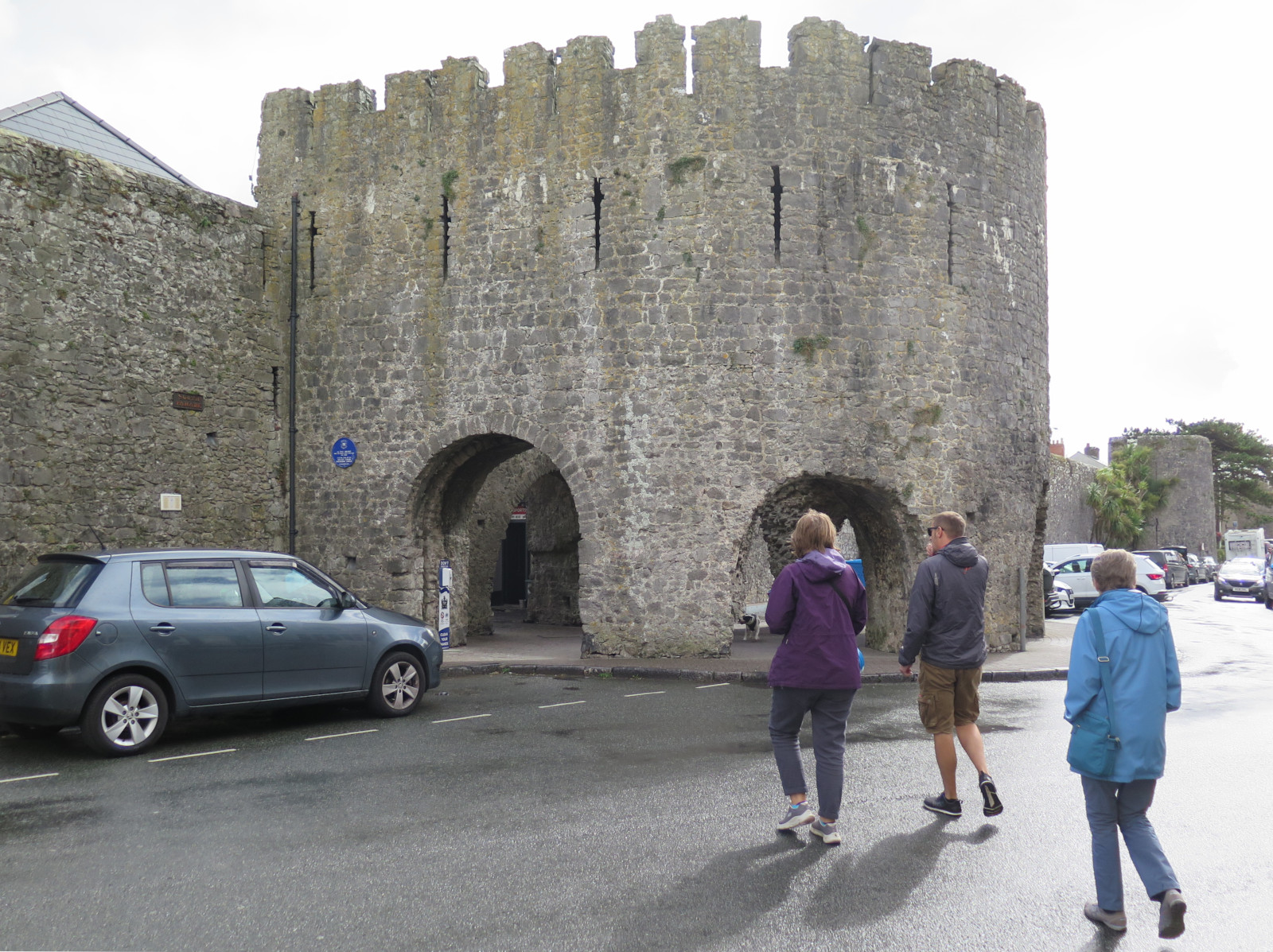
One day we drove to Tenby to look around and visit the indoor market, and we unexpectedly bumped into some friends that we’d made a few years ago in Cirencester, who have since moved to Yorkshire. And here they were in Tenby!
World events: The G7 Imposed a price cap on Russian oil exports; and Liz Truss was appointed Prime Minister of the United Kingdom.
The fencing around our back garden was finished, and we were very pleased with it.
I was working on some decorating in Tony and Isobel’s new house, next door but one to ours; having them living close would make it far easier for Donna to help her Mum cope as Tony deteriorated (he had Parkinson’s). A local builder made some alterations for them, including bricking up an unwanted door.
JHM: I wrote an index for articles on my family’s old business. World events: In the UK, Thomas Cook went bankrupt; and in the USA an impeachment inquiry began against President Donald Trump
Donna started her teacher training at the college in Stewartby; and at a Small Group meeting in St Neots she read out Ezekiel 47 and asked, ‘How deep are we prepared to go?’ This led to some good discussion. She was also helping with the Food Bank at this time.
I was meeting with my friends Matt, Kev, John, and Mo, we’d been reading the Bible together and trying to follow Jesus better. Meanwhile, the BBC reported the grim news that Islamic State had beheaded a British aid worker in Iraq.
We visited York to see Debbie, Beth and their families, Sara was six this month.
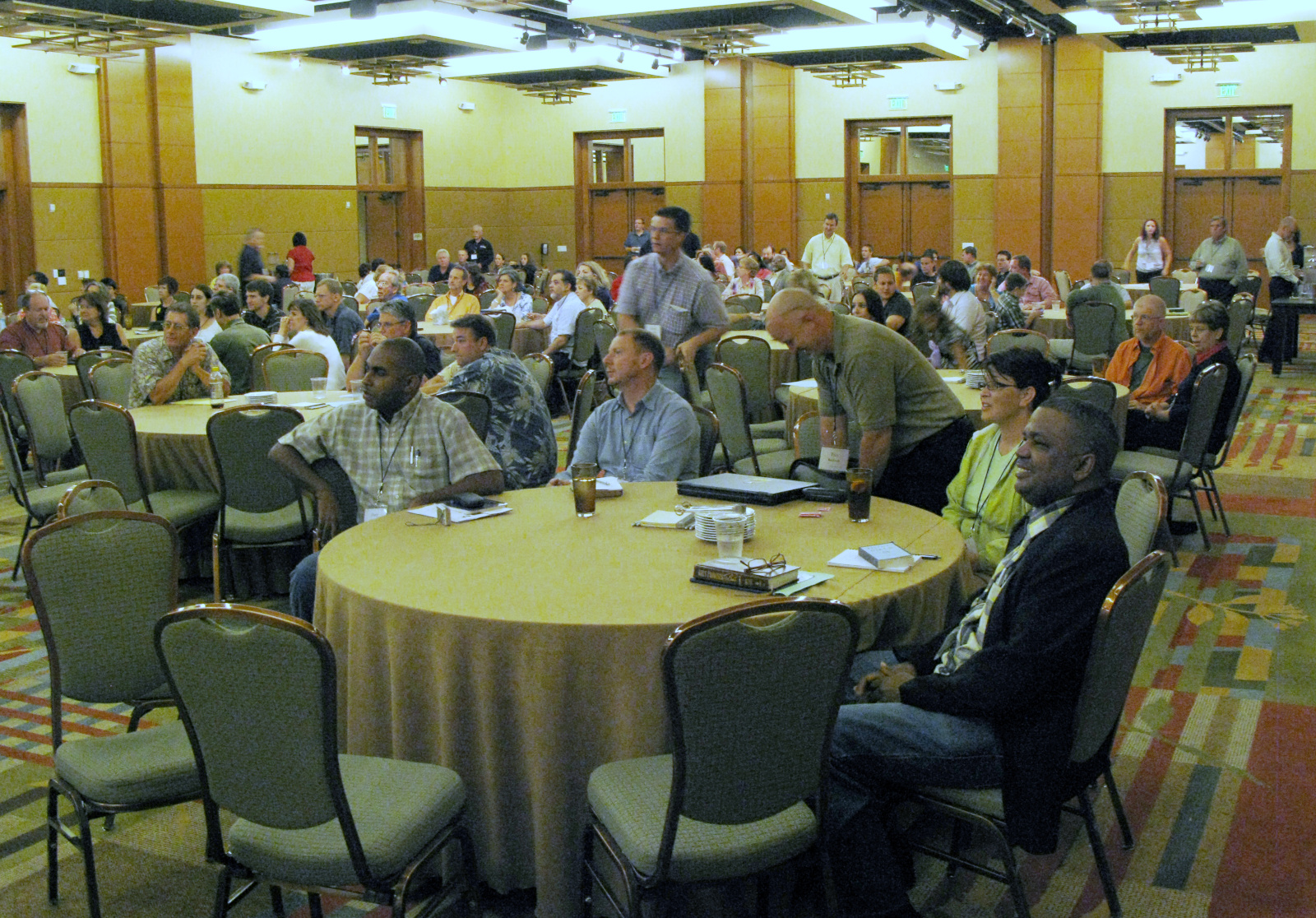
I flew to the USA for the House2House Conference in Dallas over the weekend of 2nd-6th. From there I flew to West Palm Beach to stay with Steph and Earl, then on to Boston on 14th to join up with Donna for a holiday, returning home via Gatwick on 26th.
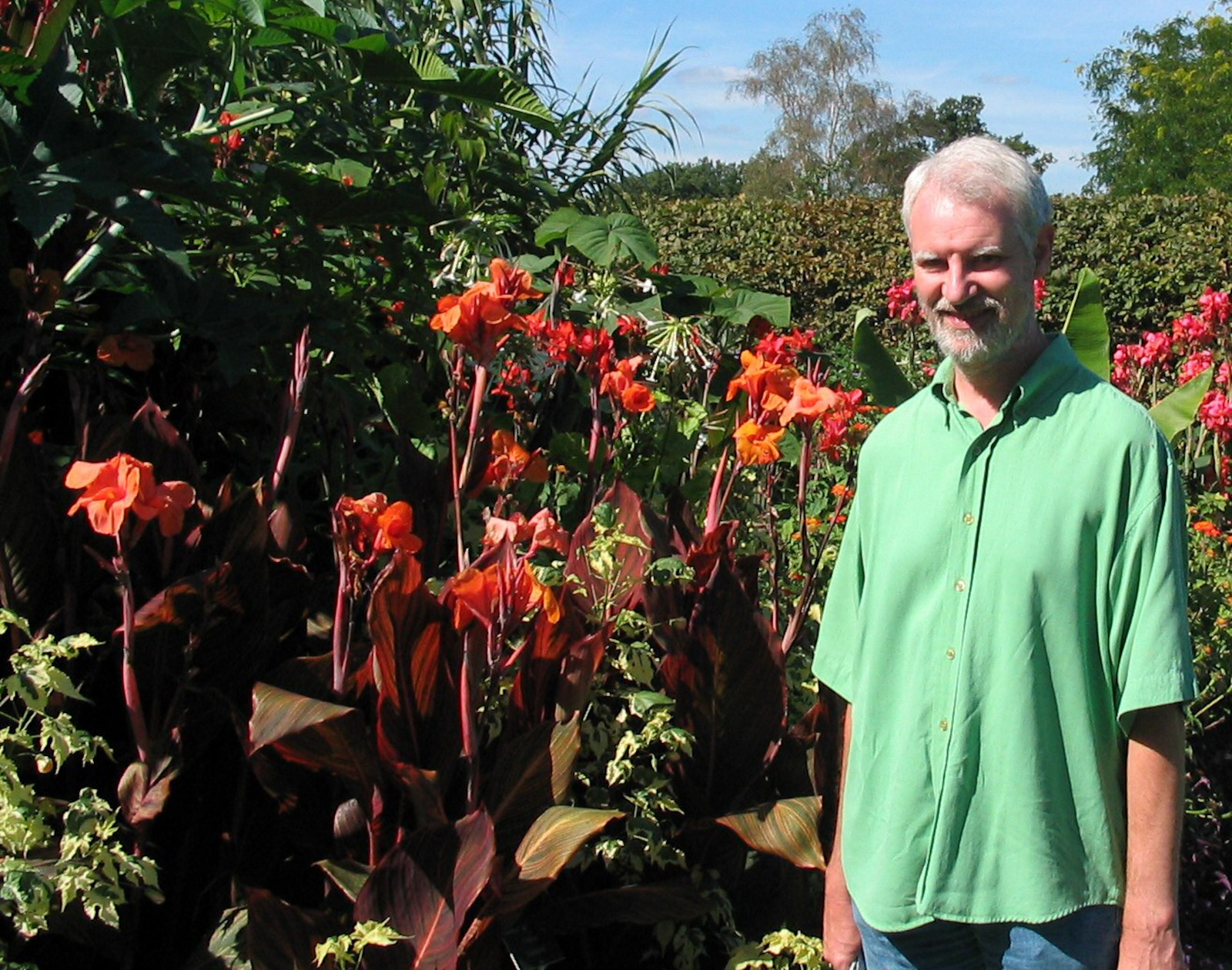
We drove down to the RHS Garden at Wisley and spent a good part of the day there exploring. There’s a lot to see! Donna managed to get this picture of me while we were there.
We’d been invited to a party in St Neots in the evening, but we still had enough time to look around quite thoroughly before driving home and getting ready for the evening event.
JHM:I posted meeting notes on Touch and seasons. World events:Chechen rebels took 1,128 people hostage; and West Sulawesi became the 33rd province of Indonesia.
We had a house-warming barbecue on 12th at our new home in St Neots, with a mix of guests from Unilever, Open Door Church and some neighbours.
On 17th we set off for a holiday in Sorrento. The photo shows the remains of a bakery in Pompeii, the grey devices are flour mills and you can see a brick-built oven in the background. Pompeii and Herculaneum were both amazing to see.
During surgery to remove Judy’s colon tumour, metastases were found in her liver. She was offered a course of chemotherapy (5-fluorouracil) but although this was likely to give her a few more years, it would not be a cure.
This was a shock to the whole family, I have few photos, documents, or notes for the year following Judy’s surgery.
World events: Britain lifted the Northern Irish broadcasting ban on Sinn Féin and paramilitaries; and the Taliban movement was founded in Kandahar, Afghanistan..
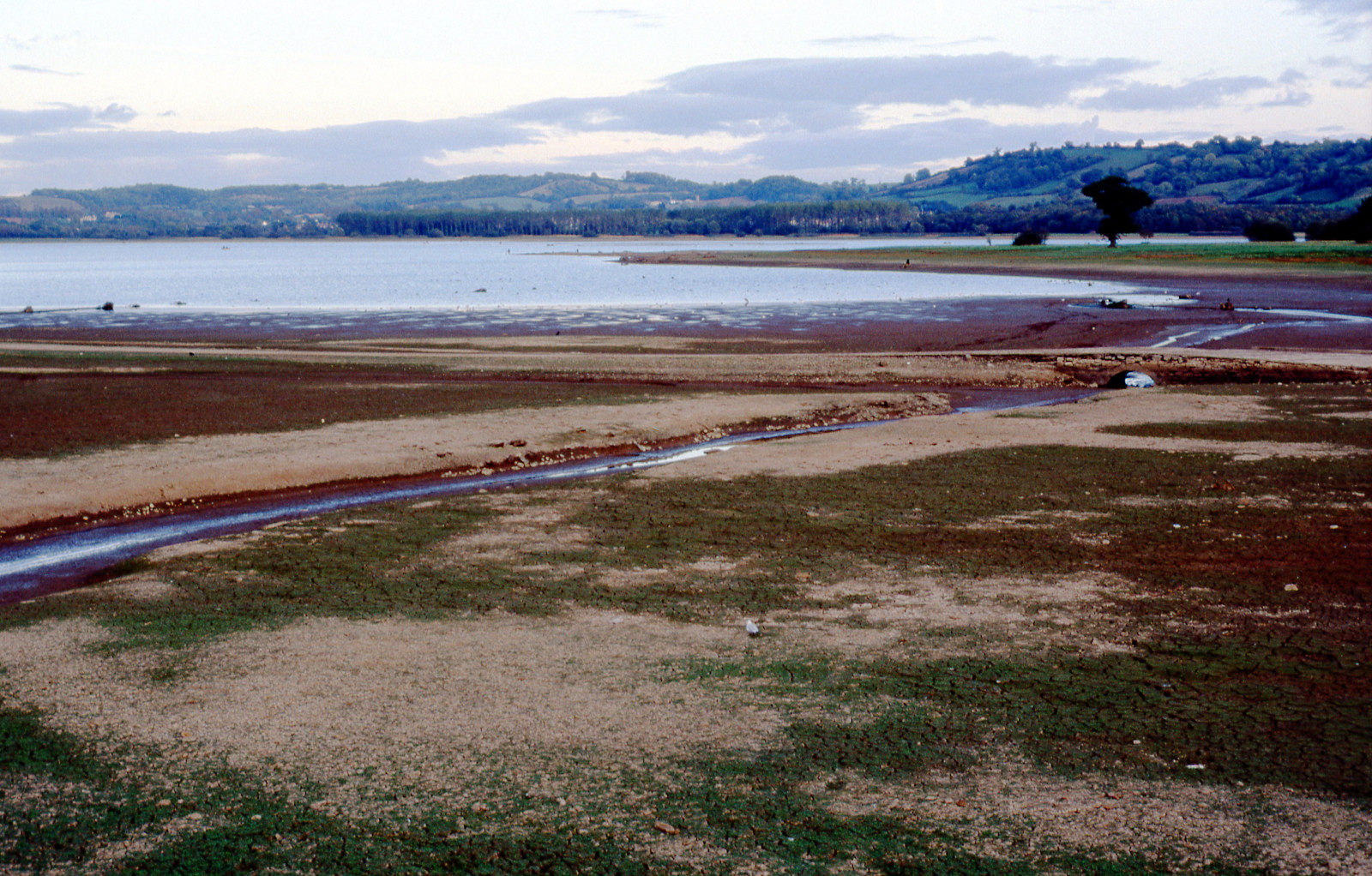
Due to lack of rainfall and a hot summer, the water levels in Chew Valley Lake fell to the lowest we could remember. The photo shows a road crossing the River Chew over a stone-built bridge, all of which would normally be under water.
World events: An IRA bomb exploded at the Royal Marine School of Music in Deal, killing 11 people; and Hurricane Hugo devastated the Caribbean and the southeastern USA.
It’s always fun to do something unusual. Here are Debbie and Beth eating outside in the sunshine, it was lunchtime judging by the direction of the shadows.
There are fully grown apples on the tree beyond the table, but unpicked so presumably not quite ripe at the time of the photo.
At this time we were busy with faith meetings of various kinds. Our band, Fountain, played and Judy spoke at Pill Baptist Church around 16th, and on 21st Colin Urquhart spoke at Portishead URC where I recorded his address in support of the coming Good News Crusade.
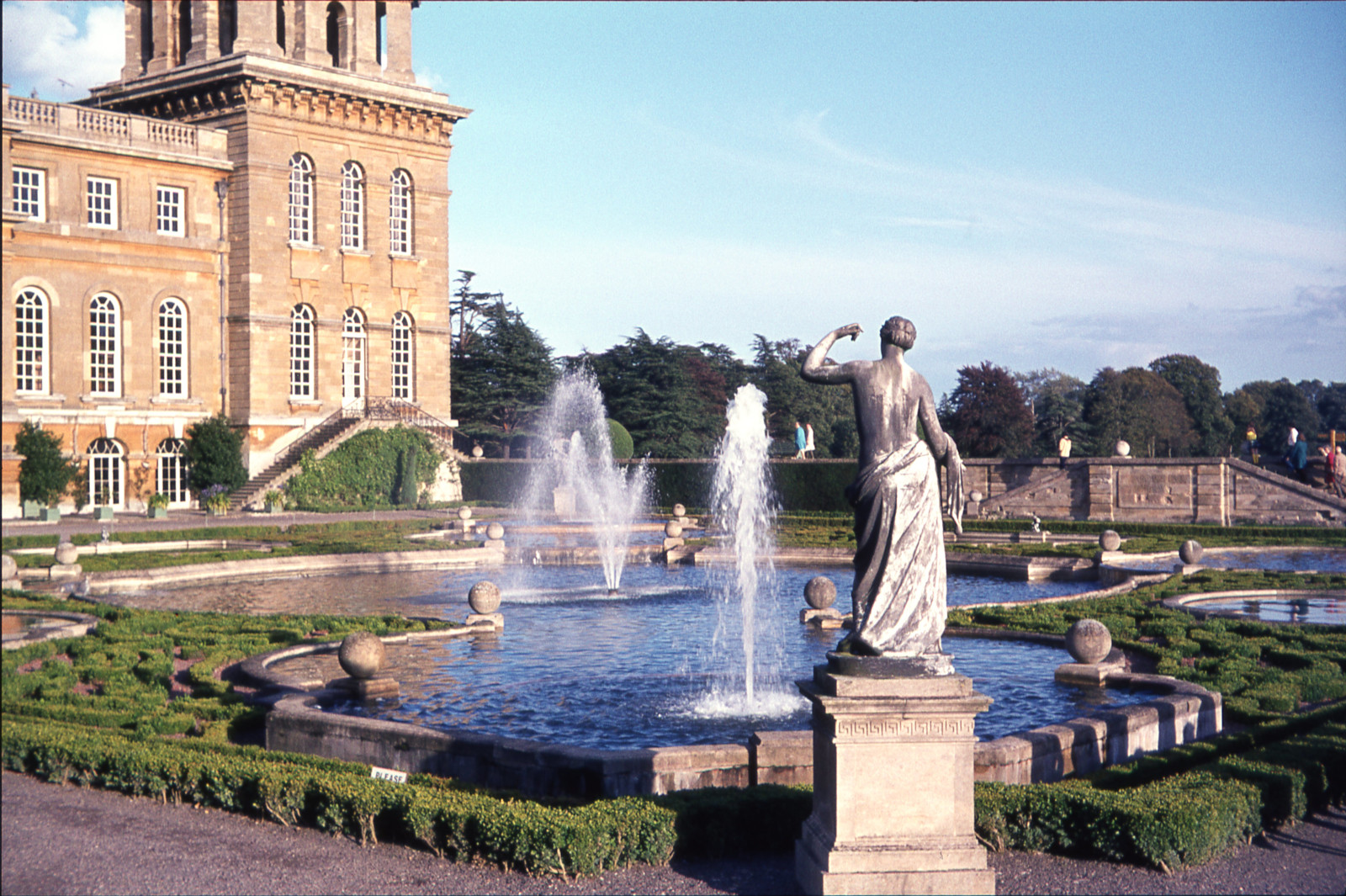
We visited Blenheim Palace, possibly with Judy’s Mum and Dad. It was a fine, early autumn day with a blue sky and strong sunshine.
Judy was pregnant at the time, we had no way of knowing whether to expect a boy or a girl (no ultrasound scans in those days), but in the event it would turn out to be Debbie. A highly satisfactory outcome!
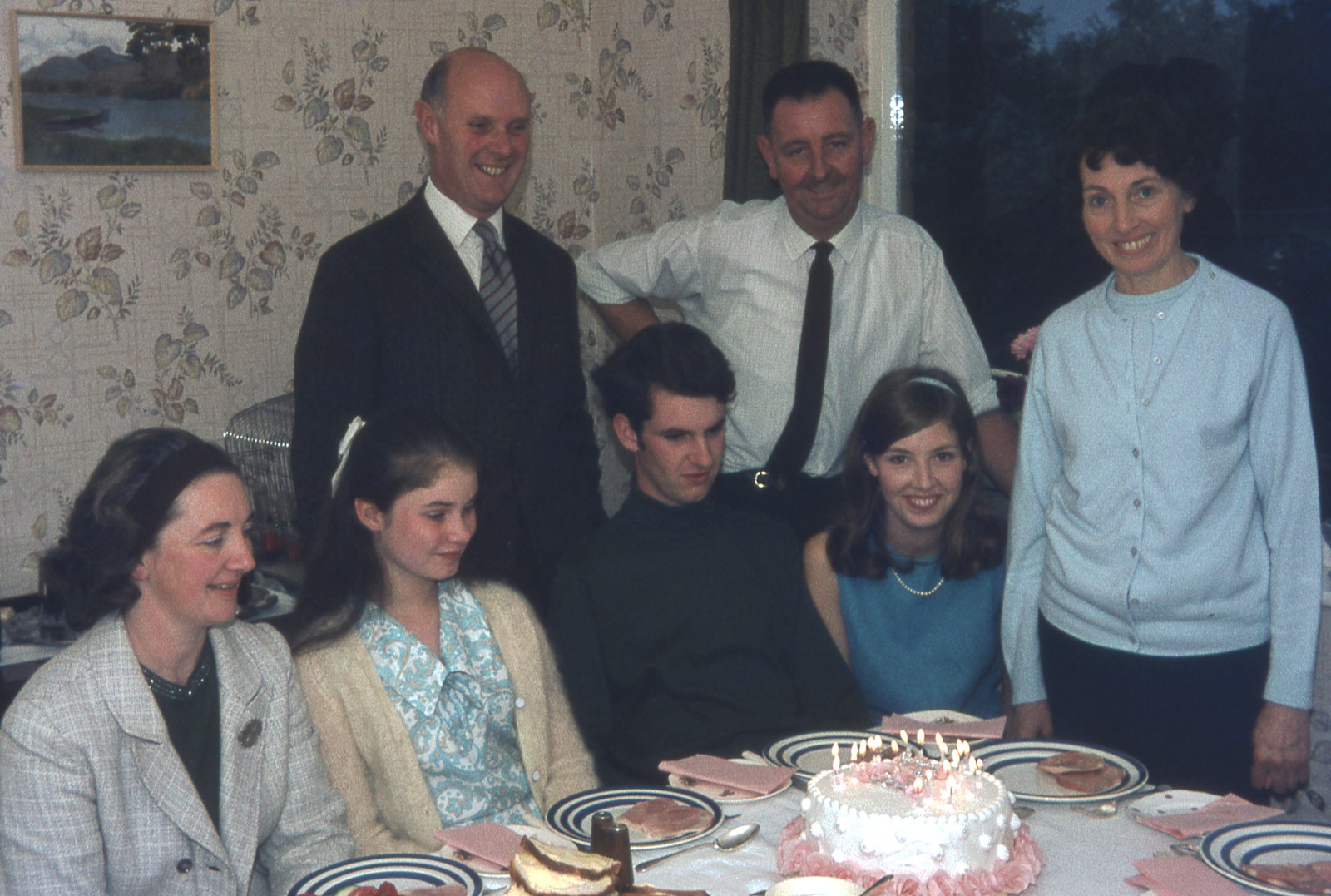
Judy’s 21st birthday was 10th September and we were all invited to Cheltenham for her party. I think this was at 18 Hales Close, and Judy’s brother Frank must have taken the photo. We were both about to head back to University for our final year, me to Bath and Judy to Aberystwyth.
Our Irish holiday continued into the beginning of September. This is the River Bann at Toome Bridge just north of Lough Neagh. Granda was a water bailiff on the Lough, protecting the eel fishery from poaching. The boat he took us out in is the one in the bottom-right corner.
World events: The Forth Road Bridge opened in Scotland; and the Beatles refused to play to a segregated audience in Florida.
After my Grandpa’s death and the funeral, Granny (Nor) went to Kent for a holiday in the area where she grew up, and visited places she remembered and was fond of. Perhaps she had friends or family to visit as well, I don’t know. What I do know is that this card had a long strip of conceretina-folded photos with other views that you could pull out. However, this has not survived.
World events:Luna 2 became the first human-made object to crash on the Moon; and the Xerox 914, the first plain paper copier was introduced.
We were on holiday at Muddiford, near Christchurch 0n the south coast of Hampshire. I was six at this time and Cindy was three, and Dad decided to send a postcard to Ireland on our behalf. His message on the back seems a bit cheeky, though, recommending Muddiford over Portrush! I wonder what Granny-in-Ireland thought about that? (view the card)
It was Mum and Dad’s second wedding anniversary at the end of September, and I was 14 months old. I was likely becoming more confident at both walking and talking. Possibly I’d have been doing unhelpful things as well, like trying to climb the stairs! Keeping a young child safe gets harder as they try new things.
Dad’s Uncle Herbert died (he’d been ill for some time). Dad continued working with radar at the Ballinderry RAF site, and visiting Coagh to spend time with his new friend Lilias. And on 6th September Dad reported hearing ‘awe inspiring drumming’ in Coagh.
By the end of the month Lilias was feeling she was falling in love with Dad, but in his diary he wrote that this was ‘a pity’. I’m glad he changed his mind later!
World events: II: In Operation Market Garden airborne landings began in the Netherlands and Germany; and the first V-2 rocket was used to attack London.
If you enjoyed this or found it useful, please like, comment, and share below. (If you don’t see those links, click the article’s title above the main photo and they will appear.) Send a link to friends who might enjoy the article or benefit from it – Thanks! My material is free to reuse (see conditions), but a coffee is always welcome and encourages me to write more often!
Notes from bygone years – Some of the most august months of August Hint: Click on the thumbnails for larger images.
August 2023 (1 year before publishing this article)
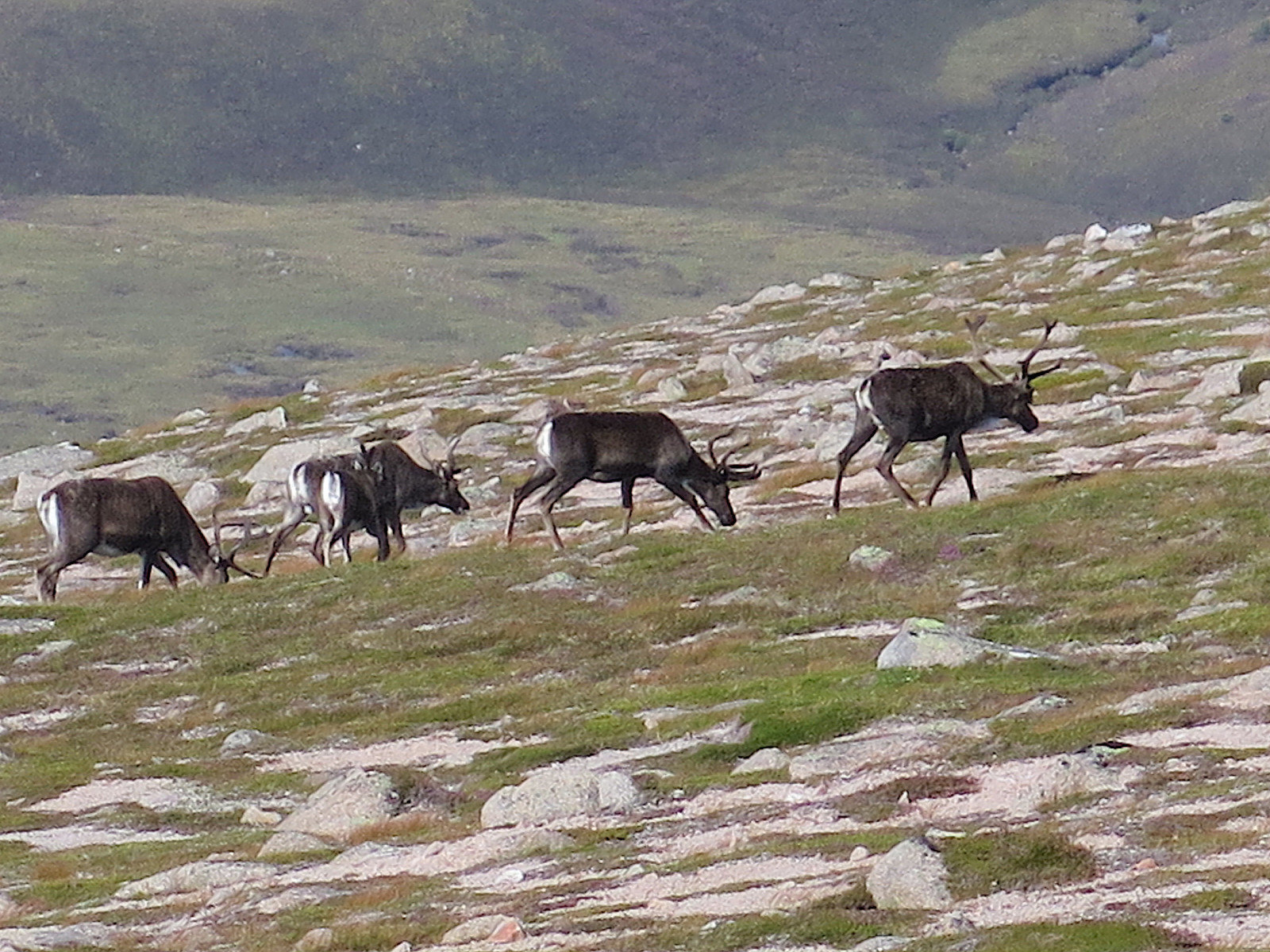
Reindeer on Cairn Gorm
For our family holiday this year we had decided to book a big house in Scotland (there were ten of us, me and Donna, my two daughters and their husbands, and four grandchildren) so we needed a lot of space! We did many interesting trips and walks, and some of us decided to attempt the summit of Cairn Gorm. We saw a herd of reindeer on the way up, and the summit was in the clouds. If it had been clear, we might have gone further south-west for the views, but we really enjoyed our walk, even so.
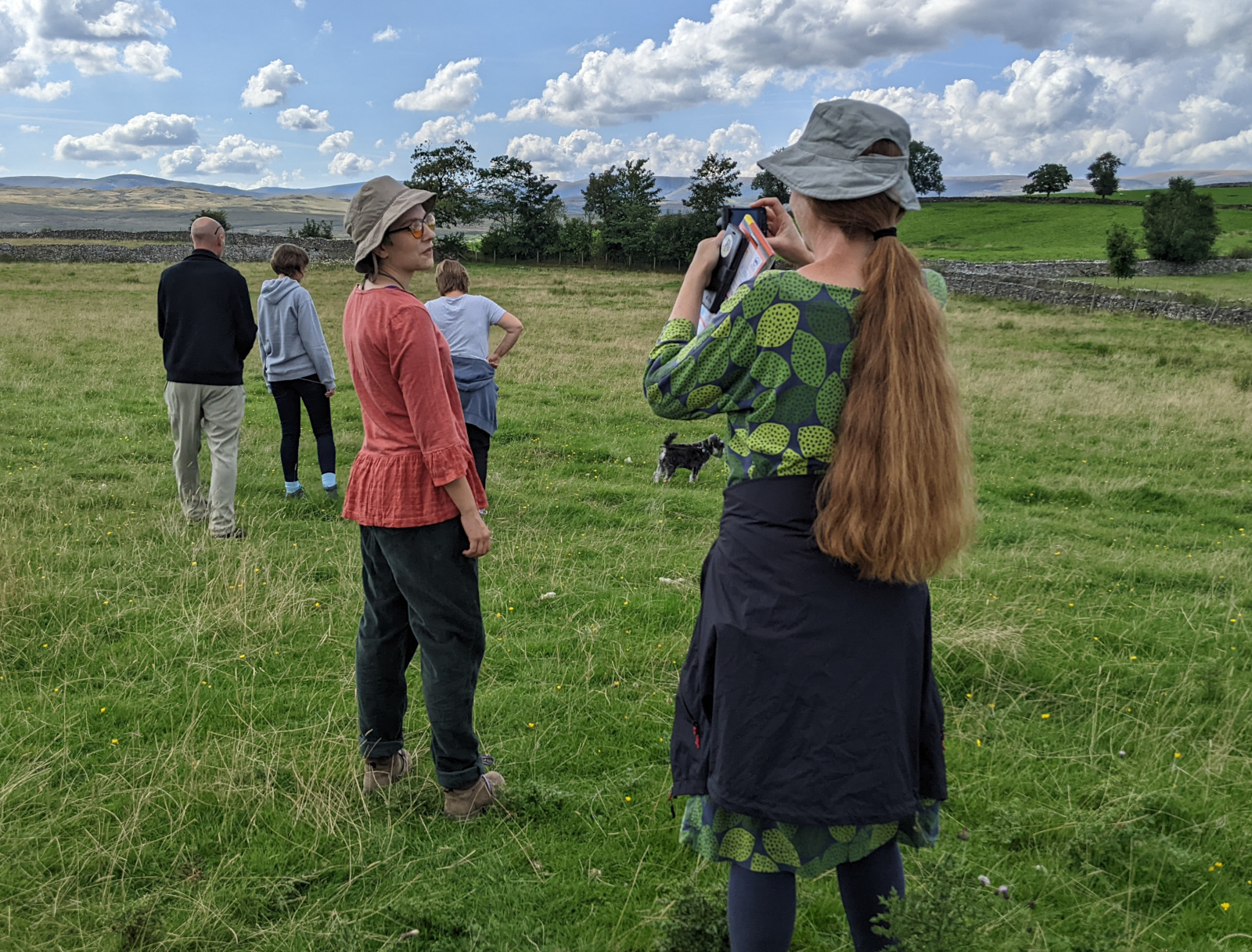
This year’s family holiday was at Shap in the Pennines. In the photo, part of the family was out for a walk in the lovely countryside around the holiday house.
As usual, there was a lot to see and do, the Lake District is not far from here and the Pennines are full of interest too.
Some of us walked from Keswick to the top of Skiddaw one day. There were good local walks from our house in Shap, too. Donna and I spent a day exploring Haweswater Reservoir and other parts of the Lake District. We usually do a jigsaw while on holiday – this time it was a picture of Cirencester Market Place.
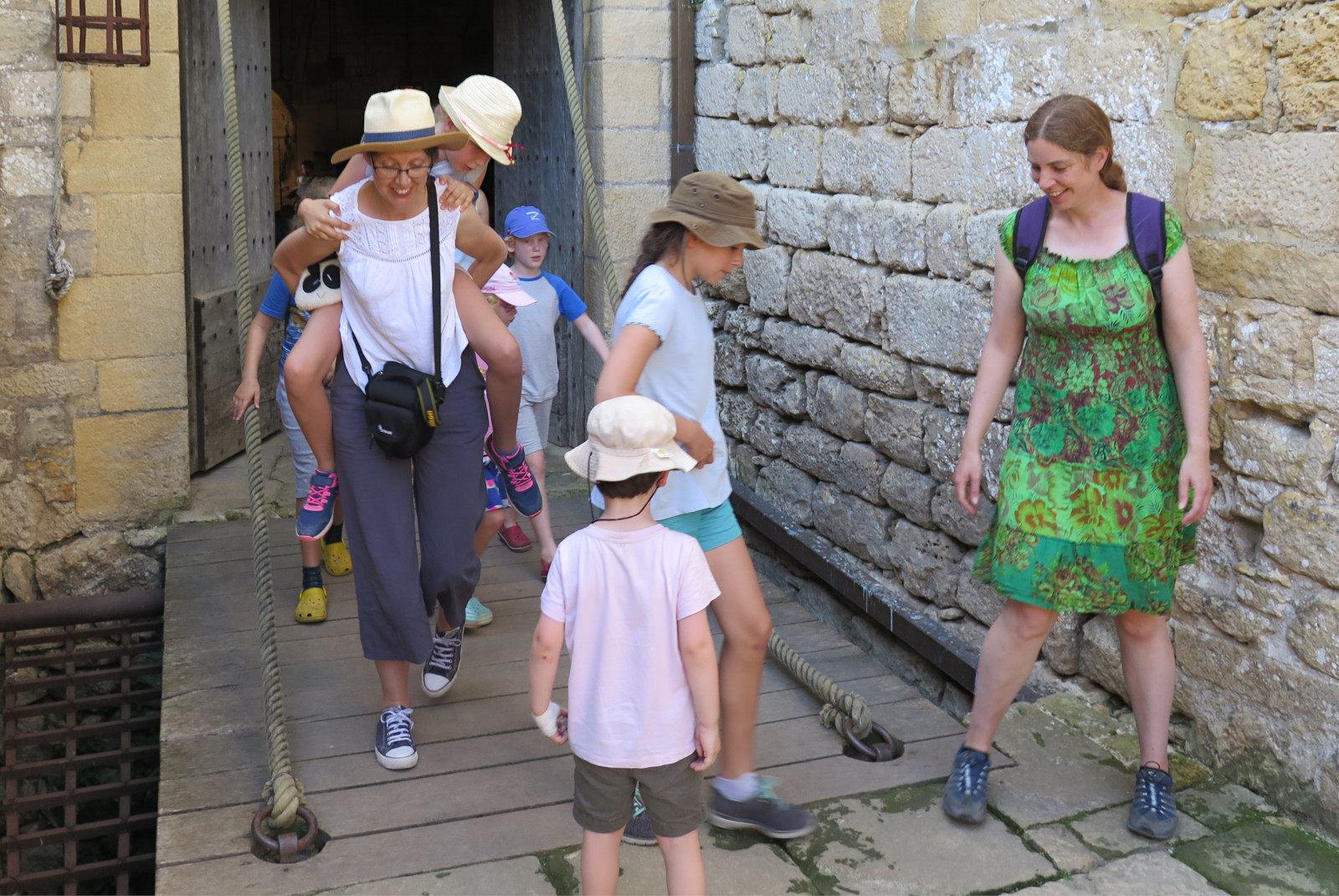
This year’s family holiday was in the Dordogne; in the photo, some of us are crossing the drawbridge of the lovely medieval castle, ‘Château de Beynac‘. Visiting this place was a fairy tale experience, we have nothing of this age and completeness in England apart from Dover Castle, perhaps. The château was just one of many interesting visits, and the holiday home was perfect for us, with a pool for the children and room for us all to spread out.
World events: 11 billion tons of Greenland ice melted in a single day; in Iceland, a funeral was held for the lost Okjökull glacier.
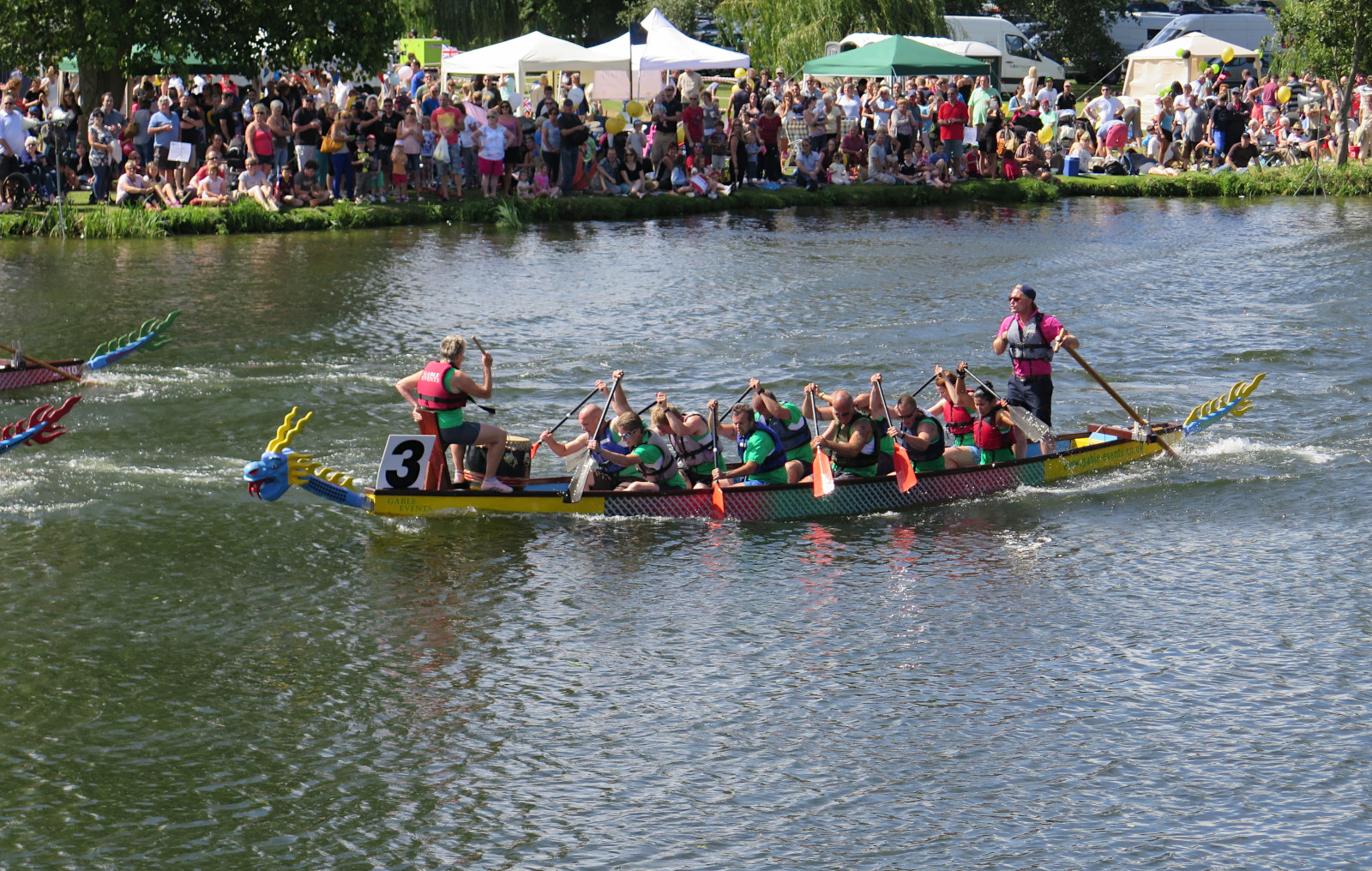
We returned from our family holiday in Lyme Regis on 1st August, and visited Donna’s Mum and Dad in Broadstone on our way home. Two of our friends were ill, one was in hospital after heart surgery and was recovering slowly and getting out of danger, the other had hepatitis and had been in and out of hospital. Both were improving. On the fun side, we watched dragon boat racing on the river in St Neots (photo).
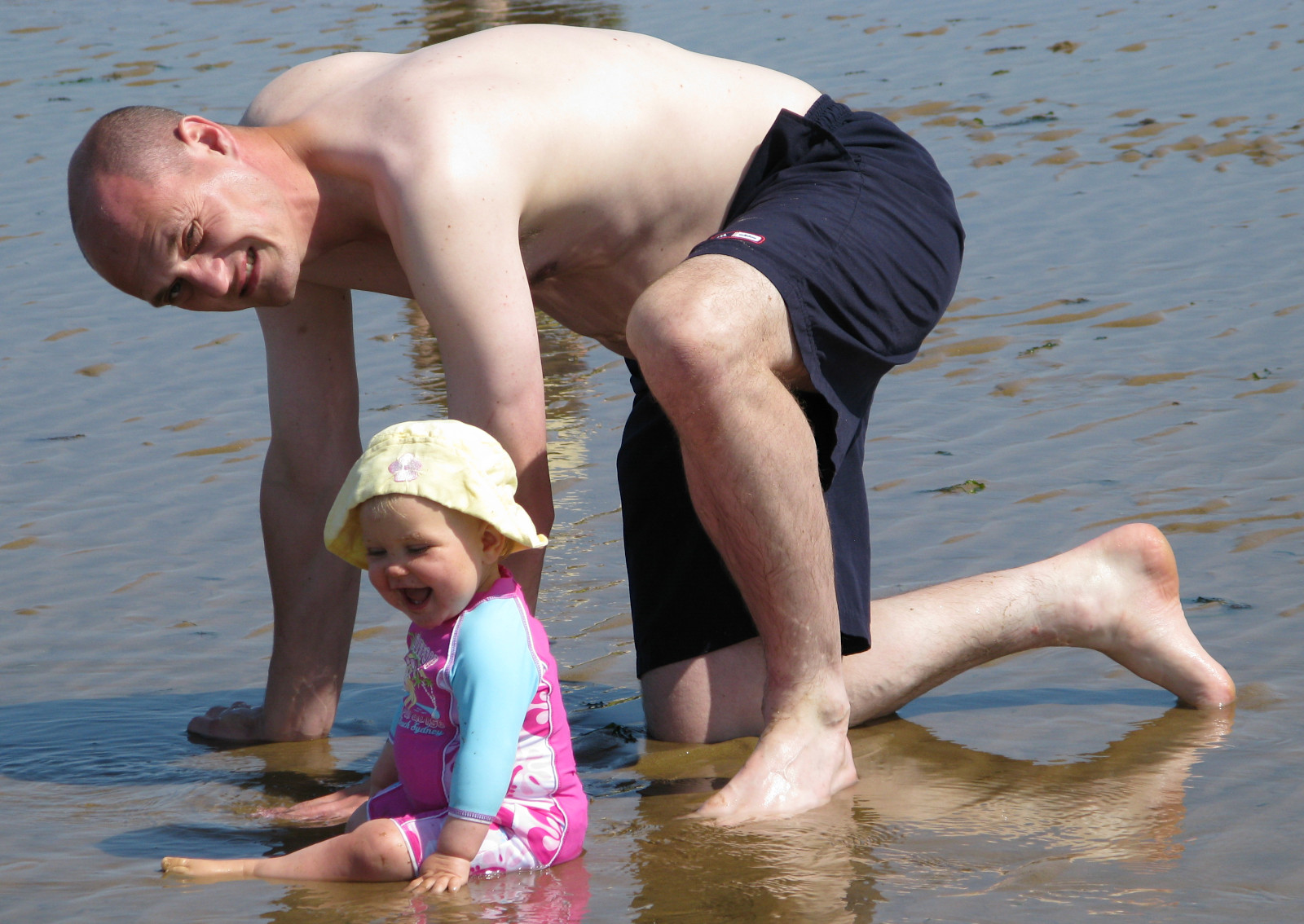
August is certainly the month for holidays in the UK. In 2009 we rented a large house in Aldeburgh and of course, the beach was high on everyone’s list of things to do. The photo shows Sara and her Dad, Steve, on Hunstanton Beach.
I imagine the conversation going something like this… Sara: ‘Come on Daddy, sitting in the water is great!’ Steve: ‘Hmm.. Nah, I’d rather not, thanks.’
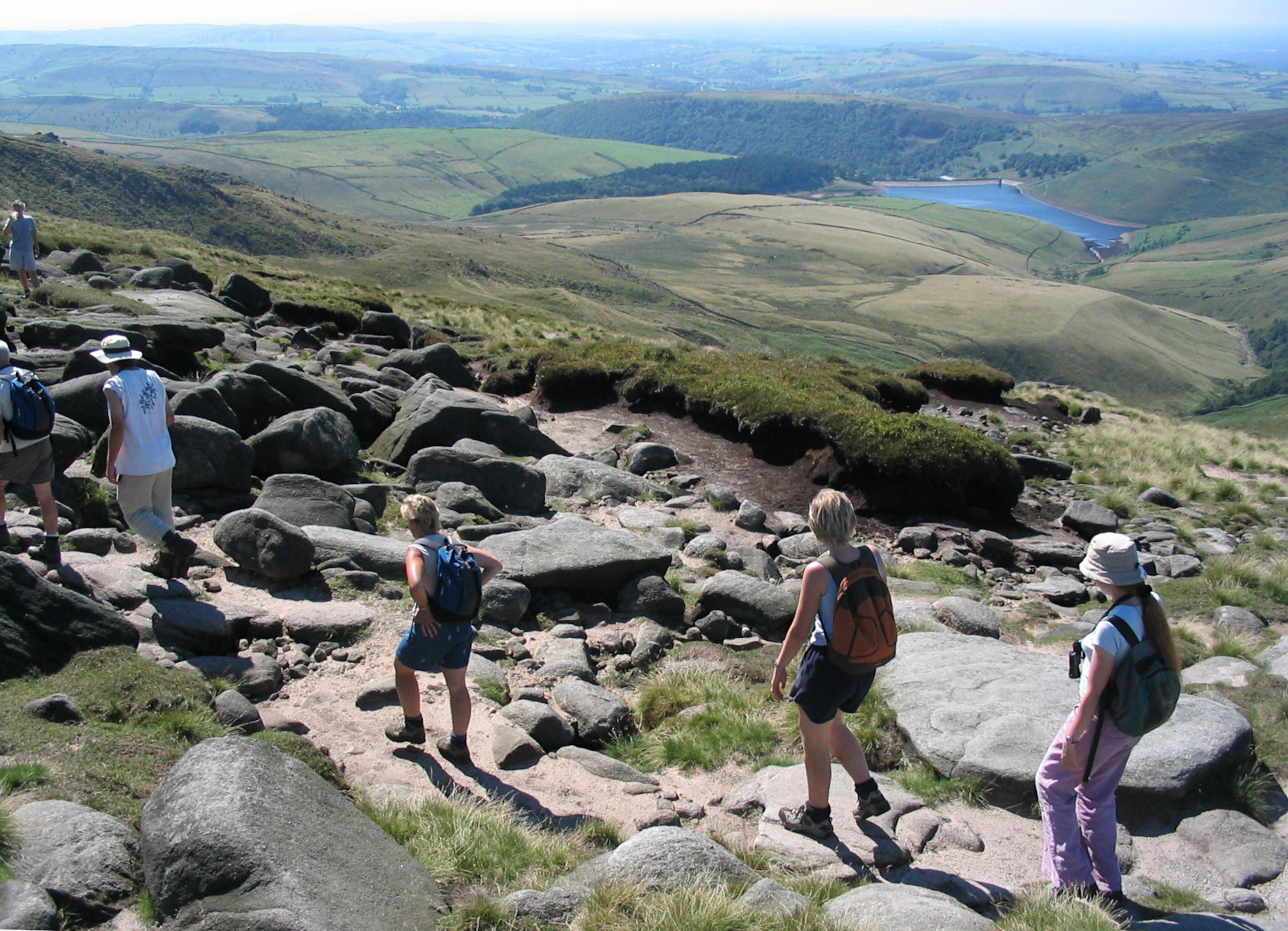
We made a day trip to walk on Kinder Scout with Beth and Paz from their home in Disley, and met up with friends from St Neots that we knew through Open Door Church.
It was a great walk on a fine, sunny day, heading up Grinds Brook from Edale, then over the top to Kinder Downfall, back along some of the edges and down Jacob’s Ladder.
World events: NASA’s MESSENGER spacecraft was launched to visit Mercury; and the Summer Olympics were held in Athens.
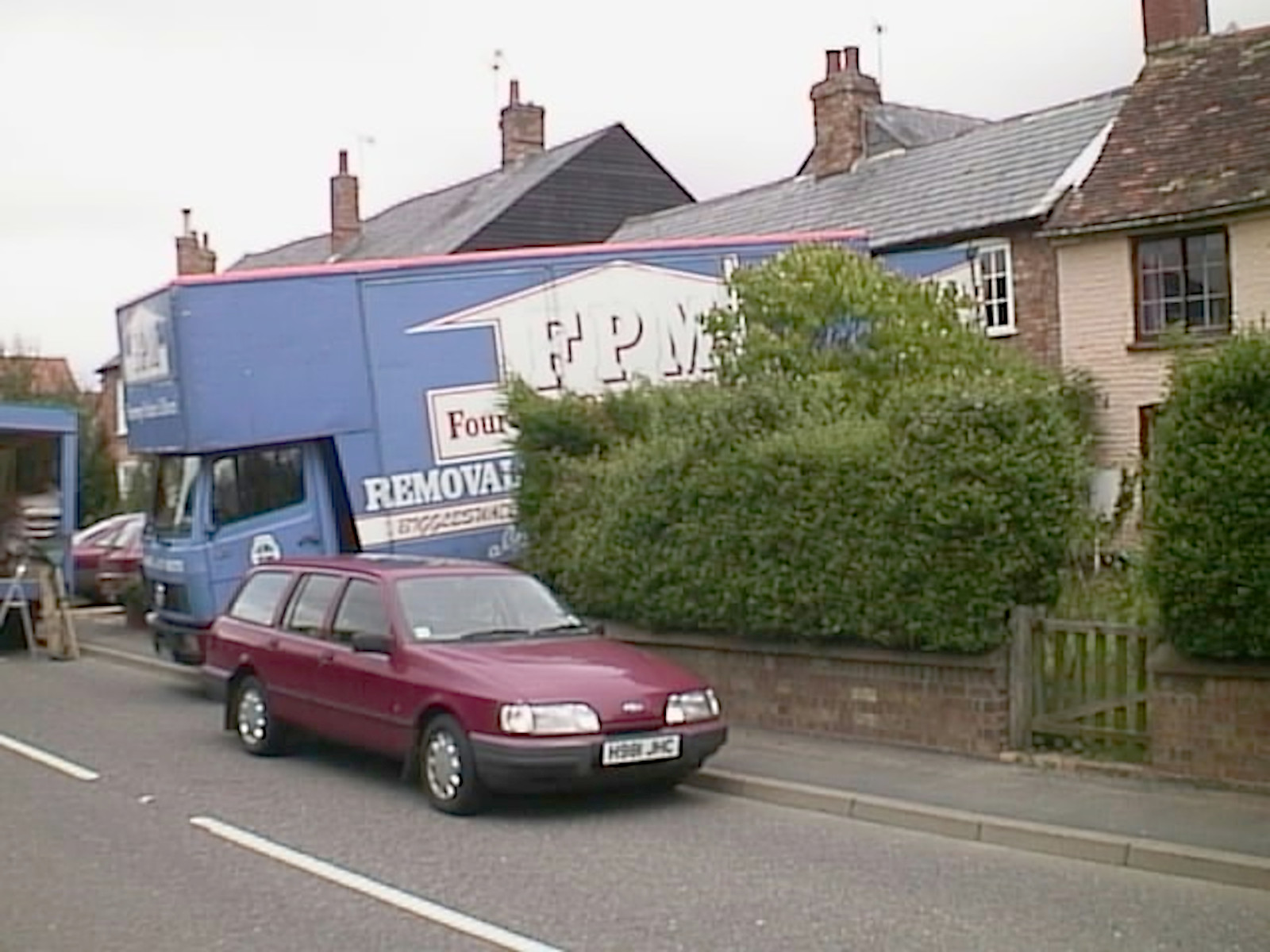
We moved house on 20th August, from Tilbrook to St Neots, from a two-bedroom cottage to a four-bedroom detached house. Our furniture looked very sparse in the new, larger space!
We’d enjoyed living in a village, but looked forward to walking to the shops and only needing the car for longer trips.
World events: There was a total solar eclipse in Europe; and East Timor regained independence from Indonesia.
August was a difficult month. We went to the Bristol Balloon Fiesta on 6th, great fun as always! The photo shows Beth and Judy at the event. Judy was diagnosed with bowel cancer, though it seemed likely surgery would successfully remove it.
Judy, Beth and I had a holiday at Janzé in Normandy and the surgery was to be performed on our return, probably early in September but it might have been late August.
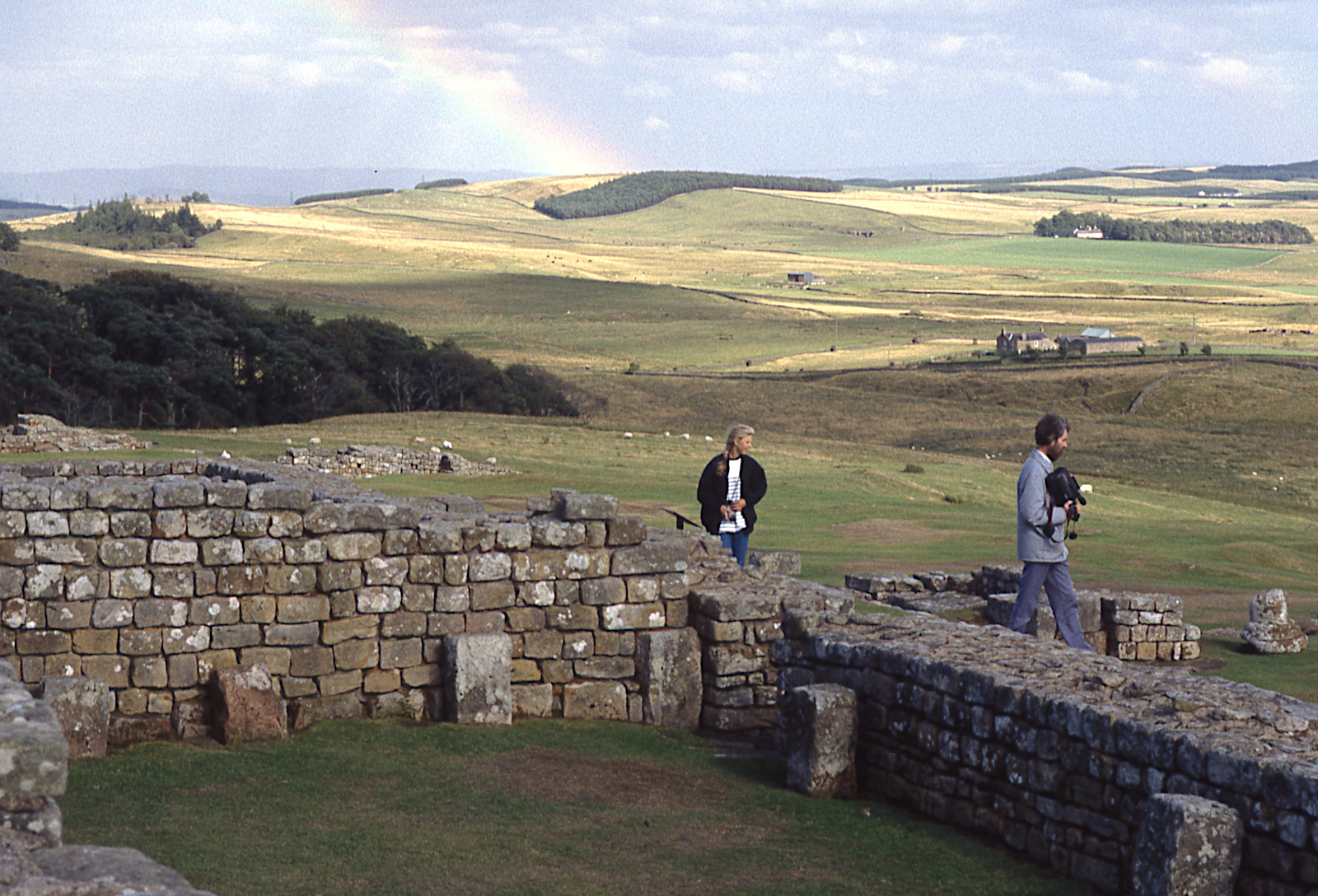
This year’s holiday was on the northern coast of the Lake District at Silloth, we were able to visit Hadrian’s Wall, Wordsworth’s house, Edinburgh, Carlisle and more.
In this photo taken by Judy you can see part of the Roman Wall fortress of Housesteads, with Debbie and me just beyond the building.
World events: The Singing Revolution in the Baltic States demanded independence from the Soviet Union; and NASA’s Voyager 2 captured images and data at Neptune.
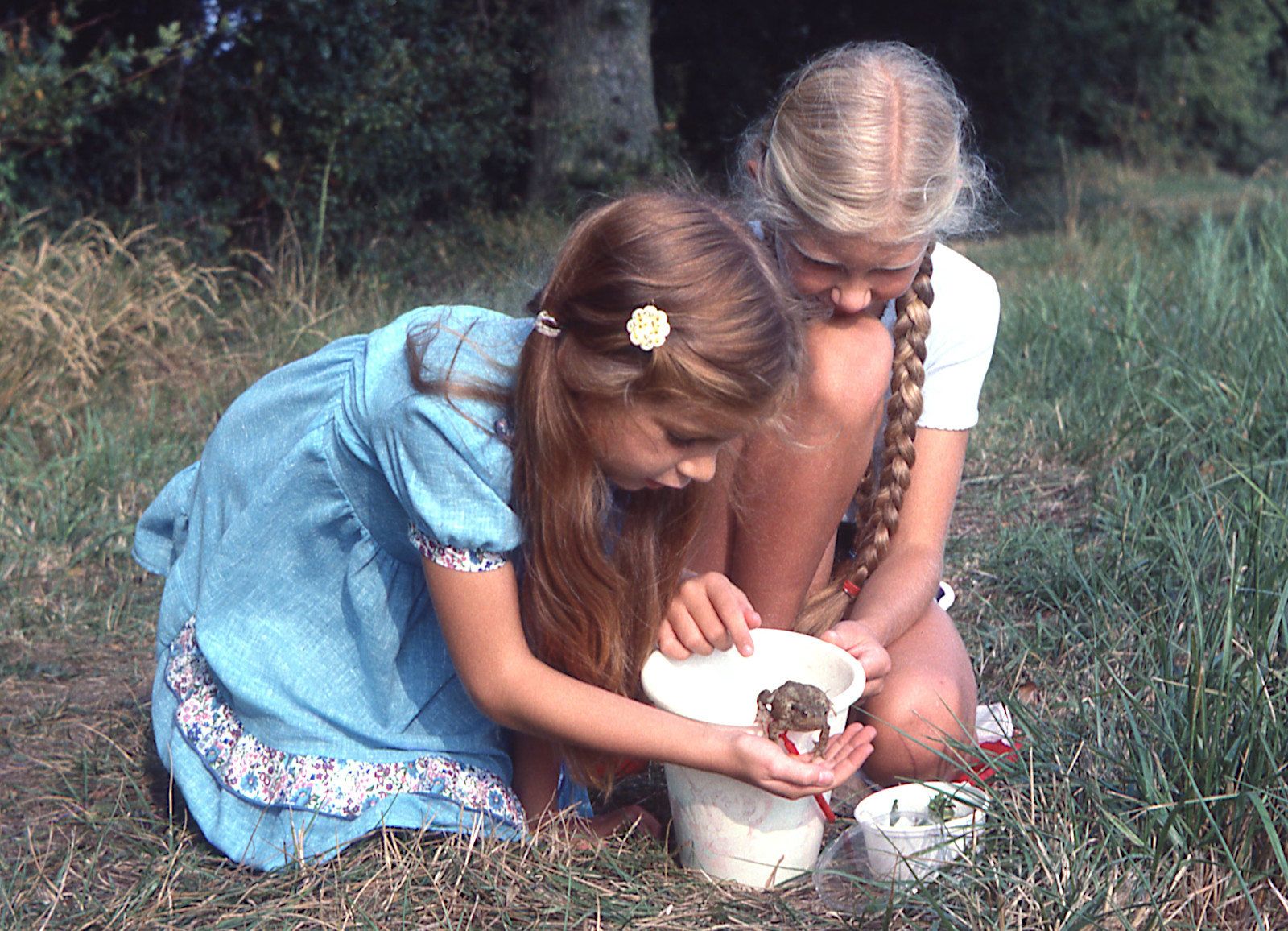
Soon after our holiday, we found a toad in our garden, trapped it in a plastic bucket, and took it to a nearby field to release it. In the photo, Beth has the toad moving onto her hand with help from Debbie, and soon afterwards it was free, hopefully in a toad friendly environment.
It wasn’t unusual in Yatton to find wildlife in the house or garden – a field mouse, a bird, a frog or whatever.
There’s remarkably little to say about this month, I’ve failed to locate any photos, cine film, documents or other physical evidence.
We were living at 22 Rectory Drive, in Yatton; Judy was being a full time Mum with Debbie aged four and Beth just one and a quarter. I was working on fruit tree pollination at Long Ashton Research Station.
By this time Judy would have been four months pregnant and we were well aware of it. We were living in an unfurnished flat in Belmont Road, Bristol, and trying to buy a house. Judy was aware of the years ticking by and wanted to start a family, while I was hoping we could sort the house while on two salaries.
The still from Dad’s cine camera shows Cindy’s husband Peter boating on Loch Nell near Oban. Mum and Dad had driven up to visit them, and Pete’s Mum and twin brother were there as well.
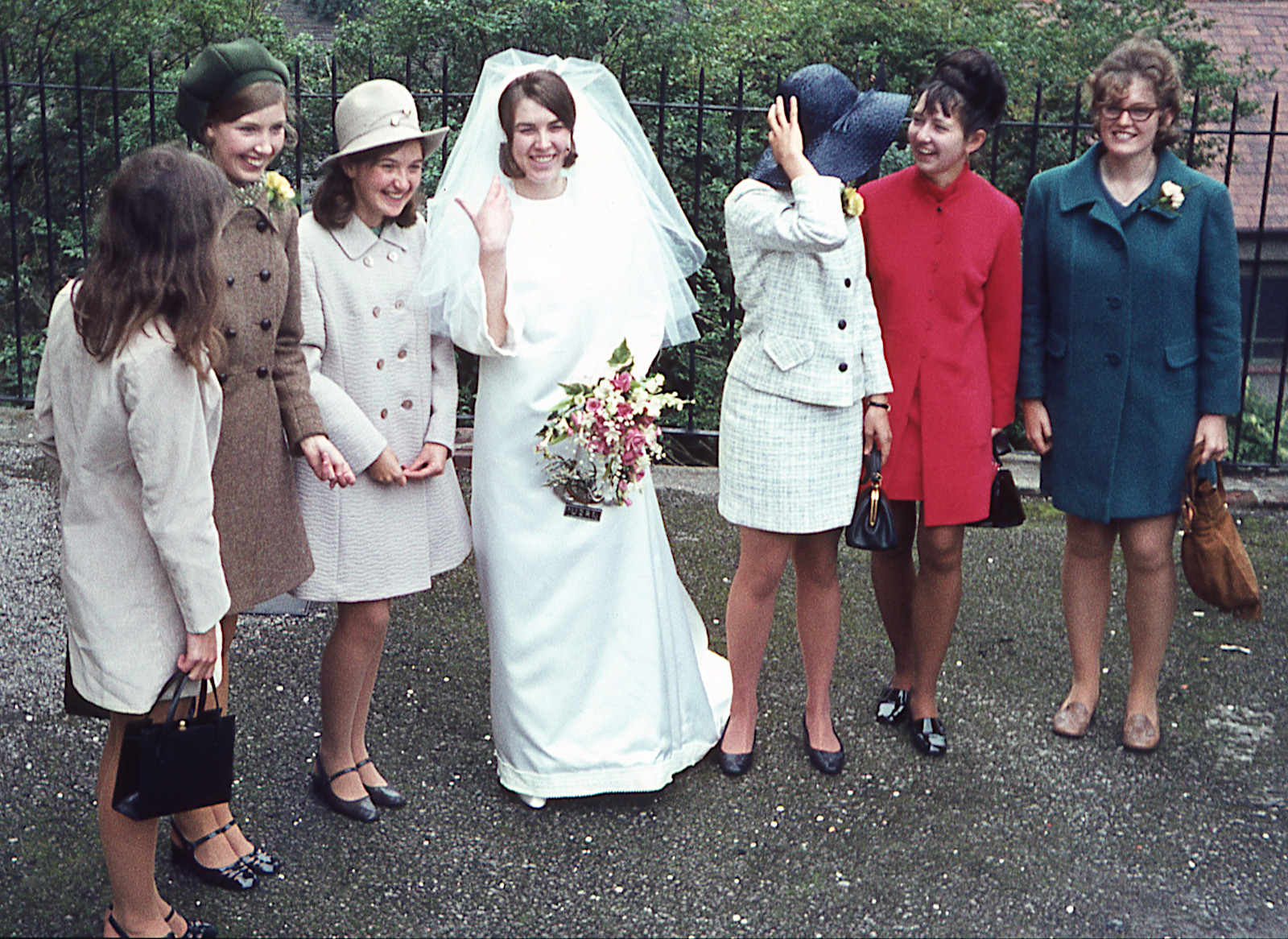
The summer of 1969 saw Judy’s friend Big Mary marry her PhD fiance Malcolm. They were both Welsh speakers, as many of the Aberystwyth students were. The photo shows Maggs (Judy’s closest friend at Aber), Judy, Little Mary, Big Mary and Jan (I think) in red. The other two I recognise but can’t put names to.
I took the photo after the Welsh chapel ceremony, but before the reception. It was a valleys wedding, I think in Cwmbran.
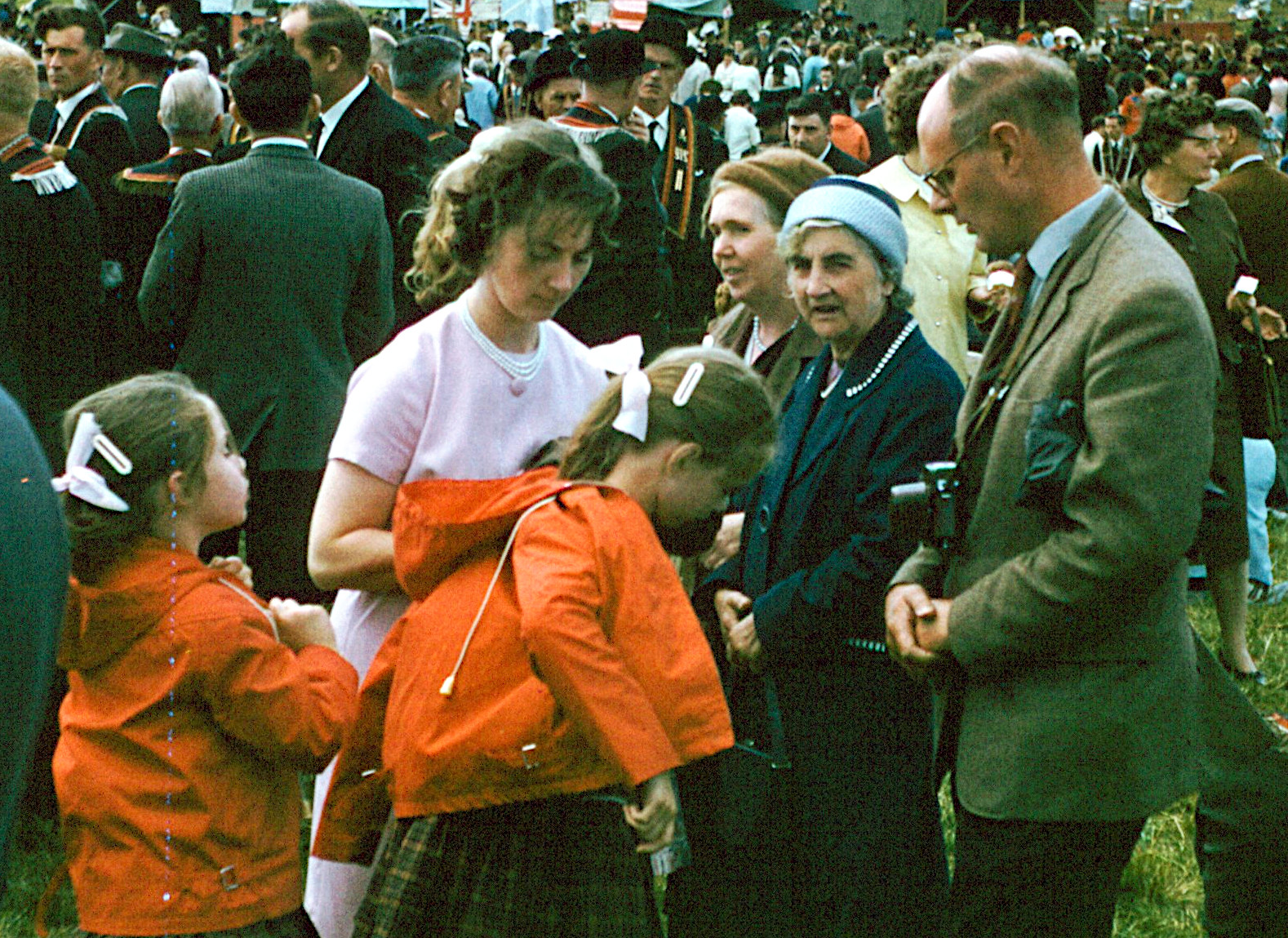
We were on holiday in Coagh, Northern Ireland and visited the Black Saturday parade in nearby Cookstown. Here we are at the Assembly Field after the parade.
In the photo you can see Rachael, Lilias, Ruth, Jane (my great-aunt), Selina (my grandmother) and Mike. We always knew our Irish grandmother as ‘Granny-in-Ireland’ to distinguish her from our English grandmother, Nor.
World events: The last executions took place in the UK; Mary Poppins had its world premiere in Los Angeles.
The 11+ exam results came in, I think while we were on holiday at Burnham-on-Sea, I had passed and would start at Cirencester Grammar School in September. During the same holiday, we heard that my Grandpa had died on 22nd and Dad had to drive home for a couple of days leaving Mum, me and Cindy in the holiday caravan.
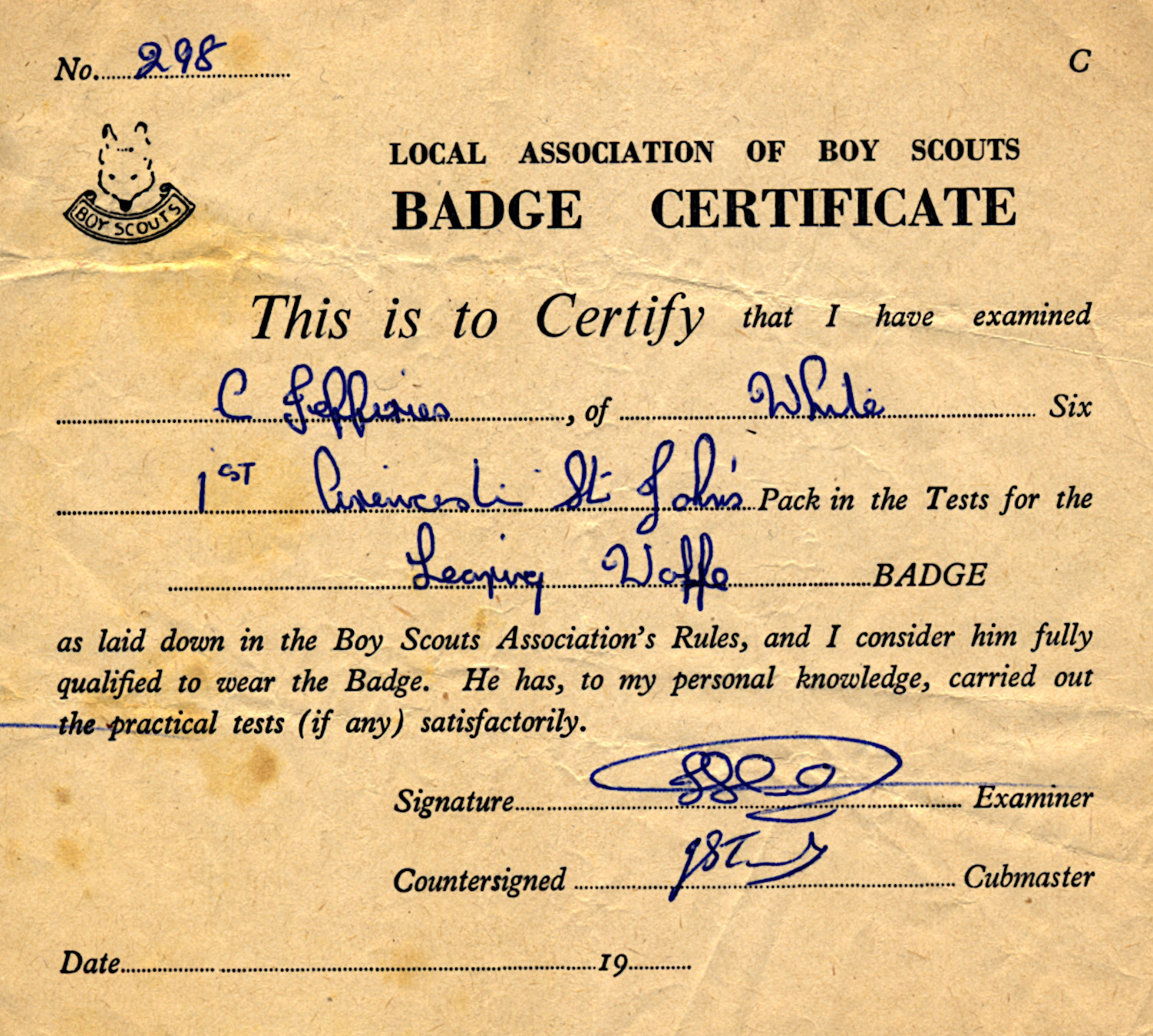
Also in August, I passed my Leaping Wolf badge before moving from Cubs to Scouts.
World events: NASA’s Explorer 6 satellite returned the first images of Earth from space; and the Mini car went on sale in the UK.
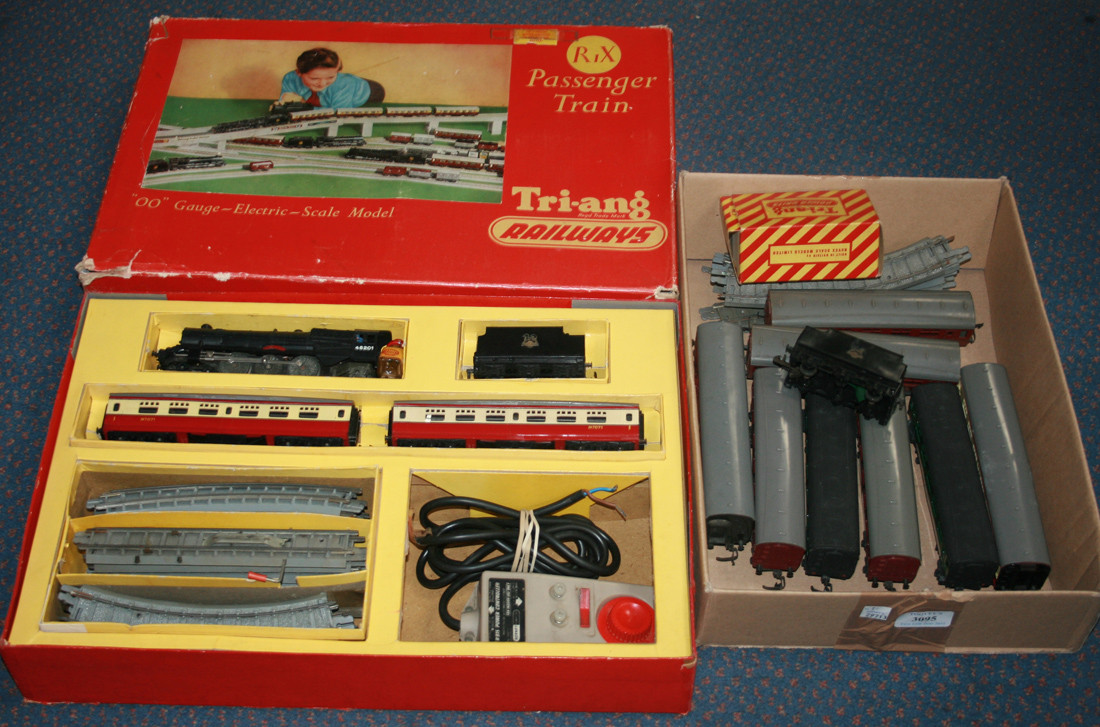
I had just turned six-years-old and I remember playing with my electric train set that I was given, either for my birthday or perhaps the previous Christmas.
It was similar to the set on the left of the photo. I well remember the picture on the box lid.
Now starting my second year of life (my first birthday was in late July), we were still living with my grandparents, I think.
I might have started saying one or two words at this stage, I was probably able to stand with perhaps a wobble or two and a sudden sit-down now and then. And maybe I could walk short distances by this time too. I remember a blue harness with three or four silver bells on the front and this was used when we walked outside on the pavement, but that memory almost certainly comes from the age of two or three.
Dad took his final radar exam on 14th and found out on 15th that he’d passed and was being posted to Inverness. He was also troubled that his girlfriend at the time, Libby, was not as interested in him as he’d assumed.
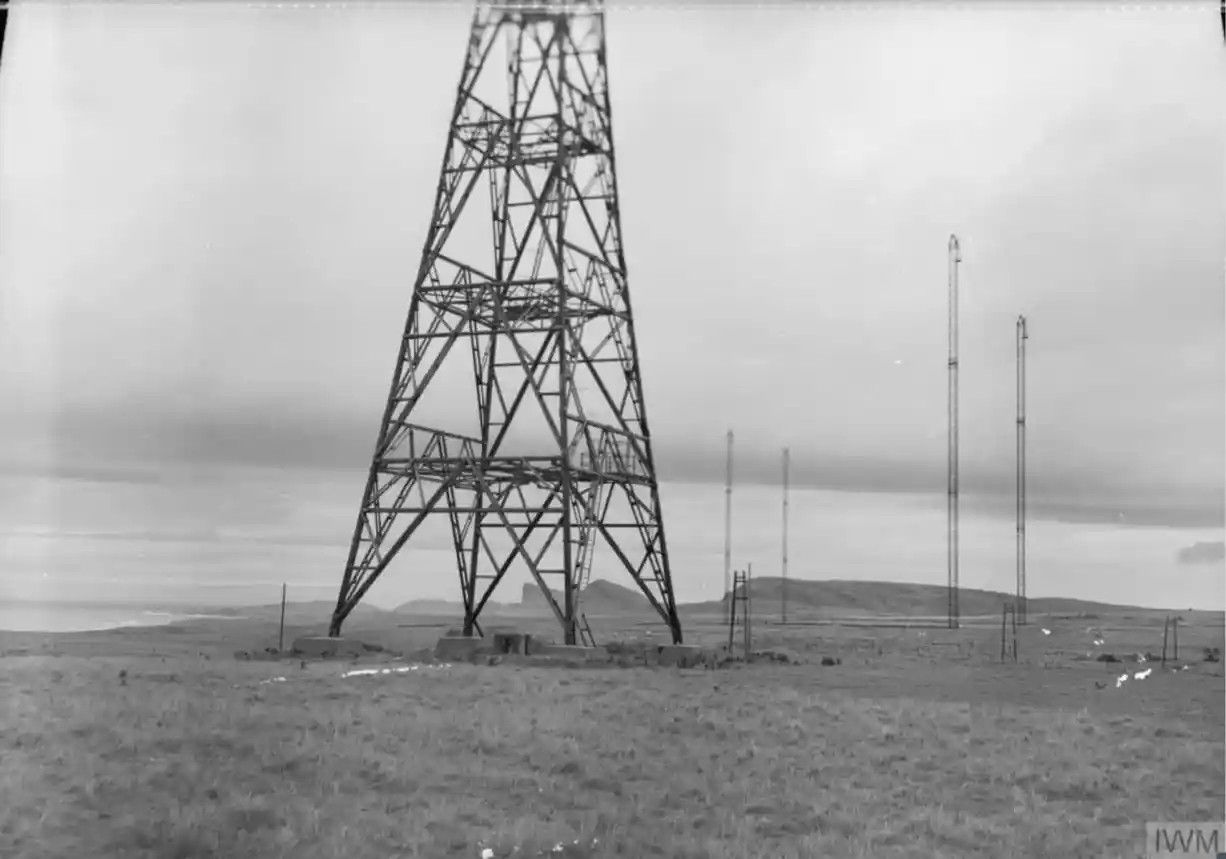
After leave in Cirencester from 16th he left for Inverness on 22nd via Paddington, Kings Cross, and overnight to Edinburgh, then via Perth to Inverness on 23rd. He was then told he was being posted to Northern Ireland instead! On 25th it was another rail journey via Perth and Glasgow to Dumfries and on 26th to Stranraer for the boat to Larne and then Belfast. With his friends Joe and Tony he caught a ‘funny’ train to Cookstown and then RAF transport to Ballinderry radar station. The photo shows part of a Chain Home radar site, similar to Ballinderry.
On the 31st Dad went to the village shop in Coagh and wrote in his diary ‘talked to girl for long time’. That girl, four years later, became my Mum!
World events: The Warsaw uprising began; and the world’s first undersea oil pipeline was laid between England and France (to supply fuel to the advancing allied forces).
If you enjoyed this or found it useful, please like, comment, and share below. (If you don’t see those links, click the article’s title above the main photo and they will appear.) Send a link to friends who might enjoy the article or benefit from it – Thanks! My material is free to reuse (see conditions), but a coffee is always welcome and encourages me to write more often!
What’s in an image? Sometimes quite a lot, more than meets the eye.
I’m posting an image every day (or as often as I can). A photo, an image from the internet, a diagram or a map. Whatever takes my fancy.
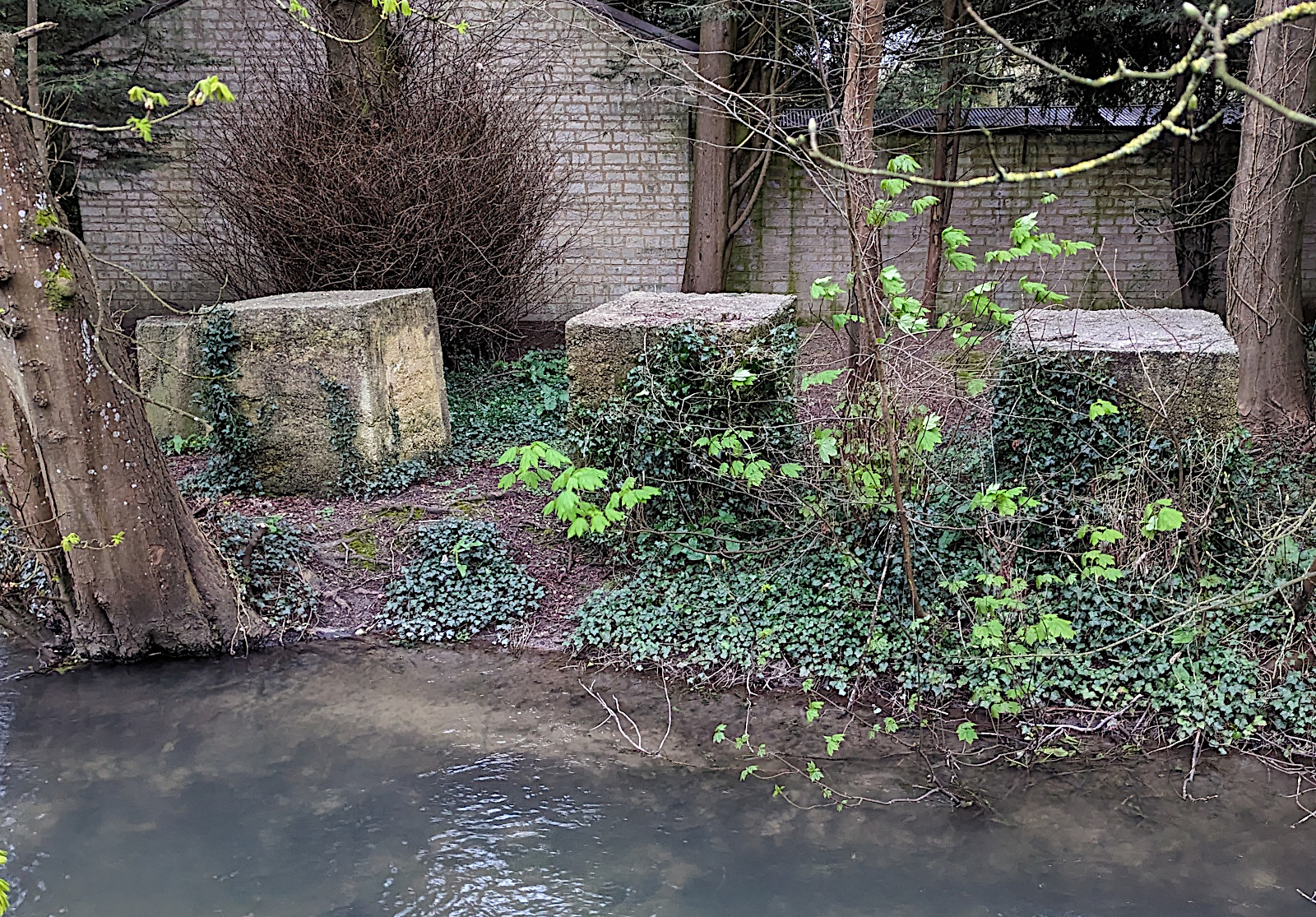
Tank traps
We have some history today. The river is the Churn and it runs in several different channels through the Cotswold town of Cirencester. On the bank you will notice three, large, concrete blocks; there’s also a fourth, partly hidden by the block on the left. The blocks were placed here during the Second World War to slow down German armour in the event that Britain was invaded. German failure to win the Battle of Britain in the air war prevented the invasion, but at the time the blocks were cast and put in place invasion remained a real threat.
The trees in the photo and the wall in the background are more recent than the blocks. The river bank led to an open field with the grounds and gardens of Abbey House beyond at that time, with the centre of the town on the other side of the gardens. The town would have been very vulnerable to attack from this direction.
Similar tank traps have been used along the front lines by both sides in the ongoing Russian invasion of Ukraine. The main difference is that modern, concrete traps are pyramidal (‘Dragon’s Teeth‘, not cubic. The sloping sides use less concrete and are more effective against tanks, but concrete cubes were also commonly used in the 1940s.
It pays to anticipate problems. But wars are rarely anticipated years in advance; political differences can boil over into actual conflict quite suddenly. And once they have started it can be very difficult to bring them to an end.
NOTE: These blocks can be seen from Grove Lane in Cirencester, quite close to the Norman Arch. From inside the Abbey Grounds, walk through the arch and turn right along the footpath for just a few yards. Look across the river, and there they are! A piece of Cirencester history that you can see for free.
If you enjoyed this or found it useful, please like, comment, and share below. (If you don’t see those links, click the article’s title above the main photo and they will appear.) Send a link to friends who might enjoy the article or benefit from it – Thanks! My material is free to reuse (see conditions), but a coffee is always welcome and encourages me to write more often!
What’s in an image? Sometimes quite a lot, more than meets the eye.
I’m posting an image every day (or as often as I can). A photo, an image from the internet, a diagram or a map. Whatever takes my fancy.
The River Churrn in Stratton
This photo shows the River Churn flowing through Stratton Meadow on the northern edge of Cirencester, with the old Stratton Mill in the background. As you can see, the Churn is only a small river, but like the Thames its name is very ancient, going back at least to Iron Age times. In Roman Britain the Thames was Thamesis and Churn is the Corin in Corinium (the Roman name for Cirencester). It’s also the Ciren in Cirencester and the Cerney in several villages north and south of the town.
Rivers are intriguing things, the water contained in them is flowing so the water you see now is different from the water that you saw five minutes ago. Yet the river usually changes its course very little in a human lifetime, so there’s a sense of constancy about it. The water is here for moments only, but the river is here for generations.
In ancient Jewish thinking, flowing water was considered living water, but stationary water in a cup, basin, pond or lake was not living and was therefore of less value and significance. A mikvah was a special bath with water flowing in and water running out at all times, bathing in this living water would make a person ritually clean. Taking a dip in the pond had no such effect!
Cirencester
For convenience, here’s a list of all the Cirencester area images:
If you enjoyed this or found it useful, please like, comment, and share below. (If you don’t see those links, click the article’s title above the main photo and they will appear.) Send a link to friends who might enjoy the article or benefit from it – Thanks! My material is free to reuse (see conditions), but a coffee is always welcome and encourages me to write more often!
Notes from bygone years – Julys duly described Hint: Click on the thumbnails for larger images.
July 2023 (1 year before publishing this article)
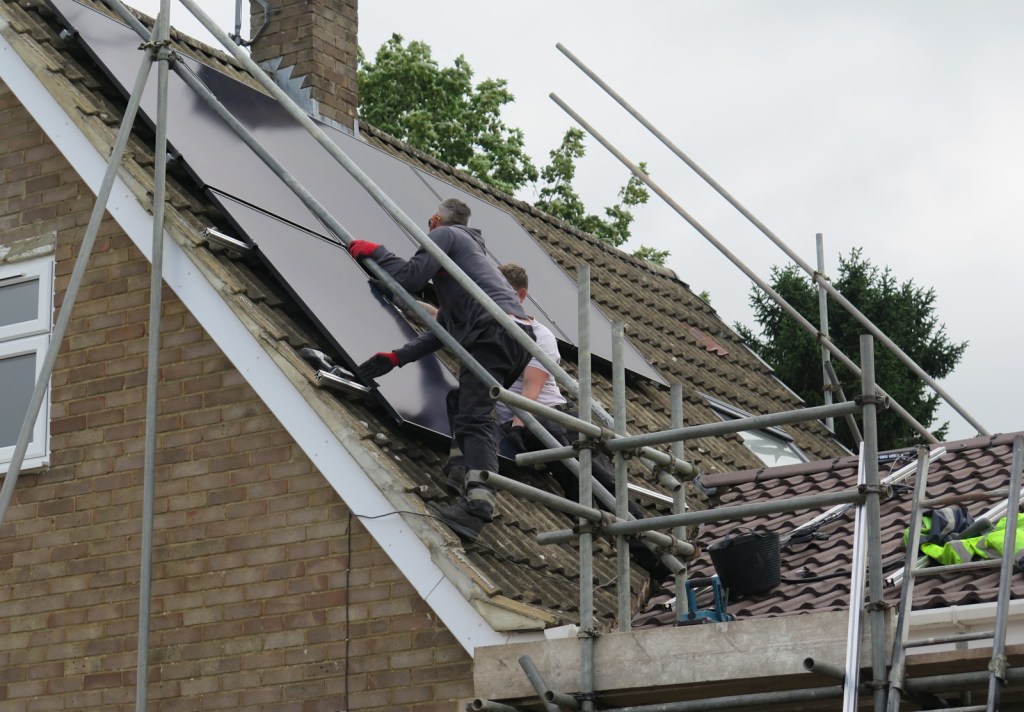
Solar panel installation
We decided to take the plunge and install solar panels on our roof. We had a long wait as demand was high, but the installers arrived in July and after a few days work we were delighted to have the system reducing our electricity bills to almost nothing. Of course, we knew it would be different in the winter months, but with a 10 kWh battery included, we found we could get right through the night on our own stored energy in the summer.
I was also experimenting with a reduced eating window, having breakfast around 11:00. I’ve tried restricted eating before, but this time I’m following evidence-based suggestions from Zoe (see also the Zoe website) .
I was doing Monday walks most weeks with my friend Stephen. We met at one of CBC’s Small Groups here in Stratton, and we got on really well together. Among other interests, Stephen played saxophone in the ‘JJ Band’. We shared similar views on many things and both had backgrounds in computing.
Stephen lived in the town so I’d usually walk down to meet him, we’d enjoy a walk in the park, and often buy coffees from the van or sometimes in town. I always looked forward to my Monday walks.
This was a busy month, I walked several sections of the old Thames and Severn Canal (something I’ve been doing again in 2024), we were regularly arranging the chairs at CBC on Fridays, and two people I knew died, Bob Morris and then Michael Sleggs.
Donna’s Dad was getting weaker and his Parkinson’s symptoms were worsening, so her Mum was needing more help than before and we travelled to Poole to help out more often.
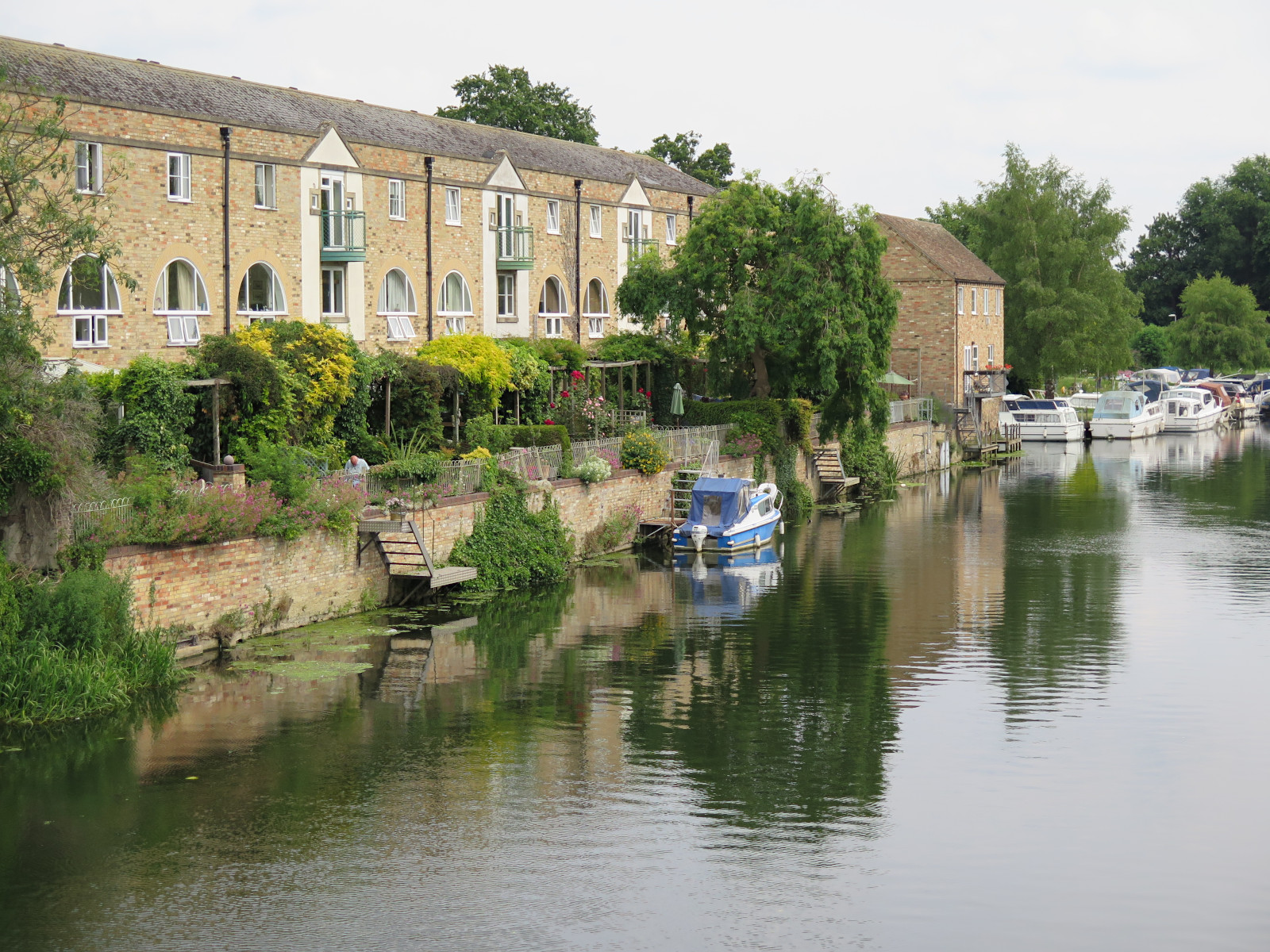
We were living in St Neots, this is a view of the River Great Ouse flowing through the town centre, an easy walk from our house in Eaton Ford. Donna was looking for a school placement for her teaching, I was meeting with a group of friends in coffee shops, hanging out, doing Bible study here and there, hopefully helping people grow and thrive. I was also meeting at home with friends from various local churches.
World events: Israel attacked the Gaza Strip; and a Malaysia Airlines flight was shot down over Ukraine by a missile.
I went to a house church conference and was astonished to bump into my friend Jim Russell there. He’d always thought my views on church were not right, yet here he was! We had some great conversation and he took my photo while I took his. I had no idea that this would be the last time I’d see him.
Donna took part in the Bedford Race for Life organised by Cancer Research UK, along with her friends Gayna and Claire, pictured here wearing their medals. There was a big turn out, along with large numbers of pink-themed balloons and so forth.
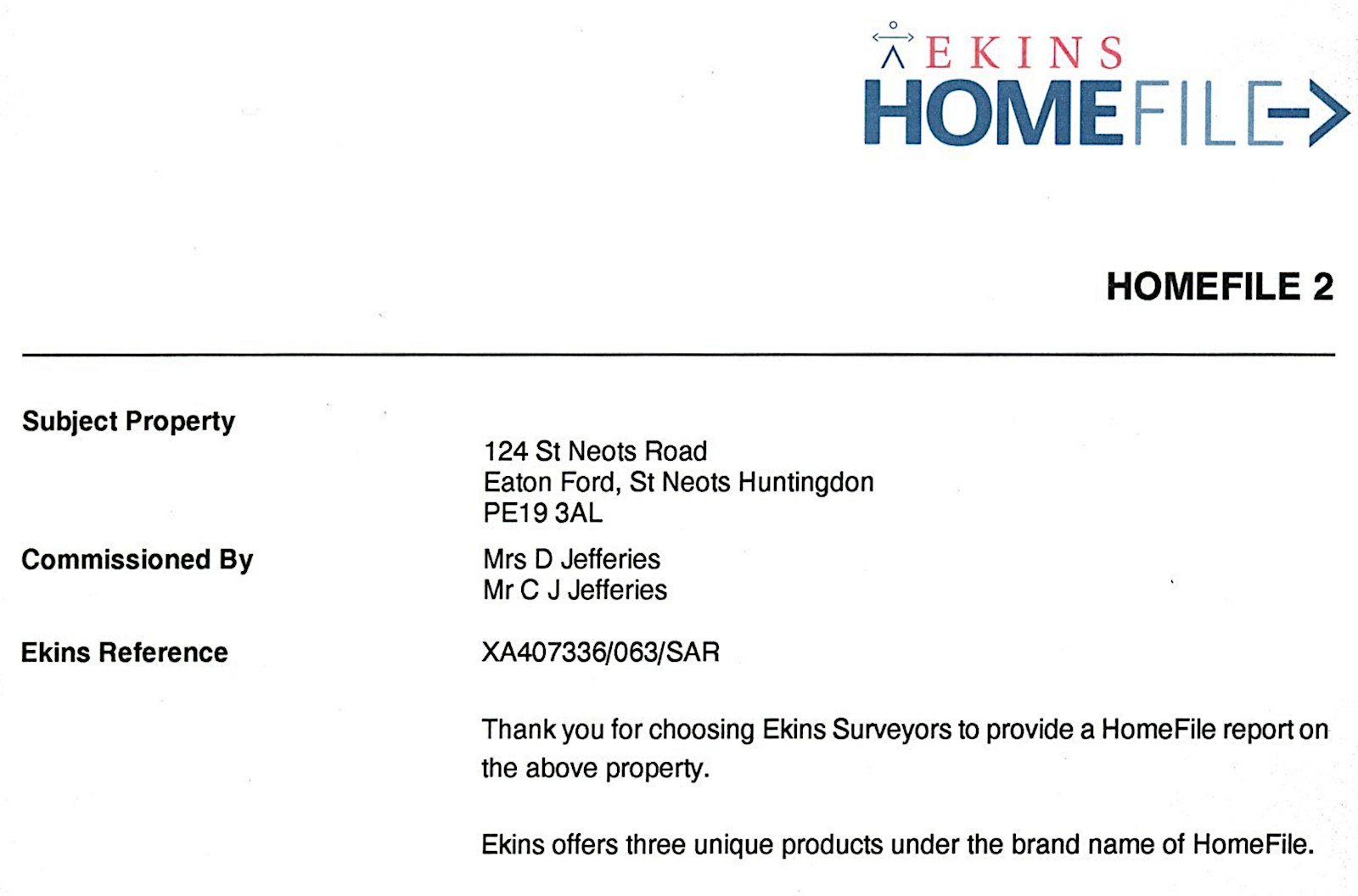
We were living in Donna’s cottage near Kimbolton and had decided it was much too small for us both. We’d been looking for somewhere larger and the image shows a survey document for the house in St Neots that we eventually bought.
We visited Mum and Dad in Cirencester on my birthday. As usual we enjoyed spending time with my parents. The photo shows my nephew Tom, my Mum, Beth and Judy chatting together in the back garden. Rachael, Dan, Rosie and Tom were here the same day so it was good to see them too.
Debbie flew to Bordeaux on her French exchange trip (her exchange partner, Anne, had come to stay with us in March). We saw her through check-in and then waited with her on the tarmac, waving goodbye as she walked out to board the plane.
It seemed very strange to drive back home again without her.
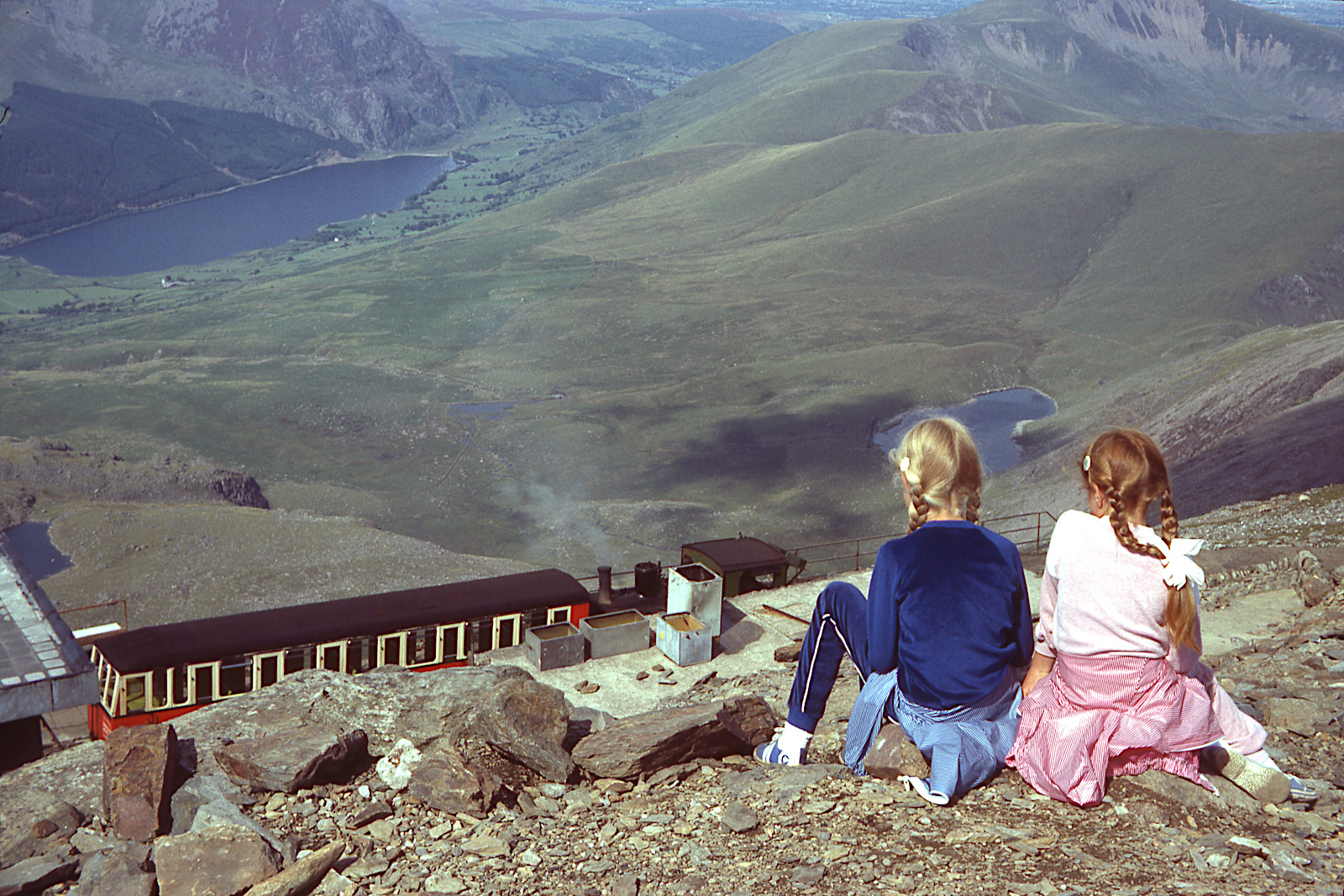
We had a summer holiday travelling through Wales from south to north, staying at bed and breakfast places (gwely a brecwast). A few days before we set out, there was a fairly large earthquake, and in Bethesda our landlady was anxious as aftershocks were still continuing. The photo shows Debbie and Beth at the top of Snowdon with a train waiting at the summit station.
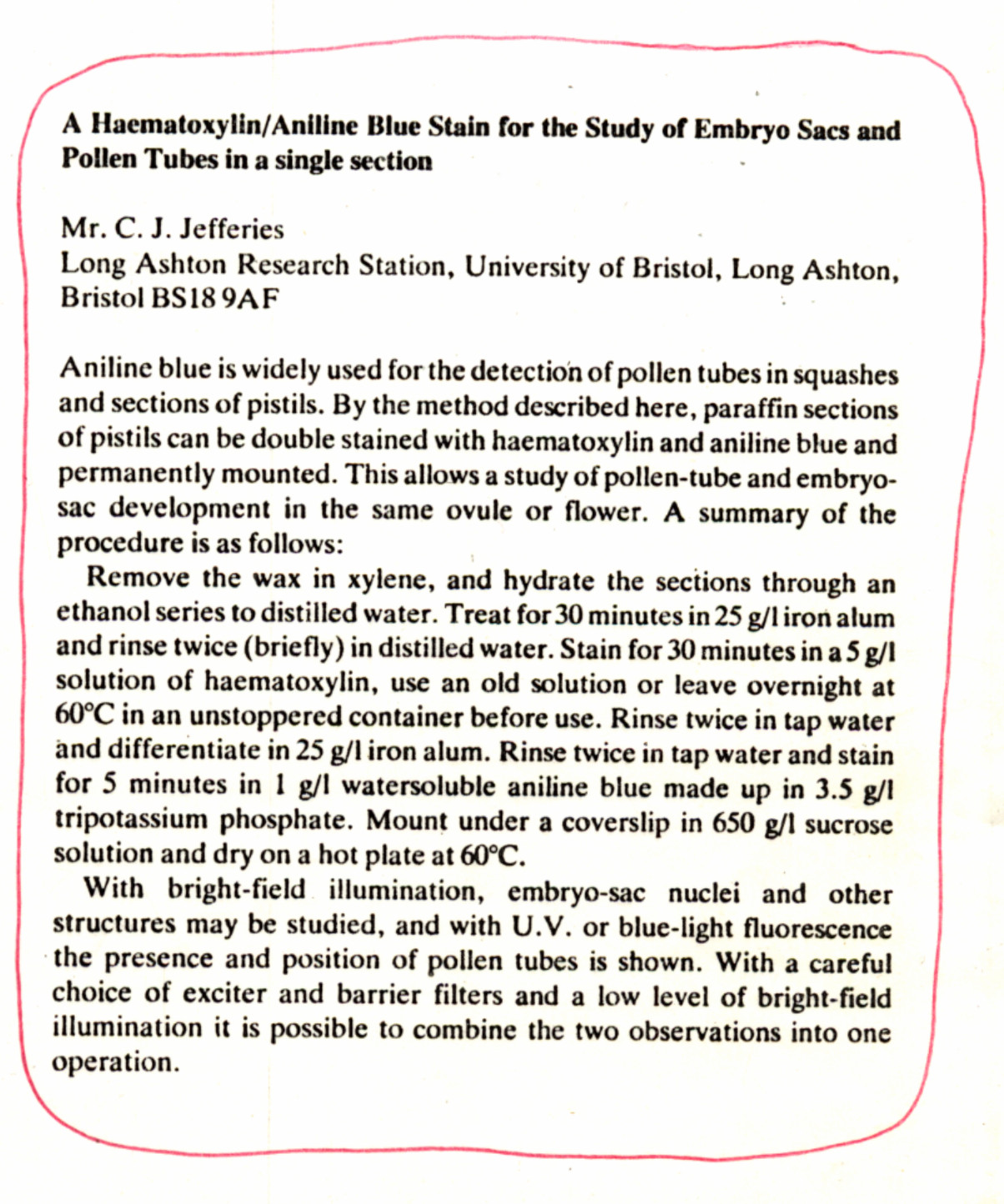
This was a short note on a combined staining method for plum reproductive tissues, to aid microscopical studies of the fertilisation process. It wasn’t published as a scientific paper as far as I recall, but was part of a poster presentation at a conference. I hoped other people would try it on different kinds of plant material so that together we could get a much broader view of its usefulness. I don’t think anything came of it in the end, but it’s important to try – that’s part of how science works.
World events: The Sony Walkman first went on sale in Japan; and NASA’s Skylab space station re-entered the Earth’s atmosphere.
Judy must have become pregnant about this time, but we didn’t know that until a little later, of course.
The Severn Bridge was only eight-years-old, and it still seemed amazing that we could drive to Wales instead of queuing for the old Aust Ferry or driving all the way to Gloucester. And there was no thought of a second crossing, of course! I took this photo, but forgot to adjust the focus (no auto-focus in those days).
I was lodging at Archgrove House in Long Ashton along with other students working at the Research Station that summer. Judy sent me the postcard from York (pictured) where she was on holiday with her parents and brother Frank. You won’t believewhat her Dad said about York Minster!
World events:John Fairfax was the first person to row solo across an ocean (the Atlantic); and Neil Armstrong was the first to walk on the Moon (we watched this live at Archgrove House).
Dad drove out to the gravel pits near South Cerney. Some of these were still being used to extract gravel, but some had been worked out and were used by anglers, for swimming, and for water-skiing which we’d never seen before. I took two cameras with me, my old Kodak Starmite loaded with 127 colour transparency film, and my new Kodak Retinette loaded with 35 mm black and white. This photo shows Dad using his camera and my sisters Rachael, Ruth and Cindy.
World events:Malawi became independent of the UK; and NASA’s Ranger 7 send back the first close-up images of the Moon.
I thought you might like to see this birthday letter from my Grandpa. He had emphysema, and died on 22nd August, my 11+ results came in before that and he knew that I had passed. Granny had decided that a sleeping bag would be a useful present as I was off to Cub Camp soon after my birthday and would then move up to the Scouts.
This is a postcard from my Mum to her family back in Northern Ireland. She writes about Cindy and me suffering from chicken pox. I had it before Cindy, so it’s likely I gave it to her (sorry, Cindy). Read the card.
My very first birthday came at the end of the month, a special day, no doubt, with doting parents and grandparents. I must have had other birthday cards, but this one from Watermoor Church is the only survivor. That’s interesting in itself; Mum would have kept them all for a while, but this one seemed more important, perhaps because of Mum and Dad’s strong faith.
On the back of the card is written, ‘Christopher James Jefferies, 37 Victoria Road, baptised October 24th 1948′.
Dad, along with his friend Joe, travelled by lorry, train and bus to Yatesbury where radar training began for them and many others. Dad liked this posting, writing, ‘Radar people seem a good lot’. He was able to hitch home in two or three hours to see the family in Cirencester, sometimes Joe came along too. By the end of the month Dad and others were using radar equipment to plot movements of real aircraft (‘pukka kites’). The photo shows an old aircraft hanger at Yatesbury in 2014.
If you enjoyed this or found it useful, please like, comment, and share below. (If you don’t see those links, click the article’s title above the main photo and they will appear.) Send a link to friends who might enjoy the article or benefit from it – Thanks! My material is free to reuse (see conditions), but a coffee is always welcome and encourages me to write more often!






















 Journeys of Heart and Mind


