< Previous | Index | Next >
Image of the day – 173
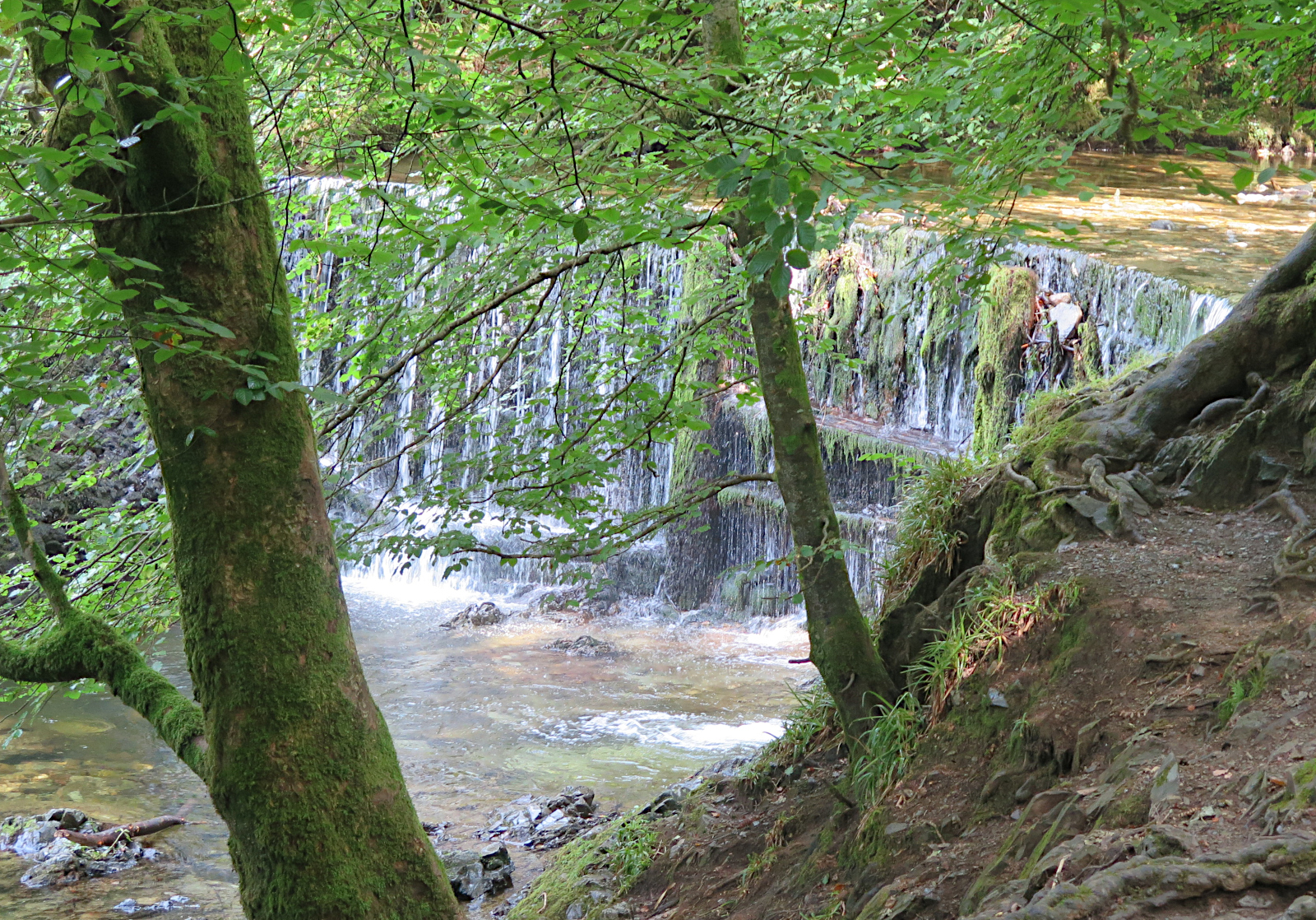
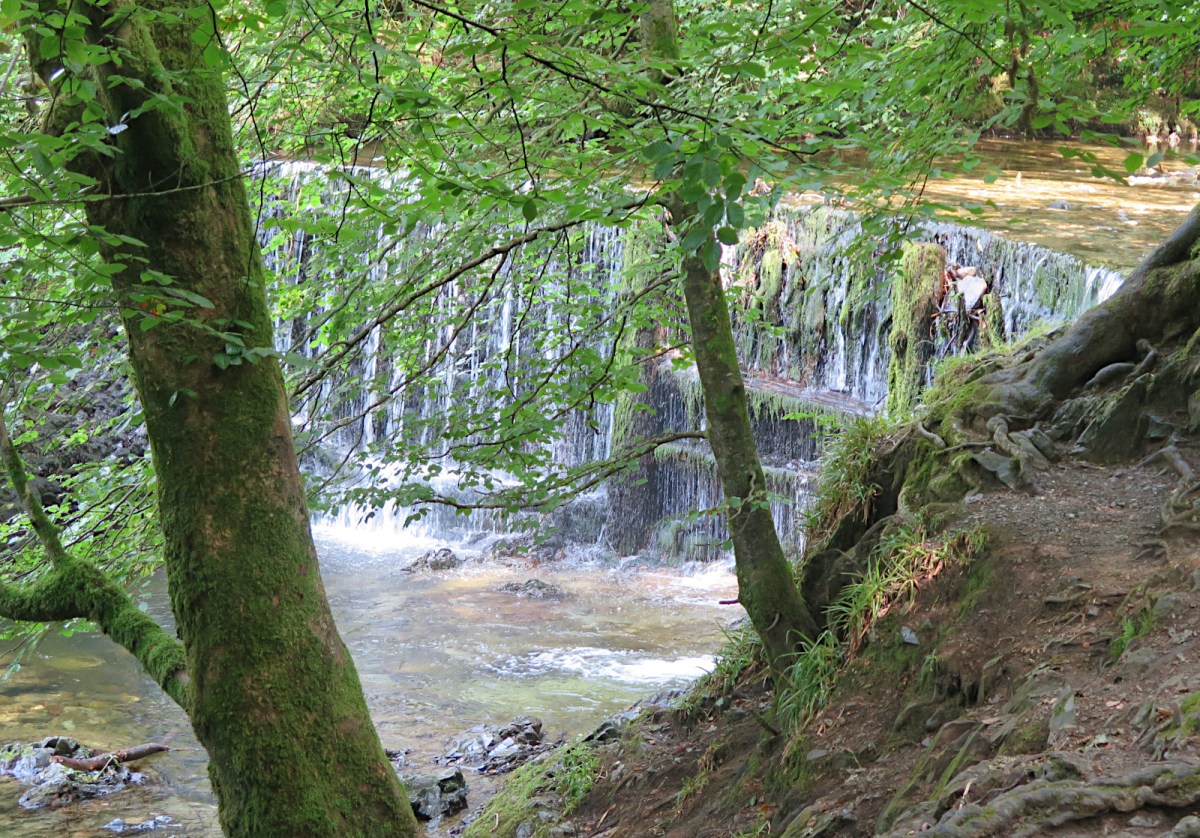
This is one of the waterfalls along Stock Ghyll just north-east of Ambleside, Cumbria in the English Lake District. It’s beautiful countryside, and the nearby Force Cafe and Terrace served us a wonderful ‘Full Force’ breakfast. In the local dialect, a waterfall is known as a ‘force’, and there’s a whole string of them along this stretch of Stock Ghyll. A ghyll or gill is a narrow, deep, wooded ravine with a stream running though it. The term can also be used for the stream itself. Donna and I made our way carefully along this muddy, stony footpath, and it was well worth the effort.
Stock Ghyll runs right down into the town of Ambleside where it once powered a series of watermills, and finally flows into the nearby lake of Windermere.
Bobbin mills
Bobbin mills were common in Ambleside in the 19th century. Coppiced timber was cut to length and shaped on a lathe, then wooden discs were attached to both ends and the completed bobbins sold to the textile spinning and weaving businesses in the industrial cities south of the Lake District where they were used to store thread after spinning and before weaving. They contributed to the rapid growth of spinning and weaving factories in northern England. Wooden bobbin manufacturing died out with the 20th century introduction of plastics.
Formation of the Lake District

The granite structures of the fells and mountains of the Lake District erupted from volcanoes during the Ordovician period some 460 million years ago.
Much more recently, repeated glaciations ground out U-shaped valleys arranged more or less radially and when the glaciers melted during warmer periods, lakes remained in the valley bottoms. Rivers flowing into the lakes or sometimes from one lake to another, have silted up some of the lakes at one end, and these flat, silted zones are now rich areas of pasture and crop land as well as places where urban construction has become possible. The photo above shows the mountain of Skiddaw in the distance and farmland in the foreground. The town of Keswick, out of the frame to the right, is also built on this flatter land laid down as sediment in the northern part of Derwent Water.
What else can we learn
One thing is very clear, what happens in one time period may be changed drastically at another, later time.
We cannot know exactly what this area would have been like when it was full of active volcanoes, but we can get a rough idea from modern subduction regions on Earth today. Under the Mediterranean, for example, the African plate is being subducted underneath the plate carrying Europe. The Alps and the Pyrenees have risen as a result, and volocanoes like Etna and Vesuvius are still actively pumping out magma or ash. The Mediterranean region is also prone to earthquakes. Now imagine (if you can) a mile or more depth of ice resting on top of the Alps grinding down the rocks to form U-shaped valleys as they slide due to gravity across the rock surface far below.
In Roman times, the areas of river sediment like that in the photo above would have been smaller than they are today and the lakes would have been correspondingly longer.
It’s very much a dynamic process. It’s a bit like the life of a person, we start as a new born infant and learn to talk and walk, then run. We learn to eat, and we learn to reason. at school we learn a lot more about the world we live in, politics, science, other languages, geography, history; we fall in love, we marry and raise a family; we have a career and learn how to manage the work environment, run a business, serve customers, manage bank accounts and so forth. The world is our playground, we travel on business or just for fun, we become grandparents as we grow older and retire from work. There are many beginnings and endings along the rich tapestry that is a human life. And lives intertwine in so many ways – friends, family, work colleagues, neighbours. Just like the Lake District, at any point it’s impossible to know what the future might hold.
Life is the same. What happened in my life when I was young is very different from what is happening in my life today. Change and unpredictabilty are the only things that are consistent throughout. If the ice hadn’t melted when it did, the Lake District would be far different from the place we know and love.
How do we deal with this built-in uncertainty? One way that many have found is faith, following a guide that we trust in ways that stretch us and help to shape our characters. Faith can be like an anchor in a choppy sea or even a full-blown storm, holding us safely in the right place until calmer conditions return. I recommend having an anchor in this experience we call life. But if you choose an anchor, choose carefully, there are some pointers elsewhere on this website. Hunt around and see if there’s anything here that you find attractive or compelling.
I’m always fascinated by links and similarities between one thing and another, life is full of them and sometimes they help to broaden our vision and understanding in ways that are quite unexpected.
See also:
- Ambleside – Wikipedia
- Ambleside Online – Website
- Derwent Water – Wikipedia
- Keswick – Wikipedia
- Lake District – Wikipedia
- Skiddaw – Wikipedia
- Stock Ghyll – Wikipedia
< Previous | Index | Next >
Useful? Interesting?
If you enjoyed this or found it useful, please like, comment, and share below. (If you don’t see those links, click the article’s title above the main photo and they will appear.) Send a link to friends who might enjoy the article or benefit from it – Thanks! My material is free to reuse (see conditions), but a coffee is always welcome and encourages me to write more often! 
You might also like:
Share this:


 Journeys of Heart and Mind