< Previous | Index | Next >
What’s in an image? Sometimes quite a lot, more than meets the eye.
I’m posting an image every two days (or as often as I can). A photo, an image from the internet, a diagram or a map. Whatever takes my fancy.

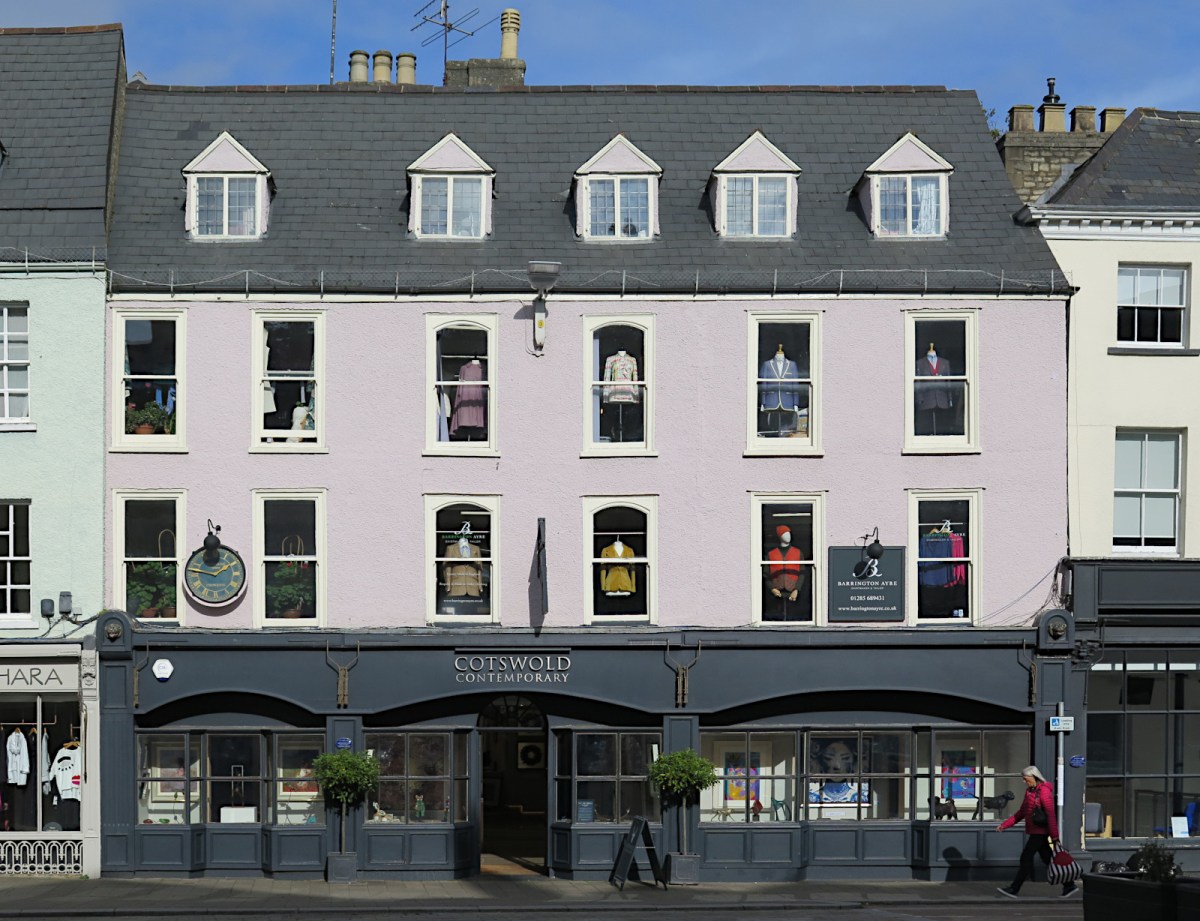
This shop was Stradlings when I was a child. It was a watch, clock and jewellery business and had been a clock maker at one time. If you enlarge the image you will see a clock between two first floor windows on the left. That clock is marked ‘Stradling maker Cirencester’, a relic and reminder of times past.
Businesses come and businesses go, that is normal, it has always happened. But something has changed dramatically in Cirencester as in towns across the county (and indeed much of the world). And it’s this – many of the incoming businesses are branches of large companies, often with little local knowledge or experience.
Of course, non-local companies are far, far better than empty shops. Cirencester has fewer empty shops than most towns; and we do have a good proportion of small, local businesses springing up all the time, especially restaurants, coffee shops and so forth. But the trend is clear, especially when you take the long view. I’m 76-years-old, but as a child almost every business seemed to be local. Perhaps the biggest exceptions were banks and building societies. Sometimes, it’s even in the names, ‘Nationwide’ is indeed a nation-wide building society!
But despite all this, many of the old names, like Stradlings, have left visible mark that can still be seen if you look closely enough. The old clock is still on the wall – a clock made in Cirencester! Not far from Cotswold Contemporary, the current owners of the clock, you’ll find an old sign above a shop front on the same side of the street. There are no words, just a black teapot and a cup and saucer. If you are ever in Cirencester Market Place, see if you can spot it, another emblem of the past. I won’t mention the current name of the shop, that would make it far too easy; but I will say that back in the day it was Anne’s Pantry. They sold little cakes, dainties and pastries to take away, or you could take a table inside for a cup of tea.
If you find the teapot or have memories of Cirencester to share, leave a comment.
Cirencester
For convenience, here’s a list of all the Cirencester area images:
A417 roadworks, Advent Market, Bishops Walk, Baunton, Canal 1, 2, Castle Street, Christmas lights 1, 2, Church 1, 2, 3, 4, 5, 6, Churn flood, Countryside, Fallen tree, Fleece, Gasworks, Gloucester Street, Hare 1, 2, Hospital, Market Place 1, Phoenix Fest, Riverside Walk, Stone plaque, Stratton Meadow, Tank traps, View, Wonky 1, 2, Yellow Iris
Themed image collections
The links below will take you to the first post in each collection
Cirencester, Favourites, Irish holiday 2024, Roman villa
< Previous | Index | Next >
Useful? Interesting?
If you enjoyed this or found it useful, please like, comment, and share below. (If you don’t see those links, click the article’s title above the main photo and they will appear.) Send a link to friends who might enjoy the article or benefit from it – Thanks! My material is free to reuse (see conditions), but a coffee is always welcome and encourages me to write more often! 
Share this:


 Journeys of Heart and Mind
I’m intrigued by your observation here, sir. What are your thoughts about the influx of non-local businesses in the light of how things have changed?
LikeLike
Hmm. That’s a great question, Chris.
Change is surely inevitable because technology is changing, culture is changing, travel is easier. It’s not possible to point to one factor and say, ‘This is what makes the difference’. There are factors of scale at work, Tesco is much more efficient as a business in buying power, distribution and so on, and shopping there is more efficient as it’s one stop for everything you need. In fact, go online and order stuff and Tesco will bring it your door.
So we’ve certainly ditched local business for convenience and time saving. But we’ve lost variety, and we’ve lost the conversations our grandparents had with the baker, the butcher, and the grocer – not so much the candlestick-maker, perhaps. One reason we see mental issues (depression, loneliness for example) might be reduced social interaction.
What do you think, Chris? Can you add further insights on this? And is there anything we might do to reduce the downsides without losing the benefits?
LikeLike