What’s in an image? Sometimes quite a lot, more than meets the eye. I’m posting an image every few days.
Click to enlarge
What’s in an image? And indeed what’s in a field? Let’s take it a stage at a time.
The Abbey
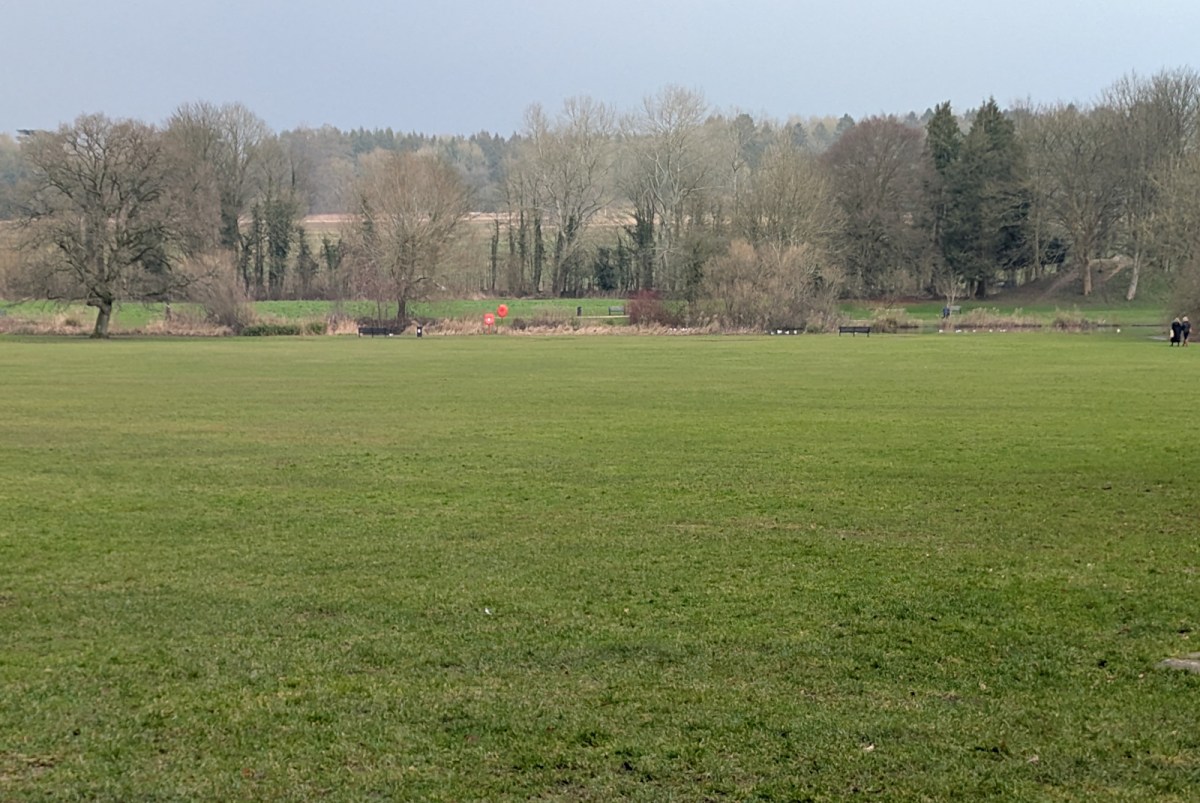
The grass in the foreground is part of one of Cirencester’s public parks, the Abbey Grounds. As the name suggests, this is part of the medieval abbey; the abbey buildings and the great abbey church are out of sight behind you in this view. All of those abbey remains are invisible, remaining as only foundations. After the dissolution of the abbeys by Henry VIII, the stonework was pulled down and re-used as building material as the town developed.
You are looking north-east. The first thing you can see beyond the grassed area is a stretch of water. This was dug by the monks to widen and deepen a branch of the River Churn to form a lake to supply fish. You will need to expand the image to see it clearly, it’s marked by benches, life buoys and low vegetation. The two figures in the extreme right are a good guide, they are just our side of the lake.
Abbey House
Also behind us in this view stood Abbey House, demolished in the 1960s. The Abbey land was later owned by the Chester-Master family who built the house, and the park was their private garden. There is one remaining structure from that time in the photo; the large mound at the extreme right covers the ice house built and used by the Chester-Masters.
The Romans
Cirencester is the site of Britain’s second city in Roman times – Corinium, or to give it its full name, Corinium Dobunnorum. The row of trees beyond the lake is close to the Roman city wall. Roman stone was also robbed to build structures in the later town, but out of site to the right of the ice house is a substantial bank and underlying that, the remaining Roman masonry. Some of it has been excavated and remains visible today. If you are visiting the town it’s well worth a look.
While we’re thinking of the Romans, the Abbey Grounds lie entirely within the Roman city and there’s almost certainly more to be discovered here. Just beyond the row of trees mentioned above is another branch of the River Churn. This, and the city wall would together have formed a barrier sufficient to force all traffic in and out of the city through the five large city gates.
Tar Barrow Field
The rising land beyond the line of trees up to the woodland along the sky line is known locally as Tar Barrow Field. ‘Tar’ is probably a corruption of ‘Thor’. The barrows would have been Neolithic or possibly Saxon, but the Medieval inhabitants clearly thought the Norse god Thor was involved in some way. There was also a Roman temple in this field and that would have been reached by a road or footpath from the Roman gate over what is today London Road.
Take a look yourself
If you are visiting Cirencester and interested in the town’s background and history, consider visiting the Corinium Museum (linked below). In addition to checking out the museum itself, you can pick up leaflets about historical sites to visit around the town.
If you enjoyed this or found it useful, please like, comment, and share below. (If you don’t see those links, click the article’s title above the main photo and they will appear.) Send a link to friends who might enjoy the article or benefit from it – Thanks! My material is free to reuse (see conditions), but a coffee is always welcome and encourages me to write more often!
The faded warm colour of the sky, the stark blackness of the skeletal trees, and rising mist make a scene I just had to capture. I had only my phone with me, but for wide-field, distant views that’s good enough.
What’s in an image? Sometimes quite a lot, more than meets the eye. I’m posting an image every day or so.
Click to enlarge
This photo was taken from the Gloucester Road, between Cirencester and the village of Stratton a mile to the north. It was the 15th of January 2025, at nearly five in the evening. The sun had already set so the air was cooling after a mild day with good sunshine and the moist air above the grass in the fields was condensing as mist.
The faded warm colour of the sky, the stark blackness of the skeletal trees, and rising mist make a scene I just had to capture. I had only my phone with me, but for wide-field, distant views that’s good enough. There’s a hint of mystery here too, we can only guess what might be hidden in the most misty areas.
And I couldn’t help thinking about the parallels with people. Before birth we are hidden, like the darkness before the dawn (you need to imagine a country dawn, not a city dawn, no streetlights, no artificial light). After birth we are visible to all and we change, growing in size, growing in knowledge, growing too in wisdom – hopefully. Most of our life is lived in the full light of day. We have a job, we raise a family, we interact with others as friends, or family, or perhaps sometimes even as enemies.
Lives, like days, begin, run their course, and then become evening. In the evening of life, the pace slows, there are memories that may be well-defined, or sometimes, like the mist, our memories hide things from us. The light fades, and when we die we enter darkness like the night.
Or do we? People have discussed what happens after death, every generation that has lived has wondered about this. Some people are certain that the darkness of death is the end of all sensation. And they are right, of course. But might there be other possibilities? Every generation has also held untestable ideas. Is there a God? If so, what is he/she like? Answers to untestable questions are not wrong, they are just not capable of being tested.
It has always seemed quite sensible to me to live my life as if what I do matters during the night of my life as well as during its day. But also, the teaching of Jesus is very logically sound, not testable but also, as far as I can see, internally coherent and free of self contradiction. That quality amazes me, I believe his claims to be true, testable or not. He has convinced me. Maybe he has convinced you too, or maybe not. We have that freedom, and we cannot persuade one another using the scientific approach, good as that is for studying more measurable and therefore testable matters.
If you enjoyed this or found it useful, please like, comment, and share below. (If you don’t see those links, click the article’s title above the main photo and they will appear.) Send a link to friends who might enjoy the article or benefit from it – Thanks! My material is free to reuse (see conditions), but a coffee is always welcome and encourages me to write more often!
The rest of the week we might have left-over meat from Sunday, often minced and made into cottage pie or shepherd’s pie. And we had non-meat days in the week as well, perhaps macaroni cheese, or kippers. or baked beans on toast, or cod.
What’s in an image? Sometimes quite a lot, more than meets the eye. I’m posting an image every day or so.
Click to enlarge
As a child I remember that we had a joint of meat on Sunday. And we usually had a fried breakfast on Sunday too, bacon, egg, fried bread, and perhaps a sausage as well. Sunday was a good day, a day to look forward to! The Sunday joint was sometimes mutton, sometimes pork, and just now and again, beef. But hardly ever chicken because chicken was too expensive. I also recall whale meat on at least one occasion. The rest of the week we might have left-over meat from Sunday, often minced and made into cottage pie or shepherd’s pie. And we had non-meat days in the week as well, perhaps macaroni cheese, or kippers. or baked beans on toast, or cod.
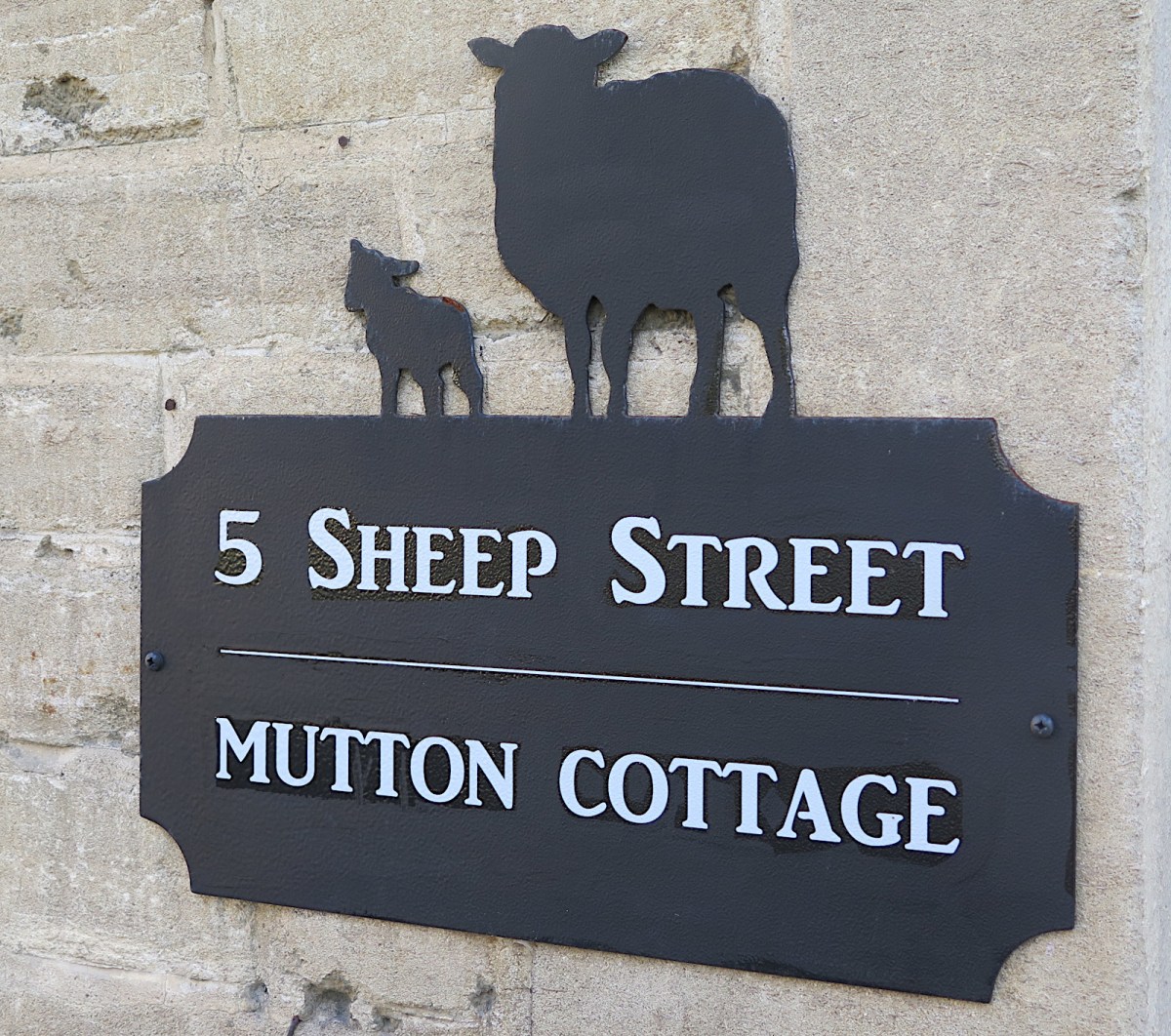
Today’s photo is from a house entrance in Cirencester’s Sheep Street. The house is not really a cottage at all. Hand sawn stone (known as ashlar) was an expensive material, so a genuine cottage would have probably have been built of undressed Cotswold stone straight from the quarry. Mutton (sometimes on a Sunday) is the meat of a mature sheep, tougher than lamb and needing more cooking time.
Why these references to sheep?
That’s easy to answer if you know something about the history of the Cotswolds! The land in this region is very good for farming sheep and in Medieval times wool was much in demand throughout Europe. Woollen cloth was still a major industry in early Victorian times, and the wealth created from the sale of unprocessed wool and woollen fabrics paid for many fine churches and merchant’s houses in towns across the region. Cirencester was no different, the famous Parish Church of St John the Baptist was built on wool money, and the many merchants’ houses in the centre of the town were funded in the same way. One of them, in Coxwell Street, still has its counting house attached.
That explains the references to sheep. You’ll find others, there’s the ‘Wool Market’, the ‘Fleece Hotel and Restaurant’, and Shepherd’s Way to name just three.
If you enjoyed this or found it useful, please like, comment, and share below. (If you don’t see those links, click the article’s title above the main photo and they will appear.) Send a link to friends who might enjoy the article or benefit from it – Thanks! My material is free to reuse (see conditions), but a coffee is always welcome and encourages me to write more often!
What’s in an image? Sometimes quite a lot, more than meets the eye. I’m posting an image every day or so.
Click to enlarge
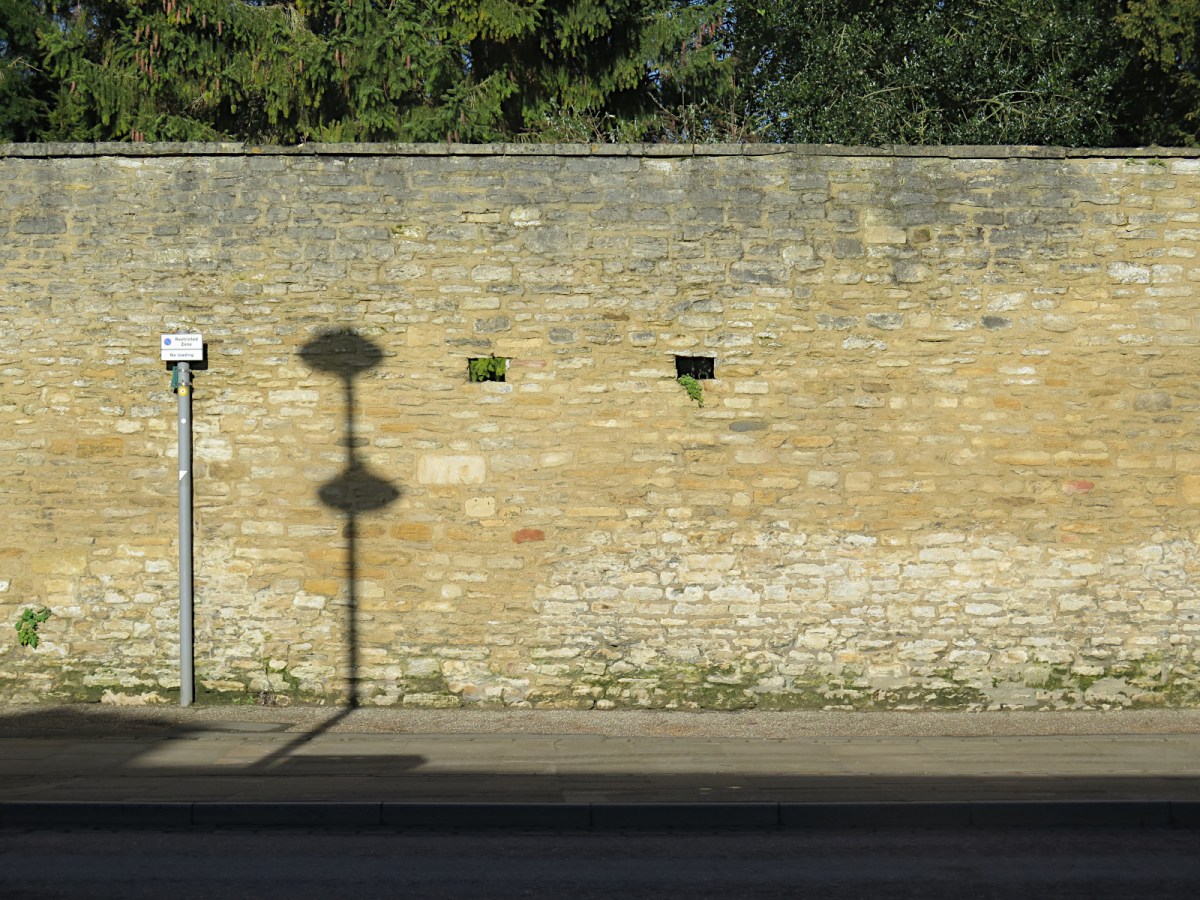
Some of you might know what these two, rectangular holes are for, but many might not. Holes like these can be found all around Cirencester, usually along the main roads leading into or out of the town.
They date back to the dark days of World War Two when Britain faced invasion by German forces. The invasion never took place because Germany was unable to defeat the RAF and air dominance was essential before the invasion fleet could be launched.
The holes in these walls, if you haven’t already guessed, are sniper or machine gun positions to enable the defenders to fire on German forces from behind the temporary safety of masonry. One round from a German tank would been more than enough to destroy the wall, of course.
When I was young, nobody took the trouble to fill these holes again, but these days they’re probably protected as historical curiosities. A reminder if one is needed, that war can come visiting at short notice (as in Ukraine) and that no nation should assume it will always be safe.
If you enjoyed this or found it useful, please like, comment, and share below. (If you don’t see those links, click the article’s title above the main photo and they will appear.) Send a link to friends who might enjoy the article or benefit from it – Thanks! My material is free to reuse (see conditions), but a coffee is always welcome and encourages me to write more often!
Beth was 1¾ this month, and Debbie was almost 5-years-old. We were living at 22 Rectory Drive in Yatton at that time and Debbie would have settled in at the Infants School and made a fair number of friends. (1980)
August 2024 (6 months before publishing this article)
Click to enlarge
We were on our annual family holiday, this time at Portrush in Northern Ireland. On 5th of the month we drove to the Giant’s Causeway and spent a very interesting time looking around. Then we visited the Carrick-a-Rede rope bridge. This was quite an experience as well.
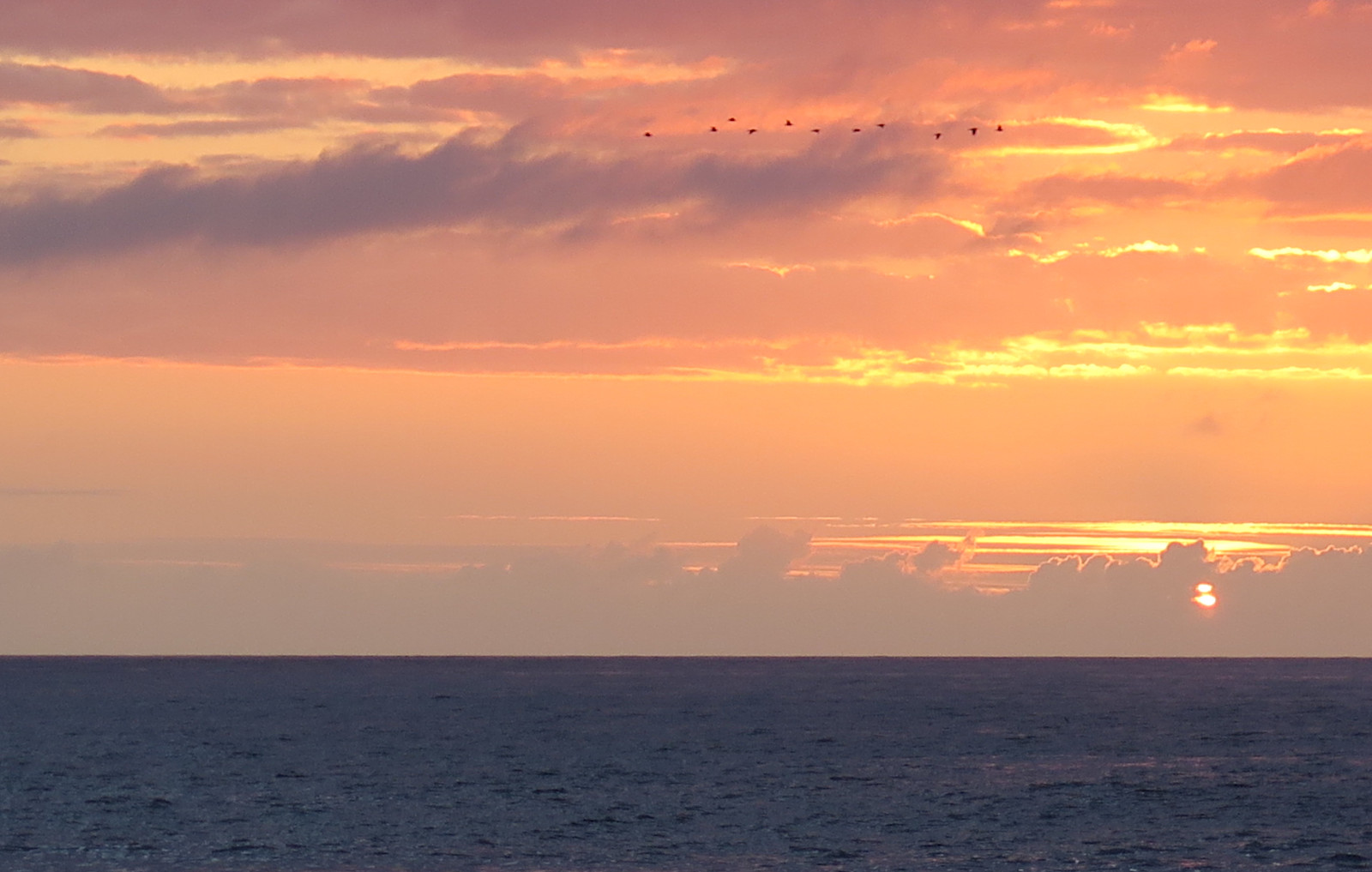
On the evening of 5th, Paz cooked steak for those who wanted it, and later I strolled around the harbour. The sunset was magnificent and I took a lot of photos, including the view of birds heading home as the sun sets.
Gas mains were being replaced in Cirencester. A team was going around, street by street, digging up the roads and pavements and fitting large bore, yellow, plastic pipes – where possible passing them through the old metal pipework they are replacing. Disruption was considerable for a week or two until the work was done and the team moved to a another street. Each property lost gas for only a few hours. Overall the work continued for months.
Cavendish House in Cheltenham closed down in February. Shopping has moved on these days and department stores are dying. I remember going to Cavendish house with my parents as a child, with my first wife before and after we were married, and noting that it was still trading much more recently – but now, it’s gone!
And we visited ‘Nature in Art‘ at Twigworth this month, too; a lovely old house with art exhibits indoors, but also many interesting installations in the gardens.
We drove up to York for a visit and to watch the Fulford School musical, ‘Beauty and the Beast’. Meredith was the beast, Verity played the part of Belle’s father, and Sara was one of the young lady ‘hangers on’ of the villain of the piece, Gaston.
It was very well done by everyone; we were highly impressed. I’d have loved to take some photos, but these days it’s not permitted.
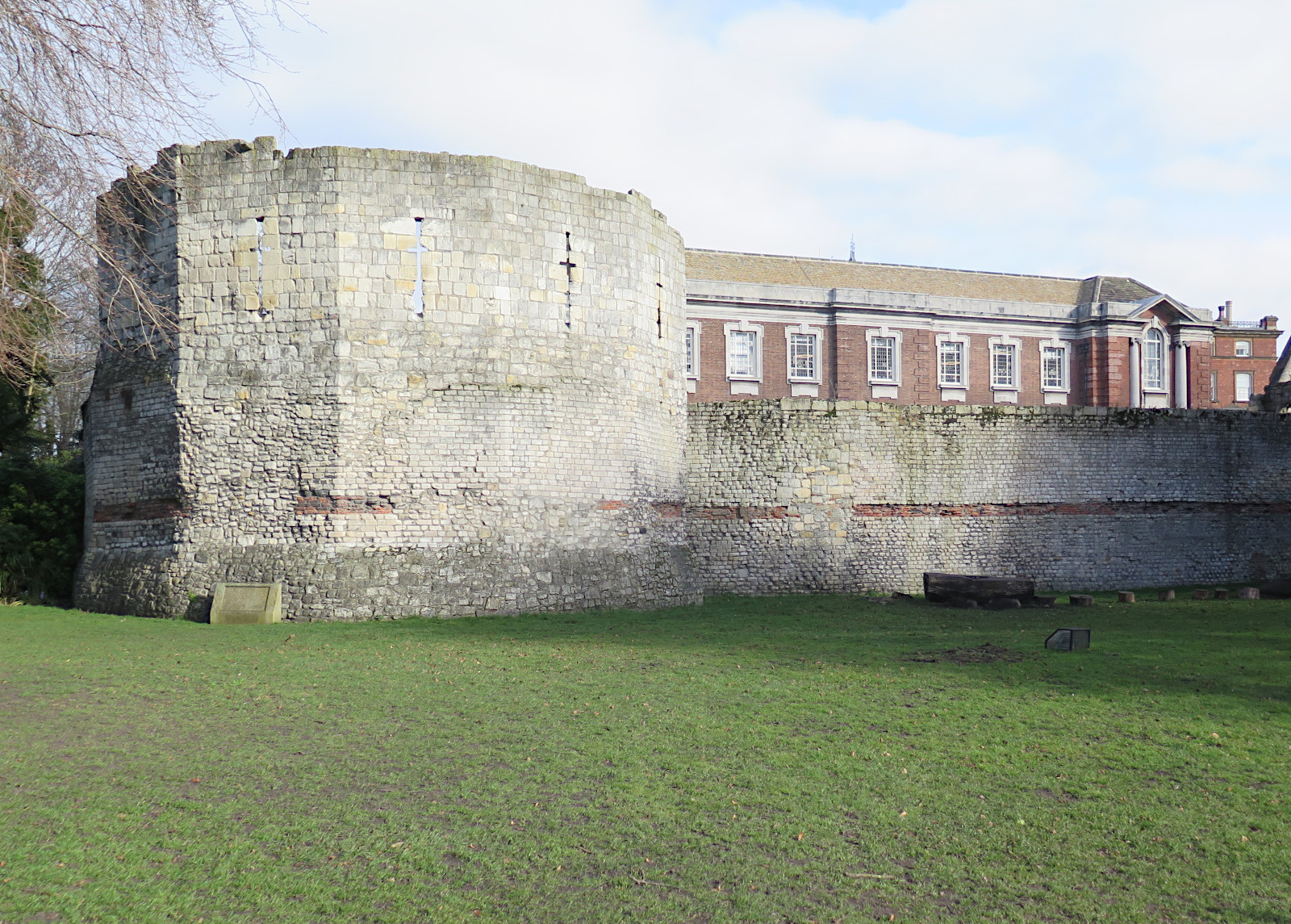
The day after the musical we explored the city centre including All Saints Church and the Museum Gardens. The photo, taken in the Gardens, shows part of the Roman fort dated to 107-108 CE, along with a surviving tower, ‘The Multangular Tower’. The Roman masonry consists of small blocks of stone and the red strip of Roman brick. The much larger stones above are medieval. Click the photo for a clearer view of these details.
On 11th it was clear that there had been more than a thousand coronavirus deaths in China, and although the rate of infection had been reduced it was still around 6% per day. This all seemed rather worrying. By 19th the virus was being called COVID-19 and it seemed to me that we were on a knife-edge between containing the infection or facing a world-wide endemic disease like a very serious kind of flu.
I was pulled over by the police after missing an exit on a roundabout in Gloucester and braking hard. They were very nice about it. After checking my licence and finding it clean they wished me a nice day and sent me on my way.
My sister Cindy held a book signing event in Cirencester at a local bookshop; in the photo she is squeezed between copies of her latest book and various toys and other items. (Find a copy of Cindy’s novel.)
During the month I met often with my friends Mo and Sue Urbano at their home in Eynesbury, and also with a group of friends at local coffee shops. These were useful times of growing together in following Jesus to the best of our abilities. There were other people too and there are snippets of the conversations in my journal. This was a busy period in my life.
We visited Broadstone to stay with Donna’s parents, and Paul and Vanessa came down from Weston-super-Mare as well. We walked on the beach with them at Sandbanks to get some exercise.
We were living in St Neots at this time, in the old village of Eaton Ford, once in Befordshire but now incorporated into the town as part of Cambridgeshire.
Unilever Colworth’s Christian Union (CU) met every Monday lunchtime and of course the meetings were not denominational in any way since we were all from different places and denominations (or in my case from no denomination at all). This was one of the features that made it so good.
Peter Farmer visited us and stayed the night on 6th, in 2009 he had been visiting one region of Britain every month to find out how people were meeting and reaching out. Quite a project! The following day we had a great meeting at Moggerhanger House.
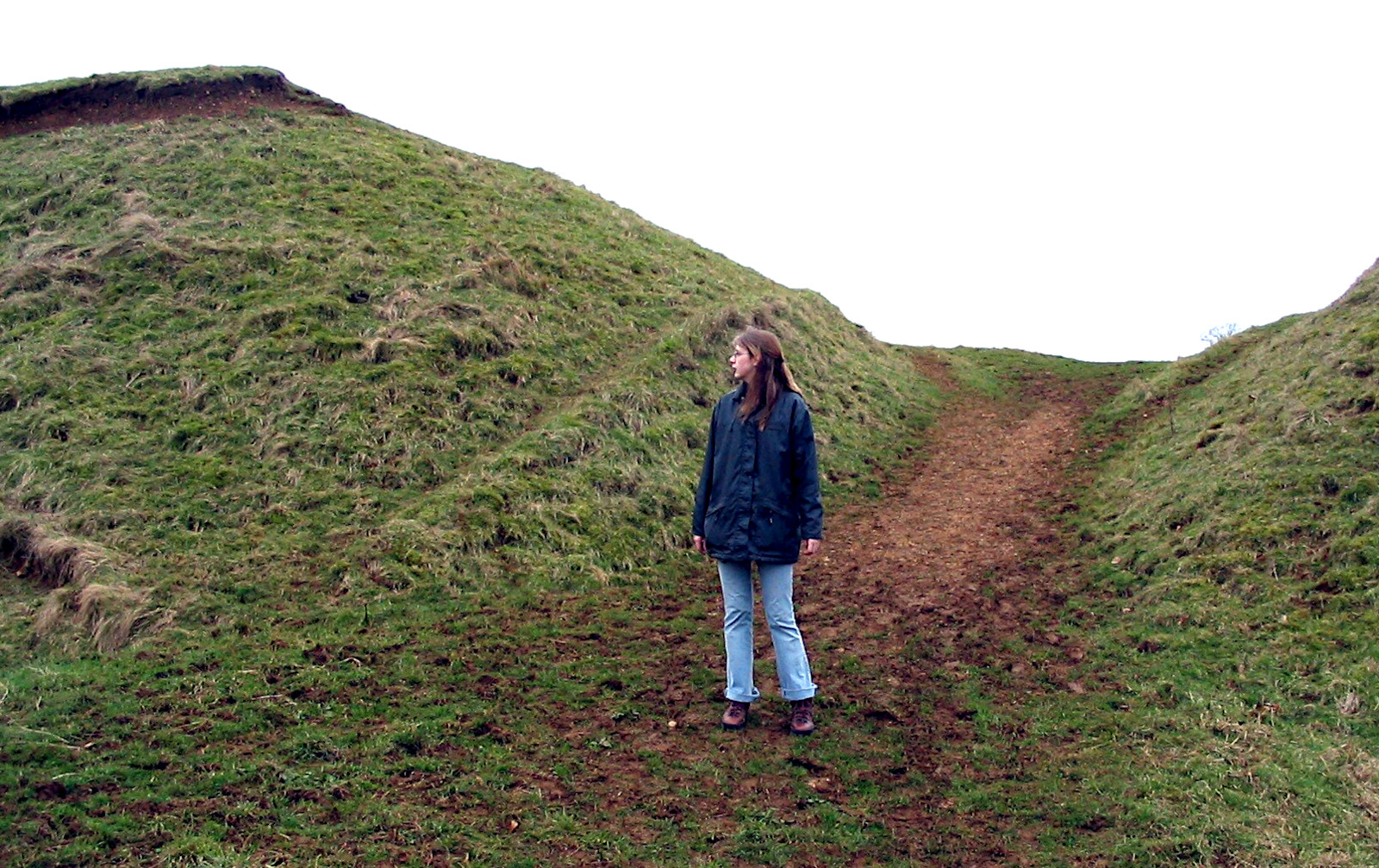
Driving cross country, I visited Debbie and Steve in Chipping Sodbury; Debbie and I walked to the nearby Iron Age hill fort which is very well-preserved. I didn’t even know it was there! There’s a double mound and a deep ditch between them; in the photo Debbie is standing in the entrance across one of the earthworks.
I had recently bought a new Nokia 6230 phone. It seems primitive indeed as I write this in 2025, but at the time it was an impressive little device. The iPhone appeared in 2007 and changed phones forever.
World events:North Korea announced it had nuclear weapons; and YouTube was founded (but not yet operating).
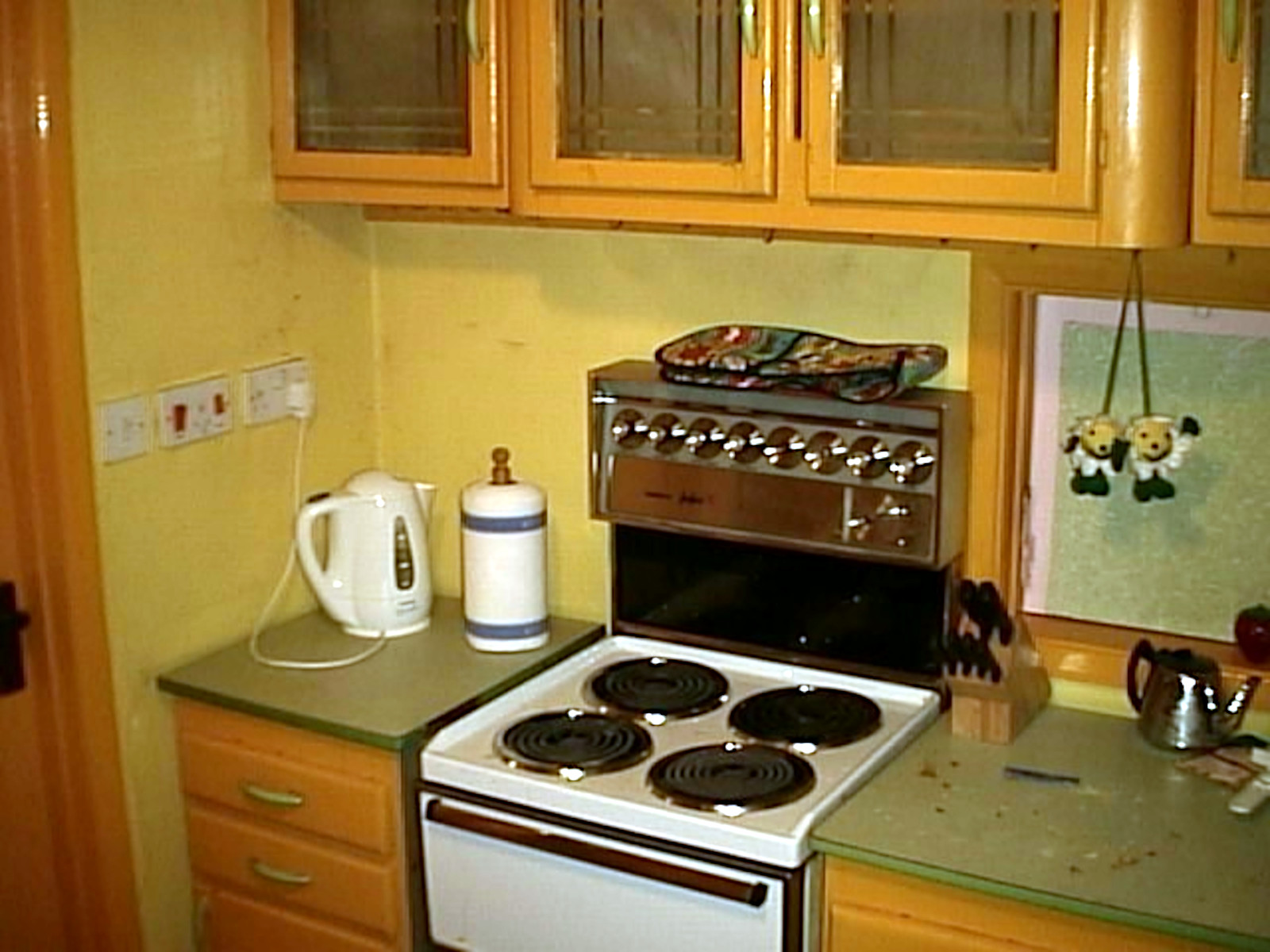
This is the kitchen, still as it was when we moved into our new home in Eaton Ford, St Neots. One of the things we’ll always remember is that the earthing on the cooker was faulty and it was sometimes possible to get a bit of a jolt from a metal pan handle. Renewing the kitchen was high on our to-do list and a few days after this photo was taken, we began taking down the old units and redecorating ready for the kitchen fitters to start work.
Near Calais
Towards the end of the month we travelled to Calais with the Open Door Church Small Group we were part of. Here we are walking along the coast path south-west of the town, I think. It was a good weekend break and fun to all be together. I can recommend it as a way to cement friendships, doing anything together is helpful.
Despite Judy’s best intentions, she had to give up working at Cotham Grammar School because of the stress and demanding hours. She was still not fully fit after some issues with chemotherapy in late 1994. Apart from her teaching job she was in really good shape and able to live perfectly normally.
For the first time in ages we were able to spend time together as a family in the evenings and weekends and that was a real joy for me and our daughters, Debbie and Beth, now 20 and 17 years old.
World events:Steve Fossett landed in Canada, the first person to fly solo across the Pacific by balloon; and Barings Bank in the UK collapsed.
On 10th of the month Debbie took a leading role in the Larchmount Players pantomime production of Tom the Piper’s Son in Yatton Methodist Church Hall. She did really well, a great performance. There were two further performances the following Saturday.
On the 20th we visited Judy’s parents in Cheltenham during the day and mine in Cirencester in the evening before driving back home.
We were living at 22 Rectory Drive in Yatton, between Bristol and Weston-super-Mare. Debbie was nearly ten years old and Beth still six.
My Uncle Dick received a letter (image above) about a book published in Cirencester in 1911. Nobody seemed to want this book at the time and my Dad gave it to me in February 1985, I was working as a microscopist and the book is about microscopy. In January 2017, I asked again if the Corinium Museum would like to have it, and this time they were interested so that’s where it can be found today. If you wish, you can read the letter, the book, and the museum form online.
Beth was 1¾ this month, and Debbie was almost 5-years-old. We were living at 22 Rectory Drive in Yatton at that time and Debbie would have settled in at the Infants School and made a fair number of friends. Judy was at home, looking after the house and I was working at Long Ashton Research Station.
I was considering ways to localise the plant hormone family of gibberellins in sections of plant tissue. The Pomology Division in which I worked was being closed down and the options were redundancy or a move to East Malling Research Station in Kent where pomology research was to continue.
Judy was looking (and feeling) very pregnant by this time. But she was in good health and there were no issues. The ante-natal classes had been helpful and we’d accumulated a lot of freebies and gifts and had bought necessary items ourselves as well. There were baby clothes and blankets, little booties and sterilising kits and bottles and teats and all the other things we thought we’d need. All this stuff fitted neatly in the basketwork crib Judy had made.
My MSc thesis was with the binders at this point. It was good to have all that paperwork and typing and drawing of diagrams (see photo) and charts behind me before the baby arrived!
I can’t be certain, but I believe this photo was taken by Judy on her way home from Aberystwyth (where she was at university) to Cheltenham, probably on a Black and White coach. That would be appropriate as the countryside looks black and white as well! I was in my final term at Bath University, and we were both working towards our finals.
World events: Tourists died in an avalanche at Val-d’Isère, France; and Richard Branson founded the Virgin Group as a discount mail-order record retailer.
Cousin Sue had her 21st birthday party on 6th of the month and Granny-in-Ireland’s 67th birthday was on 9th (she was my Mum’s mother).
School continued through February, it was my second term in the Lower Sixth, studying for A levels in Biology, Chemistry and Physics. My sister Cindy was also at the Grammar School, in the third year I think. Ruth and Rachael were still at junior school (Querns School).
World events:The Gambia became independent of the UK; and Ranger 8 crashed on the Moon after photographing possible astronaut landing sites.
One of my favourite toys at this time was Meccano; I’d had small amounts of this as birthday and Christmas presents. There were red bendy steel sheets in various sizes, green strips, dozens of nuts and bolts, wheels, axles – what fun for an eleven-year-old! But around this time I was given large quantities of second-hand Meccano parts, hand-me-downs from my cousins Tim and Jeremy. That was so exciting!
World events: The first CERN particle accelerator became operational in Geneva; and the Hollywood Walk of Fame was established.
We were living at 17 Queen Anne’s Road on Cirencester’s Beeches Estate. There were two conifers, one outside our house and another outside our next door neighbours, the Watts family.
There had been more of these trees, planted when the estate was built; but children being children the young trees had been tweaked and pulled about and most had eventually died. Mum and Mrs Watts would run out and chase the boys away, and had managed to save our two trees.
I was six-years-old and my sister Cindy was three.
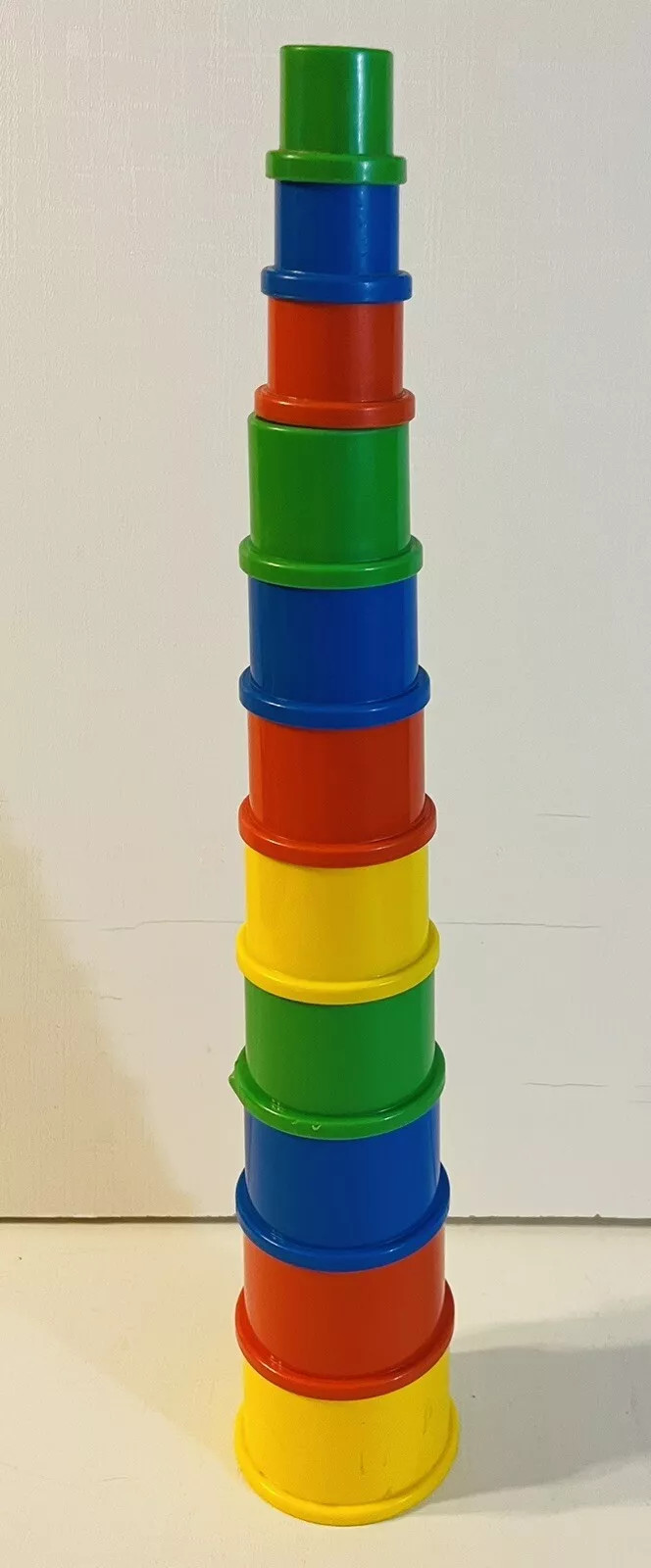
We were a little family in our own, rented council house on the Beeches estate. I had a cardboard box, open at the top, containing my toys. I remember (from later) that there was a nesting stack of bakelite pots in different colours.
You could put them inside each other (I probably watched Mum or Dad do this) or you could make a tower with them (and I’m sure I enjoyed pushing the tower over).
World events:Chiang Kai-shek was re-elected president of the Republic of China; and in New York a credit card (Diners Club) was first used.
On 3rd February Dad travelled back to Skendleby, in Lincolnshire where he was a radar operator on a Chain Home RAF site. It was about a mile north-east of the village, but is not marked on the map, of course.
Mum and Dad continued to write often, on 17th he was troubled to learn that she was unwell and might need surgery that would result in her not being able to have children. On 24th he heard that she would not need the operation after all. He writes in his diary, expressing his extreme relief; and had she needed that op, I wouldn’t be here to write this now!
World events: An oral version of penicillin was announced; and Roosevelt, Churchill and Stalin met at the Yalta Conference.
John Jefferies & Son Ltd had a florists shop on the corner of Cirencester Market Place and Castle Street, now the Vodafone shop. In February 1940 we can assume the vegetable-seed trade was good as the wartime population would have been growing their own produce on every available scrap of land. The ‘Dig for Victory‘ campaign would have encouraged this.
Entering the front door on the corner, there was a space for customers, with a service counter on the right and a private door opposite the shop’s display windows. Through the door and turning right, was a small, almost triangular outdoor space where buckets of cut flowers were stored, and there was always a smell of cooking emanating from the kitchens of Viner’s Restaurant next door in Castle Street.
Turning left instead brought you to a wooden staircase leading to offices on the floor above. There were also steps (possibly stone) leading down to the cellar.
If you enjoyed this or found it useful, please like, comment, and share below. (If you don’t see those links, click the article’s title above the main photo and they will appear.) Send a link to friends who might enjoy the article or benefit from it – Thanks! My material is free to reuse (see conditions), but a coffee is always welcome and encourages me to write more often!
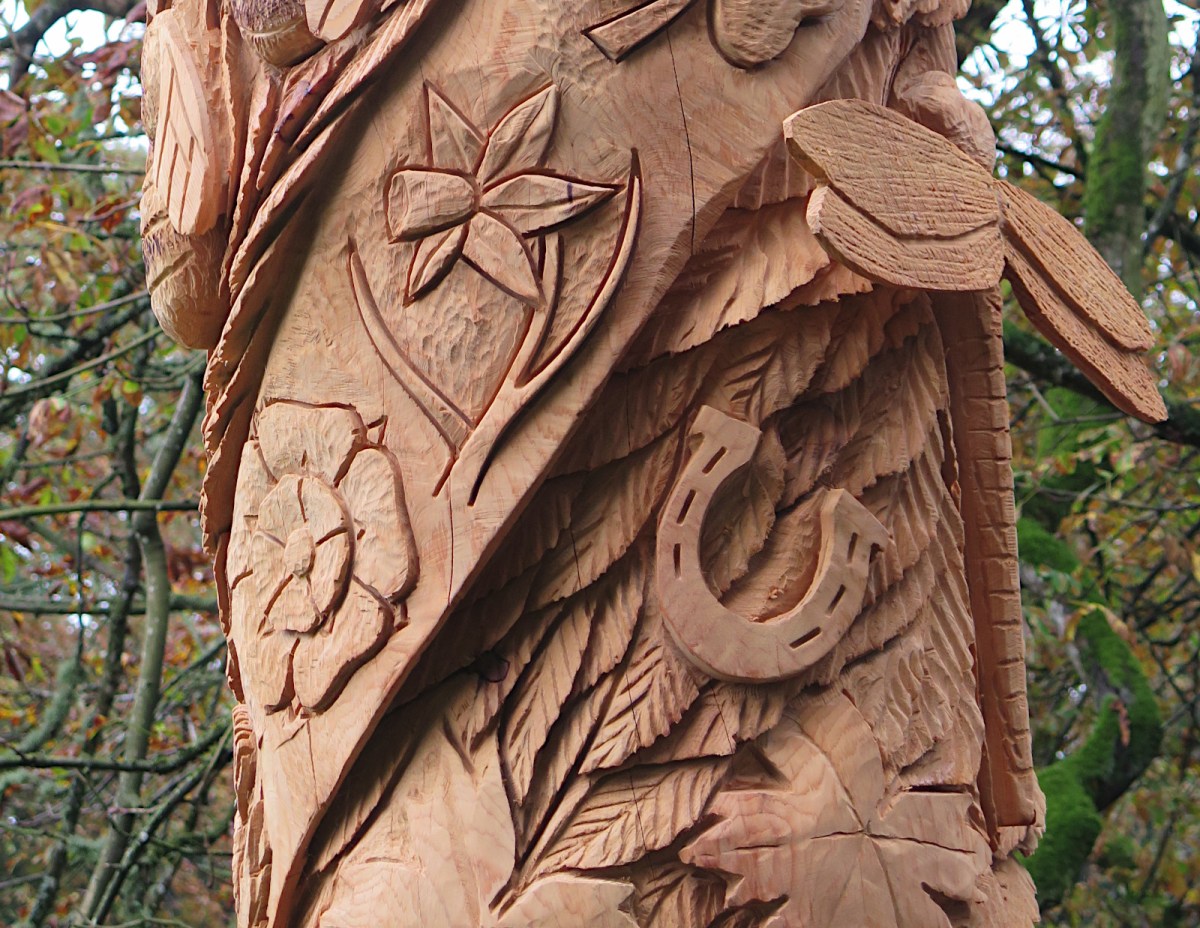
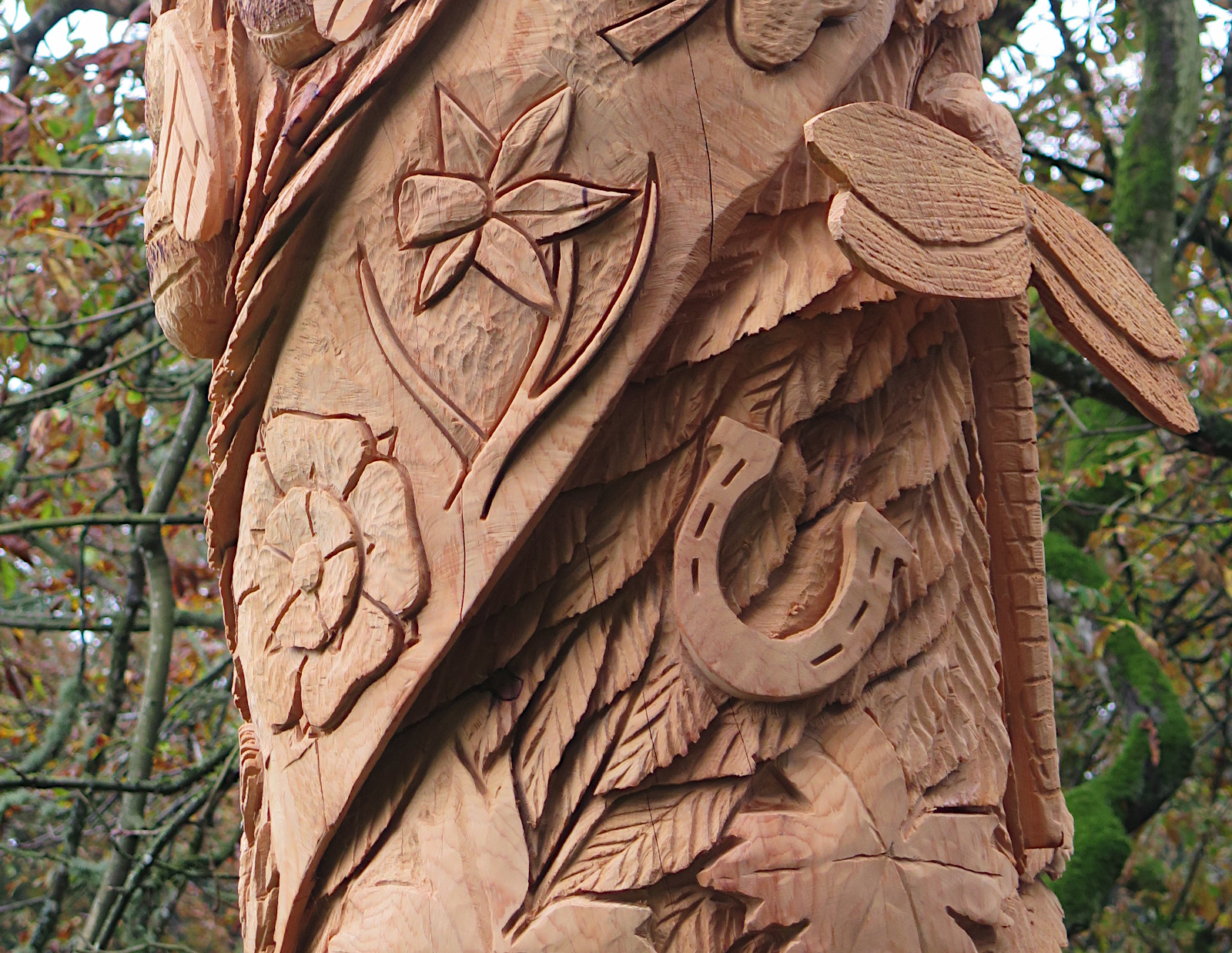
The tree was topped, the branches trimmed off, and [the sculptor] was asked to work on the standing trunk in situ. He rose to this challenge and came up trumps, the photo shows some of the detail.
Image 124 – What’s in an image? Sometimes quite a lot, more than meets the eye. I’m posting an image every day or so.
Enlarge
We have a skilled sculptor in Cirencester who specialises in carving large pieces of timber. He was called in work on a tree that had died in Cirencester Park. But instead of felling the tree and then asking him to work on the horizontal trunk (something he’s done to great effect in the past), this time the tree was topped, the branches trimmed off, and he was asked to work on the standing trunk in situ. He rose to this challenge and came up trumps, the photo shows some of the detail.
I never cease to be astonished at the way an artist can imagine a finished work before it exists and bring it to life in any medium – oil paint, watercolour, wood, stone. It’s a kind of magic. The human brain is so creative. People have been doing this kind of thing for many generations; think of Michelangelo, or the stone and bronze artists of Greece and Rome. No animal is capable of converting material into an image like this, or even imagining that such a thing is possible.
If you enjoyed this or found it useful, please like, comment, and share below. (If you don’t see those links, click the article’s title above the main photo and they will appear.) Send a link to friends who might enjoy the article or benefit from it – Thanks! My material is free to reuse (see conditions), but a coffee is always welcome and encourages me to write more often!
Image 120 – What’s in an image? Sometimes quite a lot, more than meets the eye. I’m posting an image every day or so.
Enlarge
Firethorn (botanical name Pyracantha) is a widely-grown garden shrub with small white flowers in the spring and glorious, usually red or orange fruit that often persist into January or later. They are eaten by birds however, and in a hard winter the fruit may all be consumed before Christmas. The fruit are pomes with the same structure as very tiny apples (they make excellent ‘apples’ for the fruit bowl in a dolls house). The flesh is edible but is mealy and bland, the seeds are slightly poisonous though a small number are very unlikely to be harmful.
The example in the photo was growing in Waitrose car park in Cirencester, pretty much on the line of the Roman City wall. As you walk into the car park from Sheep Street, look to your right as you pass the outdoor seating and tables and you’ll spot a low, stone wall. This was built directly above the Roman wall to show where it was and its alignment, there’s a piece of Roman stone on top of it and an explanatory sign, with further historical information on the wall of the supermarket nearby.
The road to Aquae Sulis (Roman Bath) left Corinium through a gateway nearby and later became the old Tetbury Road for a couple of miles. The Roman route continues across what is now Cotswold Airport.
When: 25th October 2023 Where: Sheep Street, Cirencester
If you enjoyed this or found it useful, please like, comment, and share below. (If you don’t see those links, click the article’s title above the main photo and they will appear.) Send a link to friends who might enjoy the article or benefit from it – Thanks! My material is free to reuse (see conditions), but a coffee is always welcome and encourages me to write more often!
Image 119 – What’s in an image? Sometimes quite a lot, more than meets the eye. I’m posting an image every day or so.
Enlarge
Castle Street is one of the busy streets in the town centre of Cirencester; it has a good mix of coffee shops, restaurants, clothes shops and so forth. Leading west from the Market Place, it becomes the old main road to Tetbury and Stroud, and eventually to Bristol and Bath. The fine, Palladian facade on the right is currently Lloyds Bank, but was once the private town house of a wealthy merchant.
There’s no castle in Cirencester today, but there was a Norman castle here many years ago (though little is known about it). Some sources suggest that it stood where Cirencester House is today, hidden behind the wall and famous yew hedge on nearby Park Street. But it may have been a little further east on adjacent ground bounded today by Castle Street, Park Street, Black Jack Street and the Market Place.
The castle (if that is not too grand a term) was constructed of timber and probably surrounded by a moat. It may have lasted just 35 years before being destroyed by King Stephen, or it might have been rebuilt in stone and lasted rather longer. Evidence is in short supply.
When: 26th October 2023 Where: Castle Street, Cirencester
If you enjoyed this or found it useful, please like, comment, and share below. (If you don’t see those links, click the article’s title above the main photo and they will appear.) Send a link to friends who might enjoy the article or benefit from it – Thanks! My material is free to reuse (see conditions), but a coffee is always welcome and encourages me to write more often!
Image 118 – What’s in an image? Sometimes quite a lot, more than meets the eye. I’m posting an image every day or so.
Enlarge
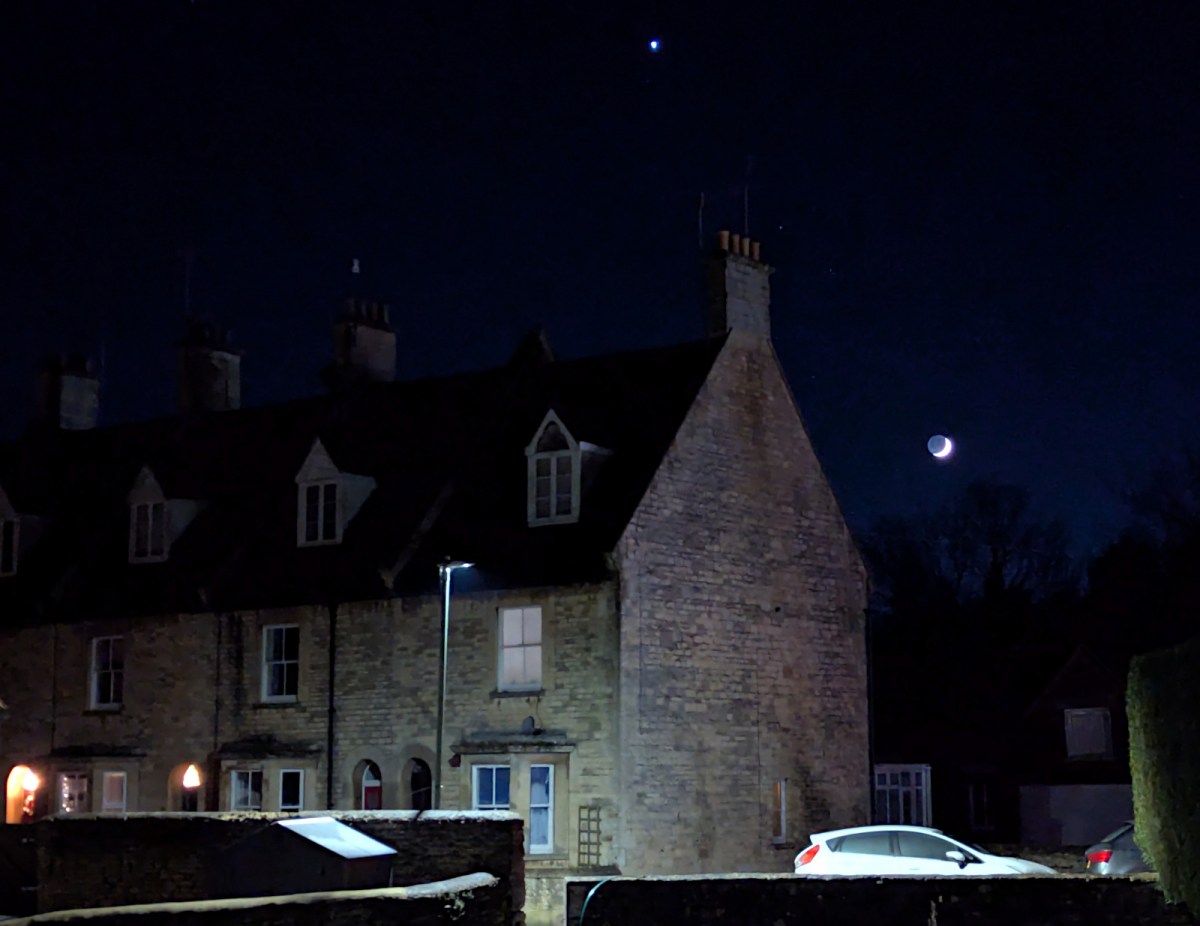
This photo is of the northern end of Gloucester Street, seen from the eastern side of the River Churn, close to Abbey Way Services.
You’ll notice several sources of light. Light travels at a little over 1 billion km/h, 1.079 billion if you want to be a little more precise. Like anything in motion at a steady speed, you can express distances in terms of travel time. If I fly a helicopter in a straight line to London at 100 km/h and it takes me an hour, then the distance to London must have been 100 km. If it takes only 30 minutes, then the distance was 50 km. You get the idea.
The streetlight, the house and the car are all around 20 m away (or 0.020 km), and doing the arithmetic shows that light would take around 80 billionths of a sec to make that trip.
The Moon hangs in the sky to the right of the house, and it’s 390 million km away, so light takes 1.3 seconds or so to arrive from the Moon.
The planet Venus is visible near the top of the photo, and as I write Venus is about 111 million km away, a distance that light covers in just over 6 minutes.
For comparison, our nearest neighbouring star, Proxima Centauri, is so far away, that its light takes 4¼ years to reach us. Space is BIG!
When: 2nd January 2025 Where: Gloucester Street, Cirencester
If you enjoyed this or found it useful, please like, comment, and share below. (If you don’t see those links, click the article’s title above the main photo and they will appear.) Send a link to friends who might enjoy the article or benefit from it – Thanks! My material is free to reuse (see conditions), but a coffee is always welcome and encourages me to write more often!
Image 117 – What’s in an image? Sometimes quite a lot, more than meets the eye. I’m posting an image every day or so.
Enlarge
Christmas has come and gone; I’m posting this on New Year’s Day but the lights are still shining on Christmas trees in homes and in Cirencester Market Place and in the roads that lead in and out of the Market Place as well.
This is Cricklade Street, running south from the centre of the town, and after some heavy rain this morning and overnight, the reflected lights add to the scene making it even better.
When we think of puddles we focus on their innate properties – wet, probably dirty, inconvenient (step over them or get your shoes damp) a source of splashes from carelessly driven cars, perhaps suggesting a blocked road drain or, worse, a developing flood.
Yet a simple reflection can turn a nuisance to be avoided into something beautiful to be captured in a photo! And this is what we are supposed to be like if we claim to follow Jesus. I might sometimes be seen as a nuisance to others, I may get in the way, I confess to having some bad habits. Don’t we all? I’m not always careful, not always gentle, not always kind.
But if following Jesus means attempting to become more like him, or allowing him to change me, then I should be like the dirty, inconvenient puddle. In other words I should be changed by reflecting his nature. Nothing beyond that is necessary! If, when you look at me, you instead see something of Jesus reflected in me – my work is done and it’s over to you to respond however you choose. You are not responding to me, you are responding to a perception of Jesus’ nature and character.
When: 1st January 2025 Where: Cricklade Street, Cirencester
If you enjoyed this or found it useful, please like, comment, and share below. (If you don’t see those links, click the article’s title above the main photo and they will appear.) Send a link to friends who might enjoy the article or benefit from it – Thanks! My material is free to reuse (see conditions), but a coffee is always welcome and encourages me to write more often!





















 Journeys of Heart and Mind


