
< Previous | Index | Next >
Image of the day – 177
What’s in an image? Sometimes quite a lot, more than meets the eye. I’m posting an image every few days.
Walking in Cirencester

Almost every day, I walk over history in Cirencester. My feet tread on pavements, asphalt, and concrete, a modern tapestry built over layers of forgotten lives. But in Cirencester, the past isn’t merely buried beneath; it is visible to view, laid out in small, colourful cubes of stone or painted wall plaster. At the Corinium Museum, the mosaics of Roman Corinium offer more than just archaeological wonder; they invite a journey into the heart and mind of a world long gone.
Corinium
The Roman town of Corinium Dobunnorum was one of the most important settlements in Britain, second only to Londinium. This prosperity is captured in the magnificent mosaic floors that once adorned the villas and townhouses of its elite. As I stand before them, they cease to be mere objects of a museum. Instead, they become stories frozen in time, each tiny tessera a word in a sentence, each panel a vibrant, geometric chapter.
Sometimes we see things indirectly, and our brains are capable of retrieving far more information than you might at first think. It’s true of all our senses – hearing, touch, taste, smell and all the rest. The senses provide information but the brain makes much more of it all.
The hare
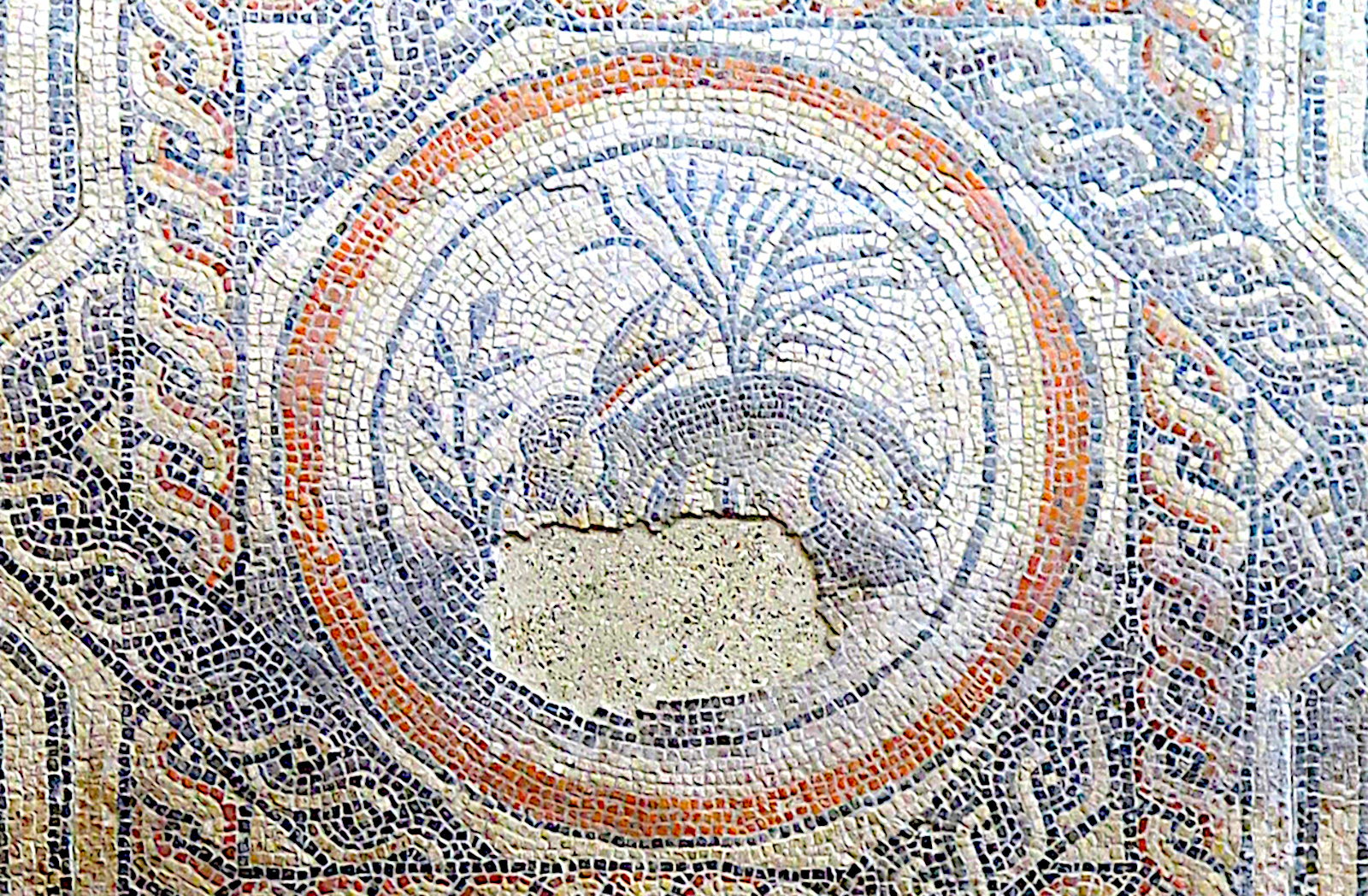
There is the famous Hare mosaic, found in Beeches Road and now a quiet emblem of our town. The artistry captivates the mind: a small hare caught in a moment of simple, vulnerable life, feeding amongst the foliage. When I look at it, I feel a curious resonance. We are so used to seeing animals in art as symbols of strength or the spoils of the hunt. Yet here is a humble creature, a snapshot of everyday nature from the fourth century. It reminds me that even in a grand Roman villa, the small, quiet moments of life were still observed and valued. It’s a message that travels two millennia, from one human heart to another.
The seasons
The Seasons mosaic presents another journey entirely. Here, Greek myth and a Roman love of the seasons mingle in intricate detail. But what strikes me is the continuity of it all. The cycle of winter pruning, spring planting, summer harvesting, and autumn gathering was as central to life then as the changing seasons are to us today. The mosaic is a reminder that some rhythms of existence are eternal, transcending the rise and fall of empires. It connects us to a shared human experience of time, of labour, and of nature’s relentless, beautiful cycle.
Orpheus
Perhaps the most poignant is the Orpheus mosaic (image at the top of the article), which once decorated a grand house just outside the town. In the centre, Orpheus charms wild animals with his music. This isn’t a scene of violent conquest, but of tranquil harmony, of nature tamed by art. In our own divided and turbulent world, the image speaks to a timeless desire for unity and peace. The mosaic suggests that art has the power to bring disparate parts of the world together, if only for a moment.
Walking through the Corinium Museum is not just a walk through history; it is a pilgrimage into the very nature of human experience. These mosaics remind me that we are connected to the past not just by shared geography, but by shared themes of life, art, and the simple beauty of the world around us. And as I step back out onto the modern pavement of Cirencester, I can imagine the ancient tesserae still underfoot, a solid reminder of the stories that lie beneath.
I didn’t write this article
OK, it’s confession time. I asked Google’s AI to write this article for me. I’ve made a few minor tweaks and edits, but that’s all. The prompt I provided wasn’t complex either. Here it is:
Write an article for ‘Journeys of Heart and Mind’ on Corinium mosaics. Follow the style and structure of existing articles.
Those twenty words resulted in this article. All you need to do is visit gemini.google.com and write a request like that, and the AI will write an answer for you. You don’t have to install anything or pay for anything, just type the request and press ‘Enter’. Give it a try! Type in ‘Write ten verses in the style of Wordsworth about laptops’ and see what comes out.
In some ways I think the AI did a better job than I would have done, but if I’d written it, it would have been me – and this isn’t! Where AI can help is to do some of the necessary research and perhaps create a first draft. But beyond that, my advice is to keep it human.
See also:
- Corinium Museum – Website
- Corinium Museum – Wikipedia
- Following Hadrian – Website
< Previous | Index | Next >
Useful? Interesting?
If you enjoyed this or found it useful, please like, comment, and share below. (If you don’t see those links, click the article’s title above the main photo and they will appear.) Send a link to friends who might enjoy the article or benefit from it – Thanks! My material is free to reuse (see conditions), but a coffee is always welcome and encourages me to write more often! 
You might also like:
Share this:


 Journeys of Heart and Mind
Well, well, well. How intriguing an exercise to conduct. I found the article fascinating, and then to discover it was written predominantly by AI, all the more intriguing. Have you written about your views overall on AI? Is it something you’d consider writing and sharing here?
LikeLiked by 1 person
I did write a couple of articles about ChatGPT, but that was way back when the first AIs were just becoming available. Back then I was alarmed about AI becoming more intelligent than people and the risk of them taking control and even eliminating us. But I think the risk of current AIs becoming that brainy is almost zero. But as the years go by and the technology improves – who knows? You can see everything related on JourneysHM by visiting the site and searching for ‘artificial intelligence’. You’ll get seven results including the two on ChatGPT.
Do go and try out an AI, they’re great for creating article plans, searching for suitable references, that sort of thing.
LikeLiked by 1 person
Thank you, Chris! 😃
LikeLike