< Previous | Index | Next >
Image of the day – 140
What’s in an image? Sometimes quite a lot, more than meets the eye. I’m posting an image every day or so.

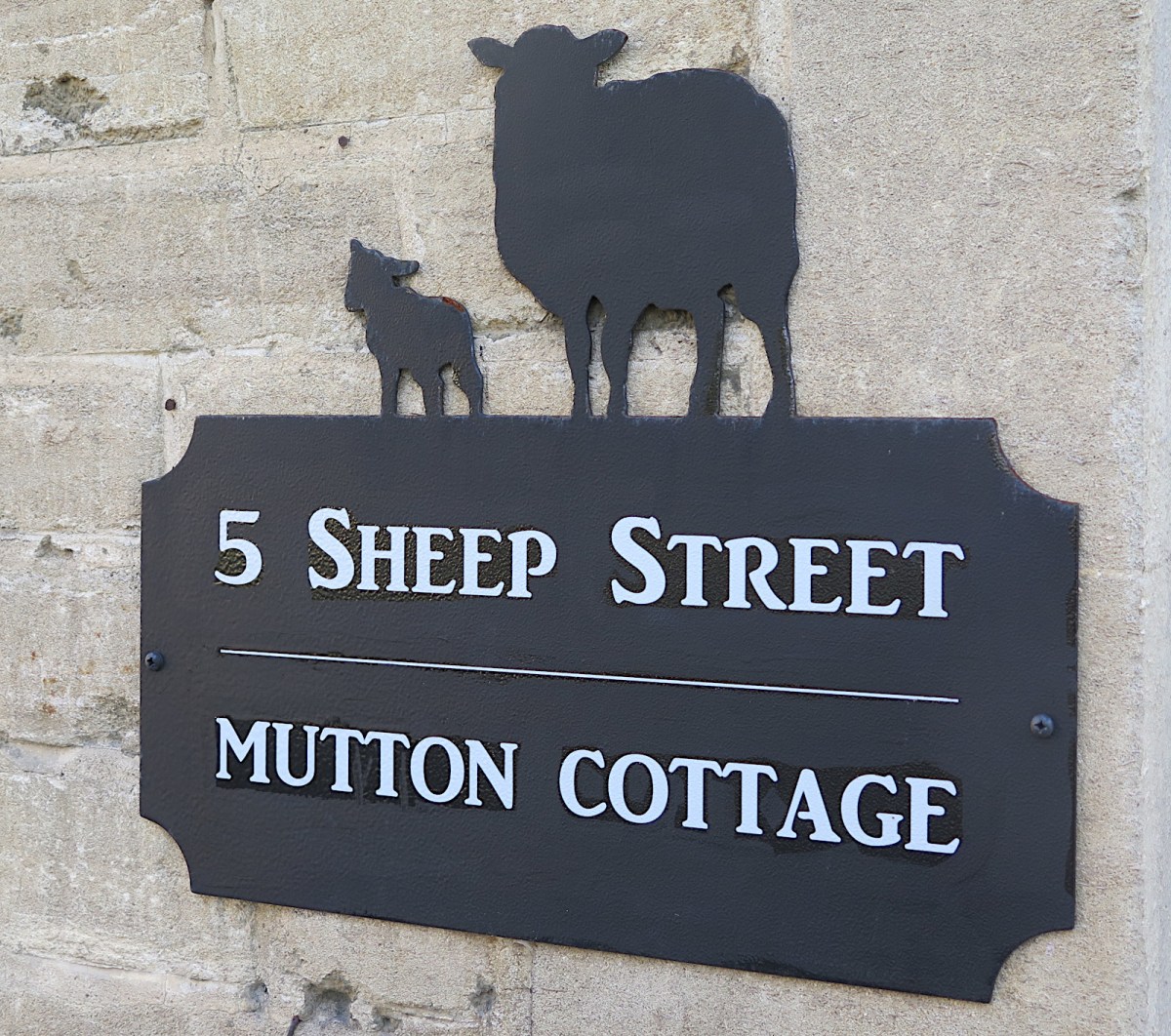
As a child I remember that we had a joint of meat on Sunday. And we usually had a fried breakfast on Sunday too, bacon, egg, fried bread, and perhaps a sausage as well. Sunday was a good day, a day to look forward to! The Sunday joint was sometimes mutton, sometimes pork, and just now and again, beef. But hardly ever chicken because chicken was too expensive. I also recall whale meat on at least one occasion. The rest of the week we might have left-over meat from Sunday, often minced and made into cottage pie or shepherd’s pie. And we had non-meat days in the week as well, perhaps macaroni cheese, or kippers. or baked beans on toast, or cod.
Today’s photo is from a house entrance in Cirencester’s Sheep Street. The house is not really a cottage at all. Hand sawn stone (known as ashlar) was an expensive material, so a genuine cottage would have probably have been built of undressed Cotswold stone straight from the quarry. Mutton (sometimes on a Sunday) is the meat of a mature sheep, tougher than lamb and needing more cooking time.
Why these references to sheep?
That’s easy to answer if you know something about the history of the Cotswolds! The land in this region is very good for farming sheep and in Medieval times wool was much in demand throughout Europe. Woollen cloth was still a major industry in early Victorian times, and the wealth created from the sale of unprocessed wool and woollen fabrics paid for many fine churches and merchant’s houses in towns across the region. Cirencester was no different, the famous Parish Church of St John the Baptist was built on wool money, and the many merchants’ houses in the centre of the town were funded in the same way. One of them, in Coxwell Street, still has its counting house attached.
That explains the references to sheep. You’ll find others, there’s the ‘Wool Market’, the ‘Fleece Hotel and Restaurant’, and Shepherd’s Way to name just three.
See also:
- Cotswolds – Wikipedia
- How wool built the Cotswolds – British Heritage Travel
< Previous | Index | Next >
Useful? Interesting?
If you enjoyed this or found it useful, please like, comment, and share below. (If you don’t see those links, click the article’s title above the main photo and they will appear.) Send a link to friends who might enjoy the article or benefit from it – Thanks! My material is free to reuse (see conditions), but a coffee is always welcome and encourages me to write more often! 
Share this:


 Journeys of Heart and Mind